Skip to content
Global Missional Leadership Doctor of Ministry (DMin) icon

Global Missional Leadership Doctor of Ministry (DMin) Program

The Leadership in Emerging Culture Doctor of Ministry (DMin) tracks explore the character and shape of effective Christian leadership in the emerging culture.

The Global Missional Leadership DMin program focuses on equipping Christian leaders in church, non-governmental organizations, and mission communities to confidently, to constructively, and to effectively carry out the mission of the gospel of Jesus Christ in an increasingly connected world.

Students engage in theological/biblical, historical, and sociological analysis of the emerging global culture to gain cultural and theological self-awareness. They do specialized research in topics such as consumerism, colonialism, the environment, and social justice. They gain skills in the use of online and mobile social media tools and they develop an international network of scholarly relationships through real-world experiences in Europe, Africa and Southeast Asia.

Learn more about the program:

Program overview

Joe Burnham's overview

GML1 DMin student, Joe Burnham, put together this youtube video to submit to Google Wave's invitation program. While making his case for why we need Google Wave for the Global Missional Leadership DMin program, he offers a great overview of the program.

See Joe's video, "Why we need Wave"

Lead Mentor
Jason Clark Photo album

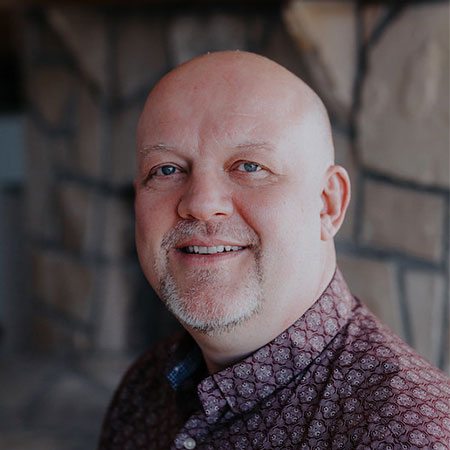
Dr. Jason Clark serves as the lead mentor for the Global Missional Leadership DMin track. As lead mentor, Clark teaches six of the courses, lead each of the three F2F experiences, and facilitate online experiences.

Jason Clark serves as a full-time pastor of Vineyard Church Sutton in Sutton, London (UK), which he and his wife planted in 1997 while he was an investment broker in London. That church has grown to around 300 adults and 120 children, in an area of London where 1 percent of the population are connected to a church. 

Dr. Clark also coordinates the Emergent UK online resource network. This network serves alongside Emergent in the United States and several other countries. He also directs the deepchurch.org.uk project and writes a blog that has a 2,500-member mailing list and has over 250,000 visits per year, that arises from his research area, teaching, and church experience. 

He is a council member of the Evangelical Alliance UK

Dr. Clark is an adjunct professor at George Fox Evangelical Seminary for the MA/MDiv modules on “Missional Ecclesiology.” He also lectures and teaches in other countries on a regular basis in the areas of church and culture. He is currently working on several book- writing projects and articles. These include two chapters in a book titled, “Christ and Postmodern Culture” for Baker Academic’s Church and Post-Modern Culture Series and a book coauthored with Dr. Andrew Walker on ‘Deep Church’ for Paternoster UK’s Faith in an Emerging Culture Series

Jason completed his DMin at George Fox, and is now a PhD candidate at Kings College London, researching theological assessments of consumerism and secularism and the implications for ecclesiology. 

Program Purpose

Many Christian leaders in churches, Christian organizations and various mission communities recognize that the world is rapidly becoming interconnected economically, technologically, culturally and politically. Moreover, in our increasingly consumer-oriented market-based society, people often regard churches of all stripes as a matter of personal preference and convenience. At the same time, leaders are often culturally aware, yet they lack any confidence and grounding in Scripture, church history and theology. Consequently, they find themselves struggling to adapt in order to fruitfully and effectively proclaim the gospel of Jesus Christ in this context. 

To address this, we believe we must reconfigure leaders into reflective practitioners who understand the complexities of this interconnected world and know how to engage it for the sake of the mission of the gospel. Clark refers to this as a ‘thick understanding’ of an increasingly global culture.

  • Global: We are convinced that to understand and to engage our own local contexts we must take into account the increasingly globalized world in which we live. Our world is rapidly shrinking and the international community is becoming a daily reality. Technology is making information and resources more accessible. Local communities and nations are increasingly interconnected economically and culturally.
  • Missional: We accept the loss of Christianity as the “center” of society and culture in the West. To the degree that a global community necessarily entails religious pluralism, we propose that we adapt accordingly. Mission in a global village means increasingly moving beyond the idea of sending select people from a “Christian country” to other countries who have not heard the good news. Instead, we need to think of mission as equipping Christians to serve in their own context. 
  • Leadership: Finally, the program seeks to cultivate and form Christian leaders who engages in theological reflection that informs practice and vice-versa. We call this type of theologically aware leader a “reflective practitioner.” These leaders possess a “thick understanding” of global culture and ecclesiology. While they are prepared to scrutinize contemporary ministry models, they are able to offer constructive alternatives.
Program Objectives

Students in the program:

  • Establish a conceptual basis for leadership
  • Refine one's thinking about strategies for effective leadership
  • Explore how one's identification with the person of Christ impacts one's self-perception as a leader
  • Engage in and reflect on a cross-cultural experience in order to "think globally and act locally" with regard to leadership issues in their particular ministry contexts
  • Reflect on the essential intermingling of leadership and spiritual formation in corporate Christian contexts
  • Synthesize a coherent theology of leadership in that will serve to inform one’s practice of leadership
Global Missional Leadership DMin Track-Specific Emphases

Dr. Clark will lead students in accomplishing the objectives above by especially focusing on the following:

  • As reflective practitioners, students will focus their learning on the following elements. They will:

    • Explore and trace the philosophical, cultural, political, sociological, religious and scientific developments that are occurring worldwide.
    • Seek to identify some of the major challenges of our global context for effective Christian mission.
    • Reflect biblically, theologically and historically to formulate suitable responses to these challenges.
    • Explore and describe the ethics, spirituality, and practice of leadership necessary for an international global context.
    • Integrate all that they have learned as reflective practitioners into their own ministry contexts and practices.
  • Additionally, students will select an area for specialization under the supervision of their faculty advisor. Students will select one of the following topics related to issues of global and missional concern:
    • Secularism, consumerism and religious fundamentalism
    • Colonialism
    • Social justice
    • The environment
    • Family and gender-related issues

Program Delivery Model

Cohort-based

The Global Missional Leadership DMin track seeks to foster the development of life-long relations among students and advisors. We organize students into groups of 20 that journey together through the entire program. A new cohort launches each academic year. Cohorts meet annually at the face-to-face (F2F) experiences. By means of online synchronous and asynchronous, cohorts critically discuss and probe course-related issues and topics with an eye toward their own ministry contexts.  

Advisor-directed

From the outset of the program, we pair students with an individual faculty advisor who helps them develop and focus their areas of specialization in the customized courses. Faculty advisors ensure the academic integrity of their students’ work by helping them to sharpen their critical thinking, writing and source-documentation skills. Faculty advisors go on to serve as their students’ dissertation advisors.

Online & Web 2.0

The Global Missional Leadership DMin track will leverage various online tools to bridge the distance among students and advisors and to enable students to learn collaboratively. While the lead mentor and faculty advisors will provide course content and expertise, students also will create significant content for their cohort and for the public.

Students, faculty advisors and the lead mentor use various social-media tools and services to learn and interact with one another. First, they meet weekly in synchronous chats to maintain and develop community. Second, they capture still and video moments from their ministry contexts or write up substantive messages. These text-based materials are either responses to course readings or formal articles on their research. Students then further discuss the images, videos, responses and articles with their colleagues asynchronously in online forums, blogs, microblogs, video and image sharing sites, and other social media tools. Students and faculty tag all program-related material with the 'dmingml' tag.

While students will continue to use desktop and laptops to perform these tasks, students will increasing use of mobile technology. Using tools such as a smartphone, students and advisors capture content such as video and audio clips, short interviews, or still photos and post that content online for discussion. Additionally, this allows them to to post content and follow online discussions while on the move. By so doing, students participate in an immersive learning environment that incorporates their ministry experiences as they occur.

For instance, imagine the following scenario: Student A is in Paris. Student B is in New York. They each own the Apple iPhone. The lead mentor asks each student to document best practices on how metro churches and social ministries are addressing homelessness. Students are required to provide the following:

  • Five photographs of homeless conditions
  • Two video interviews from the street – one of a homeless person and one of a local pastor, social worker or volunteer
  • A 250-word blog post about the experience

Next, the rest of the cohort interviews both students on their experience in a phone conference. Finally, the cohort debriefs through a weeklong text-based forum discussion.

You may join and engage in the on-going conversation at gmldmin.org. You do not have to be a student to participate.

Advances

The advances constitute a central learning experience in the program for theological reflection and discussion. Students participate in three advances at the beginning, middle and end of the coursework phase of the program:

  • Orientation Advance (at program launch)
  • Second Advance (at the end of the first year of the program)
  • Final Advance (at the end of the second year of the program)

The advances will be located on three different continents hosted by partnering seminaries and schools, including:

While onsite, Clark and local guest scholars lecture on various topics. Additionally, students and advisors engage one another through a series of seminars on topics related to their areas of specialization. Where possible we also visit missional communities in these locations that are engaging in the types of ministries that support the focus of this program. Lastly, students meet one full day for a research course and work individually with their advisors to continue shaping their dissertation research throughout the face-to-face experience.

Food and lodging are provided for each of the host locations with incidentals excepted. Wireless internet connectivity will be available when possible. Students, however, are responsible for all air-travel and local transport (car rental, taxi, etc) for each of the advances.

All advances are nine days and eight nights in length, beginning mid-day Monday and coming to a conclusion by mid-day Thursday of the following week.

Course Work

Course Work Overview

Participation in this track can be broken into three phases: application and enrollment, completion of the course work, and production of the dissertation.

During the first two years of the program, students participate in three sets of courses over six modules:

  • Research courses: DMIN 513, 523, 533, 543
  • Customized courses: DMIN 516, 526, 536, 546
  • Jason Clark's courses: DMIN 517, 527, 528, 537, 547, 548

Learn more: Explore the course catalog for descriptions of specific courses

The table below outlines the course sequence for the program:

Year One

First Semester — Personal Leadership Formation (6 hours)

Orientation Advance


DMIN 513 Introduction to Research and Resources

1

DMIN 516 Contours of Leadership in Emerging Culture - The Nature of Global Missional Leadership

3

DMIN 517 Engaging Leadership Concepts - Global Concerns in Historical Perspective

2


Second Semester — Dynamics of Leadership (6 hours)

DMIN 526 Vision and Voice in Postmodern Culture - Global Concern Concentration I

3

DMIN 527 Developing Leadership Strategies - Global Concerns in Theological Perspective

3


Third Semester — Leadership and Personal Spiritual Formation (4 hours)

DMIN 523 Developing a Topic for Research

1

DMIN 528 Spirituality and Leadership (includes Second Advance) - Global Concerns in Sociological Perspective

3

Year Two

First Semester — Leadership in Global and Local Perspectives (6 hours)

DMIN 533 Designing a Research Model

1

DMIN 536 Leadership in Cross-Cultural Perspective - Global Concern Concentration II

3

DMIN 537 Thinking Globally and Leading Locally - Church, World & Culture

2


Second Semester — Leadership in Theological and Practical Perspectives (6 hours)

DMIN 546 Theology and Practice of Leadership in the Emerging Culture - Global Concern Concentration III

3

DMIN 547 Distilling a Dream for Leadership in the Emerging Culture - The Nature and Art of Global Missional Leadership

3


Final Semester — Leadership and Community Spiritual Formation (4 hours)

DMIN 543 Writing the Dissertation

1

DMIN 548 Spiritual Leadership in Christian Community (includes Final Advance) - Geography of Personhood: Remapping Local Identity in a Global Context

3

Year Three

First Semester

DMIN 550 Dissertation

4


Second Semester

DMIN 555 Dissertation (non-credit continuation billed at 1 hour)


Research Courses

The research courses prepare students for the dissertation phase of the program by helping them gain greater competence in information literacy - the art of knowing when one needs information, where to get it, how to access and evaluate it, and how to incorporate that information into one’s work. Students meet face to face for the first two days of each face to face experience for DMIN 513, 523, and 543.

Customized Courses

The customized courses are designed to give students greater flexibility to pursue subjects of interest to them. Students are assigned a faculty advisor during the orientation advance who oversees and evaluates their work in these courses. The customized courses include three major elements:

  • Learning Plans: Written up at the beginning of the module and approved by their faculty advisor, students propose a course of study for each module that includes a reading pool, conference, and essay thesis.
  • Conferences: Students attend a conference for modules 01, 02, 03, and 04 appropriate to their topic of study. Faculty advisor approval is required.
  • Essays: All learning experiences for each module are synthesized in a 4,000-word essay at the end of semester.

By the end of the first module, students select an area they wish to specialize in and explore with their faculty advisor and a group of other students in their cohort over the first two years of the program. Students will choose a specialization from among the following topics related to issues of global and missional concern:

  • Secularism, consumerism, and religious fundamentalism
  • Colonialism
  • Social justice
  • The environment
  • Family and gender-related issues

Students will use these courses to explore more deeply the area of specialization with a view to becoming a “cohort expert” in this area. In the cohort interaction, the student will then call the cohort’s attention to the issues and questions related to their chosen topic area as well as serve as a resource to the rest of the cohort.

Courses Taught by the Lead Mentor

Jason Clark's courses are characterized by directed reading and self-organizing interaction. His courses normally include the following elements:

  • Reading: Jason provides a reading list and schedule of books, articles, and websites for students to explore and discuss.
  • Asynchronous discussion: Students meet weekly in an asynchronous chat forum to discuss the assigned course materials.
  • Chat: Students meet once a week for synchronous chat. Jason faciliates the discussion.
  • Face to face (F2F) experiences: As a part of DMIN 517, DMIN 528, and DMIN 548, students join Jason to explore course content and meet with other global reflective practitioners' the Jason may invite from the local context.

The Dissertation

Dissertation Options

The program includes the design and completion of a dissertation that addresses both the nature and the practice of ministry. Students begin working on their dissertation at the orientation advance in DMIN513 and continue to do so throughout the program. Although the third year of the program is devoted to completing the dissertation, students will have made significant progress by the end of the second year. Ideally, much of the research associated with the customized courses can be applied toward the production of the dissertation.

The dissertation can take two forms - Track 01 and Track 02:

  • Track 01: This approach allows students to write a traditional-style dissertation that addresses a ministry problem in depth and the theoretical framework that underpins a proposed solution.
  • Track 02: This approach allows students (individually or in teams) to implement an artifact utilizing audio, video, web or print to incarnate a practical, real-world solution to a stated ministry problem. The Track 02 Dissertation is composed to two parts - a Written Statement and the Track 02 Artifact.

To learn more about the differences between the Track 01 and Track 02 Dissertation options, see:

Process for Completing the Dissertation

The research courses are designed to enable students to advance their dissertations, equipping them with the necessary skills to complete their work during the third year:

  • DMIN 513: Students are introduced to the tools used for study and research.
  • DMIN 523: Students develop a topic proposal for their dissertations.
  • DMIN 533: Students develop a design proposal for their dissertations.
  • DMIN 543: Students explore the process of research, writing, and mapping out how to complete their dissertations.

At the end the first year of coursework, during the Summer 01 Module, students declare which track they wish to pursue and state their choice of topic and dissertation. At this juncture, students are matched up with a Dissertation Advisor and, later, an Expert Advisor (track 02 only) who will oversee their dissertations and provide appropriate guidance.

  • Dissertation Advisor: The Dissertation Advisor for the students' Track 2 Dissertations, he or she is responsible to oversee student progress in the conception, development and implementation of their dissertations.
  • Expert Advisor (Track 02 only): A person selected on the basis of his or her technical experience and expertise relative to the student’s chosen media venue. He or she is responsible to ensure that students adequately address the appropriate technical and design considerations when developing their artifacts.

During the third year, students turn in successive portions of their dissertation to their dissertation advisor for review and comment. Students who plan to graduate in the spring alert the DMin office by completing a "Declaration of Intent to Graduate" survey by early December. By January of the third year, the evalutaion draft of the Disssertation is due. Students are to send it first sent to their dissertation and expert (Track 02 only) advisors for review before being passed along to their secondary advisor and Len Sweet for evaluation. The dissertation is evaluated on an "as is" basis and a formal pass/no pass evaluation is returned to the student. If pass, students move on to their oral defense in March. The oral defense is attended by the dissertation, secondary and expert (Track 02 only) advisors, and Len Sweet. An archival copy of the the dissertation is due by April 1. Students graduate in April/May.

Students who are unable to complete their dissertation by January or who have to make substantial revisions to the evalutaion draft of their disssertation must consult with their dissertation advisor to determine the best course of action to expedite the completion of the dissertation.

George Fox Home  |  Directories  |  Maps & Locations  |  Contact Us  |  Privacy Policy  |  A-Z Index  |  RSS

George Fox University | 414 N. Meridian Street | Newberg, Oregon 97132 | 503-538-8383

© 2010, George Fox University. All rights reserved.