
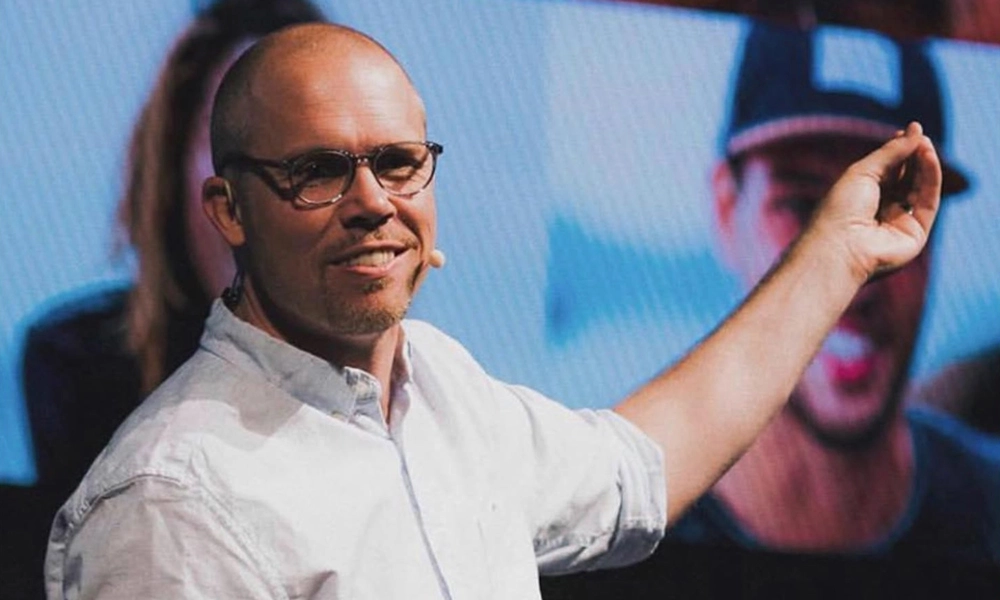
Social Entrepreneur’s Work Shaped by Ministry Experience
Seminary graduate Ben Sand is using his 20 years of experience in social entrepreneurship to launch the Certificate in Community Initiatives program at Portland Seminary
by Audrey Grice
Ben Sand’s passion is social entrepreneurship. Since 2005, he’s been starting programs dedicated to addressing systemic issues like foster care and the wealth gap.
In 2005, he helped launch the Act Six initiative at George Fox University, a program that creates more opportunities for students of color to pursue higher education. With the founding of The Contingent in 2009 and the launch of the Every Child initiative, he expanded his reach to supporting foster care workers and growing the number of foster families in the U.S.
“For the last five years, the number of foster homes has been on a decline across the United States,” Sand says. “We’ve developed an innovation that is changing the trajectory. That is a life’s work for me, and I derive a lot of joy out of that.”
The Contingent's success lies in using data and technology and trust-based relationships to mobilize community members at scale.
Sand was inspired to explore social entrepreneurship after working as area director for Young Life in Central Portland and seeing the systemic issues present in the city.
“The spiritual renewal that young people and families in complex environments desire is oftentimes really hard to integrate when there are fragmented social structures,” Sand says. “I live on the east side of Portland and experienced some really amazing breakthroughs, but also had some sense that we’ve got to go upstream and address some of the systemic issues.”

Venturing Into the Nonprofit World
Determined to make an impact on a bigger scale, Sand jumped into the world of social entrepreneurship and has never looked back.
“This idea of social entrepreneurship is more of a recent phenomenon in terms of vernacular,” Sand says. “But it’s something that we’ve been developing for quite some time. We have a lab within The Contingent called the Action Lab that is built to incubate new initiatives and new ideas using human-centered design.”
According to Sand, The Contingent has incubated 20 nonprofit initiatives over the past 17 years. Current projects include The Script, which aims to empower rising leaders from underrepresented communities, and a wide range of child welfare focused innovations that focus on increasing the number of foster parents getting licensed across America and supporting their retention when they receive placements–all while leveraging new technologies designed to reduce friction for community members stepping forward to serve vulnerable kids and families.
The Contingent is currently responsible for foster family recruitment for the states of Oregon, Arkansas, and Tennessee. The organization’s footprint is expected to expand across the country.
“The nonprofit sector has lagged behind in its ability to use data and technology,” Sand says. “We’re on the cutting edge of that, but there’s also a real sense that what we need is neighbors loving their neighbors really well. And our passion is mobilizing community members to step up and do that.”
After 20 years of launching successful ventures, Sand has also turned his attention toward supporting the next generation of social entrepreneurs.
“My conviction is that what we need now is fewer experts and more pioneers – people willing to think outside the box and take risks to try new things,” Sand says. “A lot of things will fail, and that’s certainly been my lived experience, but there are many examples of things that have really worked as well. We need more leaders to take the dare.”

Mentoring a New Era of Entrepreneurs
In collaboration with the Portland Seminary, Sand is launching the Certificate in Community Initiatives in the fall of 2026.
The program’s aim is to provide visionary Christian leaders with the tools they need to launch a successful social initiative. Sand and Carissa Quinn Bredlie, an experienced educator and coach, serve as the mentors in the nine-month program.
With their unique skillsets, the two leaders guide students through an online degree centered around cultivating innovation.
“The gap between good intentions and effective outcomes is oftentimes a lack of intentionality. We have recognized patterns that show what kind of steps need to be taken in order to have a higher likelihood of success of a social venture,” Sand says. “My hope is to bring my 20 years of learning to the table and help make sure that people don’t make mistakes that I’ve already made.”
The certificate has been a culmination of decades of partnership between Sand and George Fox University that started with the Act Six scholarship initiative and continued through Sand’s completion of a Master of Divinity degree at Portland Seminary in 2010.
“I got really serious about my faith in college and went into ministry and had no formal theological training, so all of my experience was on the streets, in the community, through taking risks and building nonprofit initiatives,” Sand says. “I felt like I was lacking in terms of theological depth, so it was important for me to be able to supplement that.”
Sand discovered that this theological base enabled him to approach entrepreneurship through a new lens.
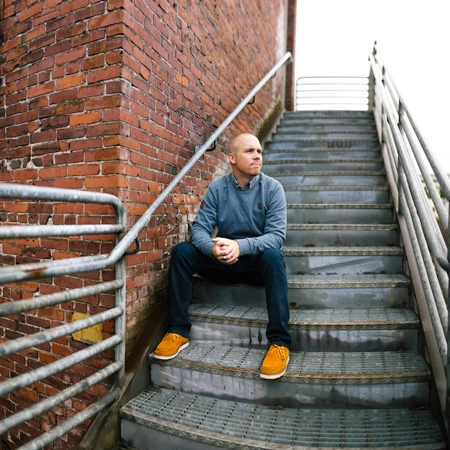
“What the seminary offered me was a theological framework to ground all of my learning and entrepreneurial convictions in a way that also carried a healthy theological premise on how we treat other people and how the ethics of Jesus translate into the marketplace,” Sand says.
“The pastoral track was never my thing. It was more of a recognition that we need people who are able to interact in red and blue environments that can bring moral, ethical and theological imagination into the community.”
But he also saw a need for a seminary program grounded in entrepreneurship. That’s where the Certificate in Community Initiatives comes in.
“I really appreciate the orthodoxy that I was steeped in, but also found that there was some orthopraxy that was lacking for my particular passion,” Sand says. “I had to figure out how to translate what I was learning in seminary in the arena. There’s value in having a certificate opportunity for students that want to get steeped in both orthodoxy and orthopraxy in an entrepreneurial way that may be outside of the traditional route of becoming a pastor.”
With the combination of his theological training and entrepreneurial experience, Sand hopes to equip individuals inspired by their faith to build the kingdom through creating new community-based social ventures.
“If there’s ever a moment for us to invest in that way in light of what we’re seeing in society today,” Sand says, “it’s now.”

Related Posts
Navy Corpsman Overcomes Hurdles to Chase CRNA Dream
After weathering academic hardships, a chronic illness and personal doubt, veteran Wayne Dorman finds himself in George Fox University’s Doctor of Nursing Practice program

Why Earn a Masters in Social Work (MSW)?
George Fox University MSW program director Rebecca Yazzie explains the opportunities and versatility you get with a Masters in Social Work.

Lasting Legacies
Five retiring employees reflect on what kept them at George Fox a combined 137 years

Grapes of Math
George Fox computer science and engineering students are developing an autonomous robot that could drastically change the way vineyard owners predict their harvest

Foster Parents Night Out
Each month, George Fox students get the opportunity to serve local foster kids, giving parents a chance to relax and recharge