
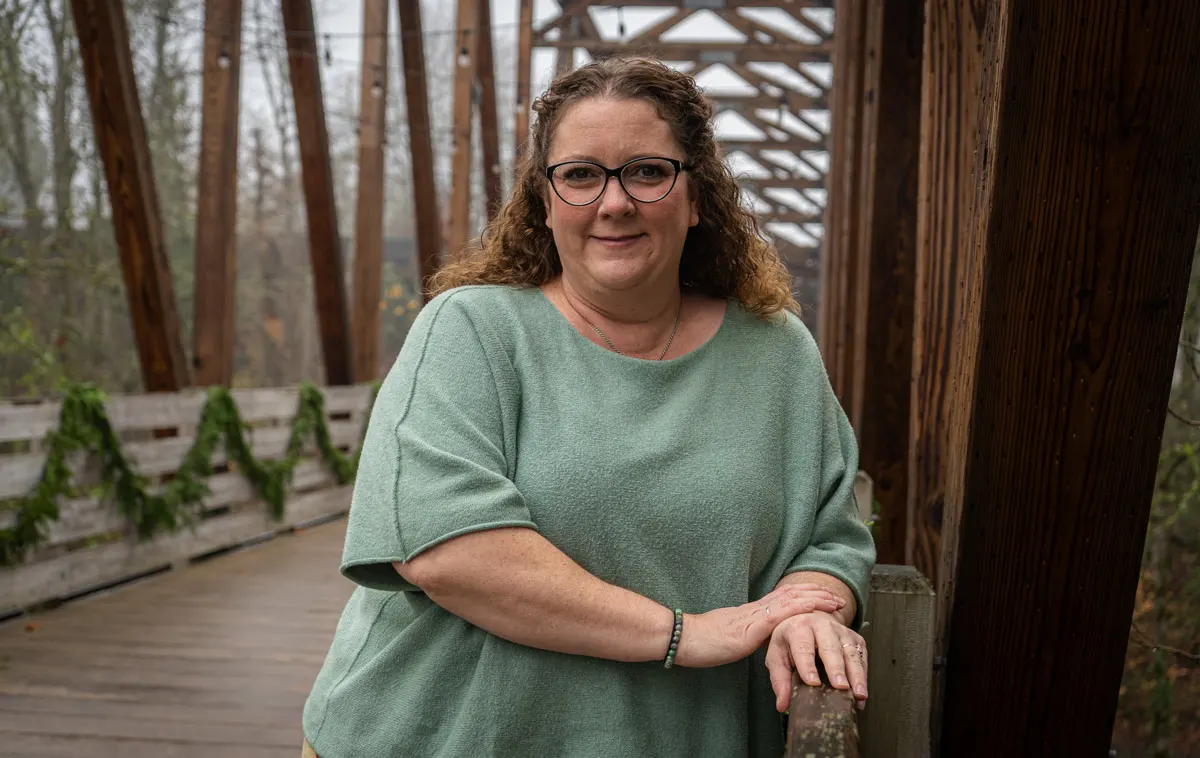
Empowered So She Can Empower Others
Emilia Reynolds discovered a newfound strength in completing her healthcare administration degree online. Now, she faithfully serves others in hospice care.
by Brooklyn Monroe Chillemi
Drawn to Service
Emilia Reynolds was a stay-at-home mom for 16 years while her children were younger, serving as a consistent caretaker. When she considered returning to work, she wanted a position that had similar goals: one where she could spend her time finding creative solutions with a heart for helping others.
Raising children, including one with intense special needs, made caregiving a natural transition back to the workforce. She worked in home health and hospice, making her way into a project coordinator role before deciding it was time to go back to school for her bachelor’s in healthcare administration at George Fox.
Along the way, she developed a passion for end-of-life care and found her work aligned closely with her values.
“As people age, our communities aren’t always prepared with how to best care for them or how to honor their dignity as an individual,” she says. “End of life is a sacred space that we are often fearful of, but it can be a time where there’s a lot of healing and closure.”
Strength in Connection
As she jumped into George Fox’s Accelerated Online Degree program, Reynolds never imagined the doors it would open.
“I know the billboards say ‘Be Known,’ and it could just be a slogan, but I feel like our professors really invested time in getting to know us by doing extra Zoom calls and providing spaces for us to have conversations,” Reynolds says. “They were always really gracious and worked with what we were doing outside of school.”
Her instructors held leadership positions in the healthcare industry, so they knew from their own experiences what it was like in her field. A few of them knew the organization she worked for well, and were able to offer valuable perspectives.
“It was really helpful to learn from them because they understood the same philosophy that I was working under in my job,” Reynolds says. “There were a lot of real-world applications, and in addition to providing the instruction and the support, my professors became mentors.”
When Reynolds would encounter situations at work that mirrored what she was learning in class, she was able to directly apply the course material to her work experiences.
“I felt like I had my own case studies every week from my work, and I could just draw from those,” she says. “The courses were really relevant to what I was experiencing in the workplace.”
She even had the opportunity to step into a role as a healthcare executive, with the support of one of her professors, while she was in the program. Although she quickly found that the corporate side of long term care was not for her, the experience was invaluable.
“As much as healthcare administration is about budgeting and staffing and revenue, it’s also about the people you’re managing – those relationships are extremely important. I’m really proud of the rapport I built with my staff during that time.”
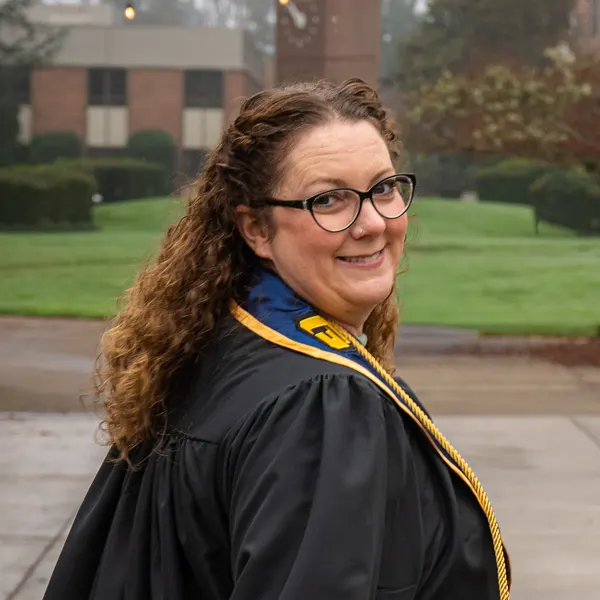
Real-Life Self-Empowerment
Strong connections with faculty opened up another unexpected opportunity: Reynolds was invited to attend a conference held by the American College of Healthcare Executives with one of her professors.
“That was hugely eye-opening and inspiring, because I was able to go directly to healthcare executives at larger hospitals and different health organizations,” Reynolds says. Sitting side-by-side with CEOs, she was able to ask questions and share her experiences directly with them.
“It helped me to realize that the leaders are people too, so they’re running into challenges, looking for inspiration, and trying to figure out how to motivate their teams, just like I am,” Reynolds says. “Seeing them hash out these challenges while being willing to invest in a student like me was really appreciated.”
Conferences like these, alongside her coursework, gave Reynolds the chance to see the healthcare system from a variety of perspectives, including systems that she is not necessarily involved in, but is often impacted by.
“This degree has really helped me be prepared to feel confident going into all sorts of different settings. It’s given me confidence in talking to the C-suite leaders, administrators and CEOs, and not to feel intimidated because I can better understand where they’re coming from. I now have the language to articulate what I need to, whether it’s to share our services or address a concern or a problem that we're having to help remove roadblocks to care.”
Serving in Faith
“Before I pursued my degree, I was coming off some very challenging years,” Reynolds says. “I think my degree helped me rebuild myself.”
“I was at a point where I really needed to see my value. The opportunity to pursue my education later in life was a huge gift that God has used to enable me to have a role where I get to serve others, and give resources, education, and meaning in places where people are really feeling broken and challenged.”
Studying at George Fox allowed her to bring her faith into her coursework, which was especially fitting for her work in end-of-life care. In the hospice field, there is an emphasis on physical, emotional and spiritual needs for the patient, so Reynolds has always infused her faith into her work.
“The end of a life can be a time to connect with people at a very vulnerable point,” Reynolds says. “To be invited into that to offer support, or even just to witness those last interactions with family members or come alongside the clinicians as they’re supporting patients, is really sacred. I see it as a way that I can honor the Lord in the way I interact with people, by loving them unconditionally and trying to connect them with the right people or resources.”
Empowering Others
Now, Reynolds serves as a hospice community liaison at Signature Healthcare at Home, where she equips healthcare providers and the families of hospice patients with tools to support hospice patients.
“The goal is to provide environments that are supportive and empowering,” Reynolds says. “Death isn’t something that our culture is extremely comfortable with or handles well, so I’m trying to educate people on what hospice is. It’s not giving up — it’s providing wraparound support, with a network of resources and emotional, spiritual, and physical support for the entire family.”
Reynolds came away from her degree more inspired to help her team feel involved in decision-making processes and with a clearer vision of the kind of leader she strives to be.
“I want to be a leader who can relate to the actual work that’s being done and can effectively involve all of the stakeholders,” Reynolds says. “That was something that was drilled into us during our classes: making sure that all of the stakeholders are involved in decision-making, and that everyone has a voice.”
“As a leader, you have the power to really impact others’ experiences and how they do their work, and you can either empower them and equip them to be leaders in their own right, or you can really diminish their strengths. I want to be someone who empowers others.”

Related Posts
The Future Is Bright for George Fox Pre-Meds
How a new agreement with A.T. Still University gives students an inside track to pursuing their dream and potentially solve a doctor shortage
'A Career That I Love'
Inspired by a mother who cared for her and her own life circumstances, Cynthia Molina is changing lives as a social worker with Boys & Girls Aid in Portland
Enabling People to Push Forward
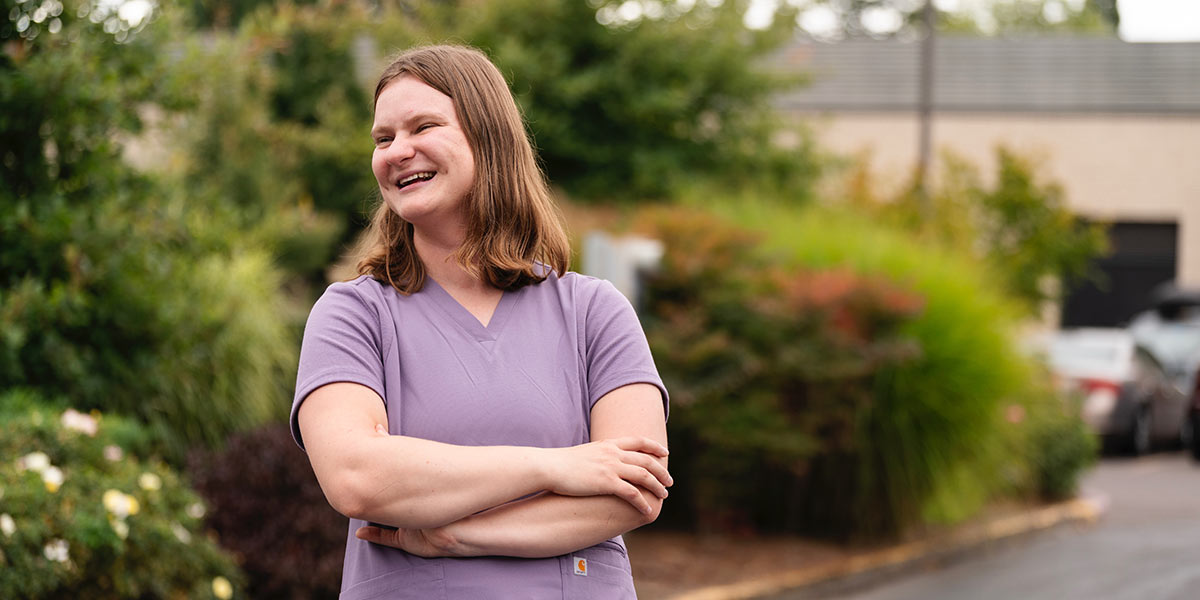
OT student Oksana Tompkins has had a heart for helping people since her days as a child in a Russian orphanage.
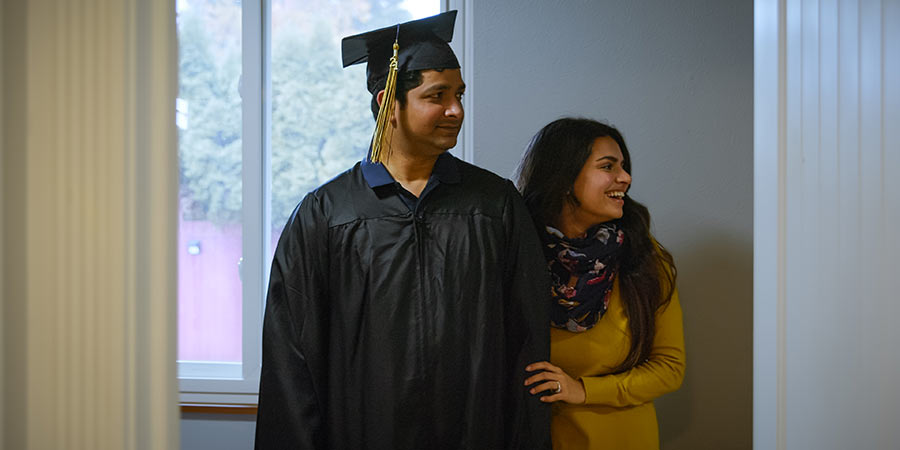
Fox Fast Facts: Accelerated Online Degrees
Get your degree from a nationally recognized university. Be an asset at work and an example to your family. Learn more about our Accelerated Online Degrees, designed for working adults.
Your Life Counts Here
Getting college credit for the experiences that shaped her helped Emily move forward
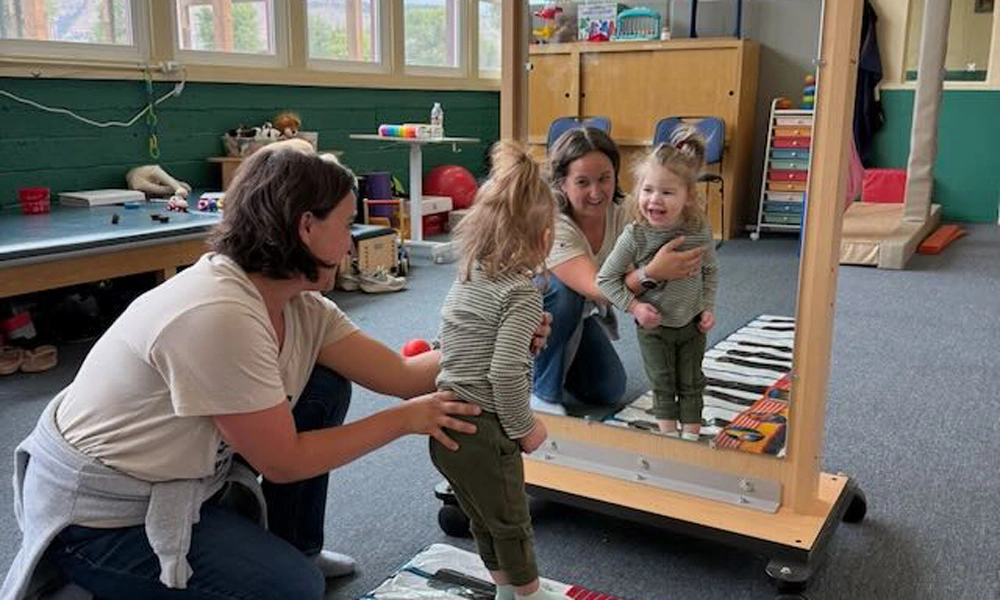
Leaps of Faith
Like any muscle, faith is strengthened with exercise – and Kayla Taylor, owner of Tater Tots Pediatric Therapy, has gotten plenty of reps in her career.