
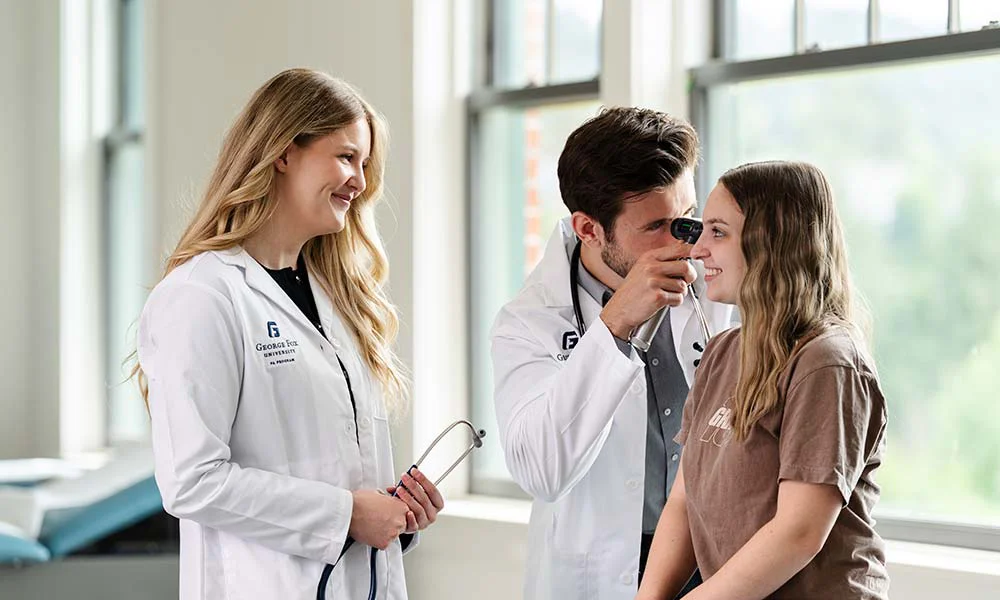
Formation Beyond Professionalization: Reimagining Healthcare Education at George Fox University
By integrating faith and healthcare, we aim to cultivate three core virtues of wisdom, moral courage, and neighbor-love to address a quiet crisis in modern healthcare.
by Travis Pickell, PhD
There is a quiet crisis unfolding in modern healthcare, one that begins long before a practitioner ever steps onto a hospital floor.
The crisis is rooted in a fundamental tension: healthcare is, by its very nature, a high calling. The vast majority of students who choose to pursue nursing, medicine or allied health fields do so animated by lofty ideals. By and large, they desire to heal, to comfort, and to serve. Yet, the reality of contemporary healthcare is often alienating. Structured around efficiency, metrics and bureaucratic complexity, the system frequently distances practitioners from their original sense of purpose. The road to these professions is increasingly littered with disillusionment, moral distress, and burnout.
This presents a profound puzzle for those of us who teach aspiring healthcare professionals: How do we prepare students for the brokenness of the healthcare system without undermining their high calling?
At George Fox, we believe the answer requires shifting our focus. Traditional medical and pre-professional education heavily emphasizes professionalization – the acquisition of technical competencies, scientific knowledge, and resume-building credentials. While these are necessary, they are insufficient for sustained flourishing in one’s vocation over time.
To counter this, we must commit to intentional formation. We must shape not only what our students know and do, but who they are. By integrating faith and healthcare, we aim to cultivate three core virtues of wisdom, moral courage, and neighbor-love.
Head, Heart and Hands: The Architecture of Moral Formation
At George Fox, our mission is to be “a Christ-centered community that prepares students spiritually, academically, and professionally to think with clarity, act with integrity, and serve with passion.” When applied to healthcare, this educational philosophy maps onto a holistic model of virtue development.
This model recognizes that ethical dilemmas in medicine are rarely just intellectual puzzles solved by applying a sterile formula. They are deeply human encounters that require personal qualities, like moral perception (attention), emotional resonance (compassion), and the fortitude to act (courage).
Characteristics like these are shaped in many ways, like building good habits and practices, reflecting on personal experience, and learning from role models. Our aspiration is to go beyond “resume virtues” (the skills that you bring to the marketplace) to “eulogy virtues” (qualities that define a life well-lived).
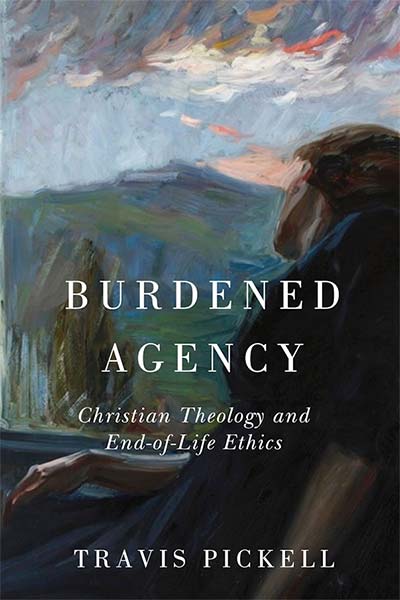
Burdened Agency: Reimagining Choice and Finitude at the End of Life
The necessity of this deep formation became acutely clear to me while researching and writing my book, Burdened Agency: Christian Theology and End-of-Life Ethics. In contemporary bioethics and secular medical culture, “autonomy” is often portrayed as an undisputed goal. Modern medicine has adopted a moral imperative to harness technology to eliminate suffering and exert absolute control over our physical circumstances, especially near the end of life.
But in reality, this secular ideal of total control is an illusion. When patients and clinicians actually arrive at the edge of life, they do not experience autonomy as liberating; they experience what I call “burdened agency.”
Because of rapid technological advancement, death has been thoroughly medicalized. What was once a “given” is now a matter of agonizing “deliberation.” Families and patients are forced to decide exactly when to stop curative measures, whether to transition to hospice, or even whether to pursue medical aid-in-dying. At the same time, these high-stakes decisions are increasingly made in isolation. Bereft of traditioned communities of wisdom, individuals are forced to look inward, relying solely on their own moral intuitions.
To navigate this fraught landscape, healthcare professionals and patients need a radically different way of approaching end of life. In Burdened Agency, I explore how we might retrieve rich theological resources to construct an alternative framework, which views our physical finitude not as a technological failure to be corrected, but as an aspect of our creatureliness.
Christians, formed within a community of character, may learn to forsake the illusion of power and control. By practicing a radical, Christ-like letting go (“kenosis”), patients and clinicians find the freedom to stand in solidarity with the suffering rather than desperately trying to master every outcome. We learn a posture of receptive agency – an active, faithful surrender that neither seeks to excessively ward off death through futile medical intervention, nor prematurely hastens the end.
At the same time, the Jesuit theologian Karl Rahner reminds us that death is not merely a passive biological event that happens to us, but the crowning active deed of a human life. When modeled on Christ’s self-surrender on the cross, death becomes an opportunity for active, faithful witness. Understood this way, facing death can become a final offering of love and trust that reconciles our limited agency with our ultimate acceptance of God’s sovereignty. Importantly, however, it’s not just a matter of having the right ideas. The patience, humility and faithfulness that is required to live this out are all related to the formation of character.
Translating these ideas into the classroom has been one of the most rewarding aspects of my vocation at George Fox. In my upper-level seminar, “Theology and Philosophy of Death and Dying,” undergraduate students grapple directly with these themes. My goal is to shift students away from viewing medical ethics as a series of abstract “dilemmas” to be solved by a clever calculation at the moment of crisis. Instead, we use memento mori practices to help them realize that death is not just something that happens to patients; it is something that will happen to them.
As one student reflected in their course evaluation, these exercises “were pointed ways to make learning about death not simply about something that happens to other people, but something that will happen to me. I will die.” Another student shared that the course “stretched me in my understanding of my place and work in this world and whether or not I am doing it right when considering my impending death and the impending deaths of others.”
By engaging with these practices and texts, we show students that the capacity to make faithful, wise decisions at the bedside is not generated on the spot. It is the natural extension of a character already formed through practices shared in more robust moral communities.
Healthcare and the Integrated Life
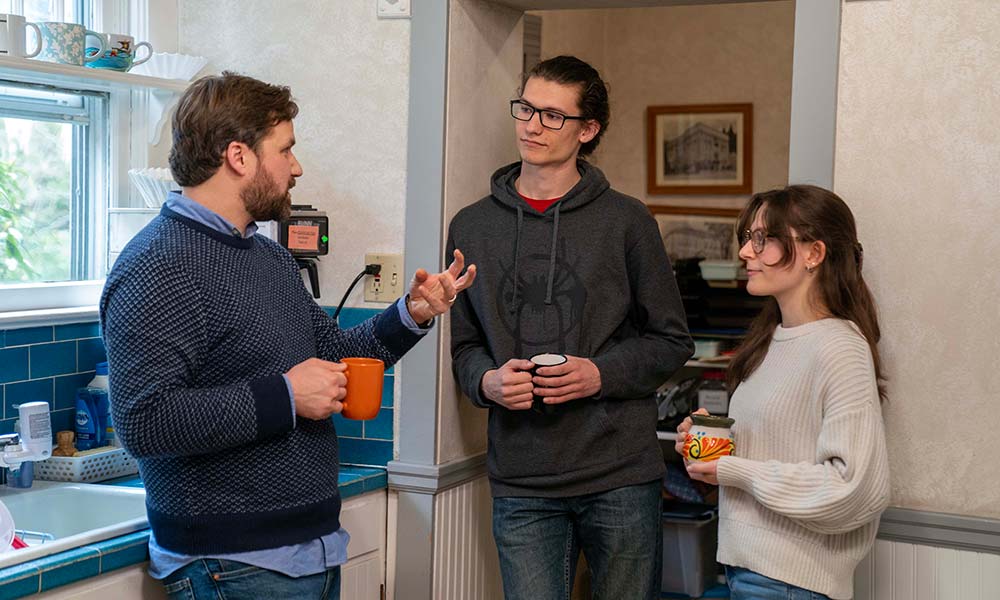
While the “Death and Dying” seminar addressed theoretical and theological scaffolding, we also must create dedicated spaces where pre-health and nursing students can practice these virtues in community. To meet this need, I established the Healthcare and the Integrated Life program.
This year-long, cohort-based program brings together approximately 10 to 14 pre-health and nursing students for monthly meetings. Rather than meeting in a lecture hall under fluorescent lights, we gather around the dinner table in my home. This setting is intentional. Hospitality and commensality (sharing meals) lower defenses and foster genuine dialogue and friendship.
Each meeting focuses on a specific character virtue, such as Attention, Compassion, Courage, Faith, Hope, or Love. We pair these themes with readings, art, poetry, and concrete practices.
To cultivate the capacity to truly see patients, we may read a poem like W.H. Auden’s “The Surgical Ward,” and practice “attending” together by writing our own poem or by taking a silent nature walk. To move beyond clinical detachment and toward the virtue of compassion, we may gaze at Matthias Grünewald’s agonizing depiction of the Crucifixion, listen to stories of profound suffering, and physically write a letter to someone who is suffering.
To prepare students to speak up when the system demands compromise, we may explore examples of moral courage, like Peter Buxtun (the Oregon-born whistle-blower in the infamous Tuskegee Syphilis Study), or discuss a clip from the film Of Gods and Men, analyzing the cost of staying faithful under pressure.
We also invite local healthcare practitioners and guest faculty to join these dinners. These mentors act as living “virtuous exemplars.” Interestingly, this space has proven just as vital for the practitioners as it is for the students. One visiting M.D. wrote to me after a session:
“Thank you for including me ... [This] home-cooked meal and thought-provoking conversation must have felt so life-giving to the students. But what I wasn't expecting is how important and refreshing this will probably be for each of the guests ... It’s easy to become tired and jaded, and spending a Sunday evening with honest, purposeful youth will be refreshing to the souls of those who are in the trenches.”
The Goal: Professionals Who Flourish
In a higher education landscape dominated by a rush toward narrow specialization and careerism, it’s more important than ever to remain committed to the liberal arts ideal of holistic, Christian character formation.
We do not want to send our graduates into the medical field merely as highly skilled technicians. We want them to go as wise, courageous and compassionate neighbors who are spiritually anchored enough to withstand the systemic storms of modern medicine. By forming their heads, hearts and hands in the context of community and Christian faith, we believe we are preparing them not just to survive in their careers, but to bring Christ’s healing and hope to a broken world.
Related Posts
Message from the President - Unique Creations of God
Robin Baker discusses how the Class of 2024 is characterized by resilience, grit and commitment.
Beyond the Classroom: Building Lifelong Bonds Through Weekly Devotions
For Professor Kristy Asbell, her Life Group girls are the undisputed highlight of the week.
The Roads Not Taken
Faculty members Stanley Paul, Trevor St. Clair and Kate Turner didn’t set out to be occupational therapists, but they ultimately couldn’t shake the appeal of the profession

Keeping the Faith
CEO Aly Salz found her calling to ministry in an unexpected place – her business
A Way Out, A Way Forward
After years of homelessness and addiction, Tia Renner found sobriety, purpose and an unexpected path to law school, pursuing her dream to become a voice for others
A George Fox Legacy – In Reverse
After four decades of waiting, it was Susan Marcu’s turn to walk across the stage