The Paintings
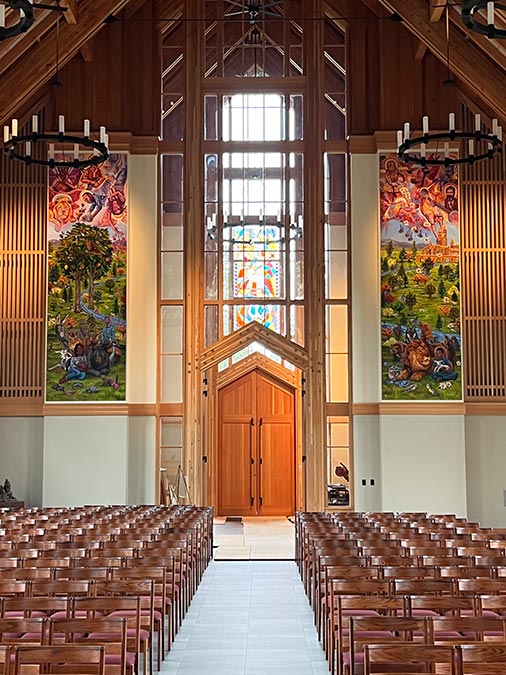
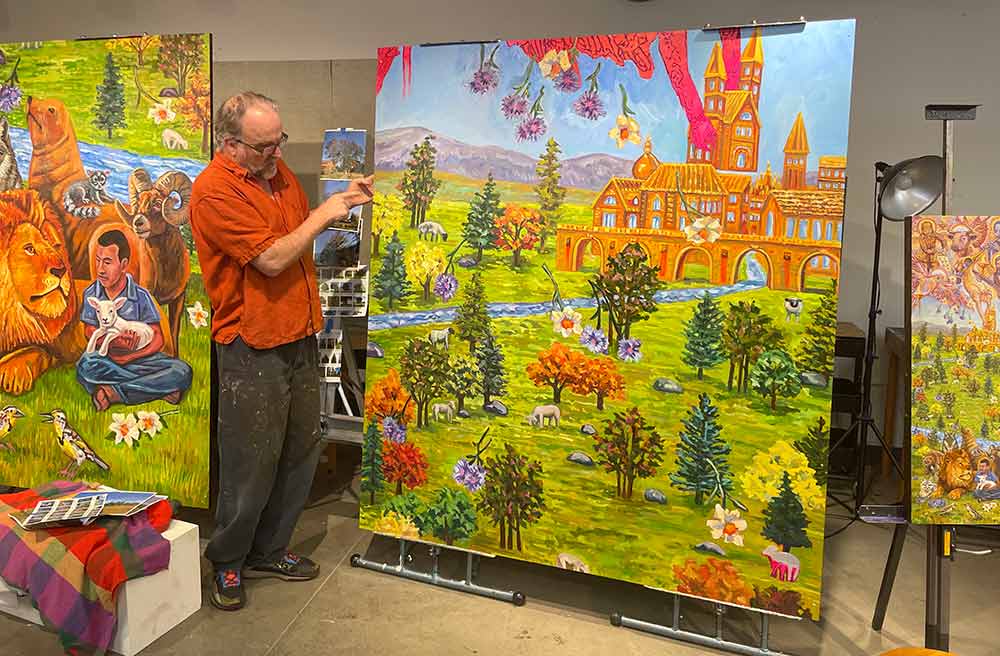
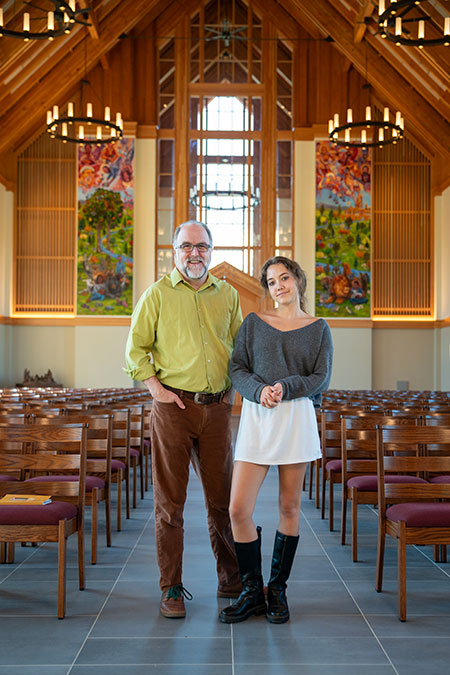
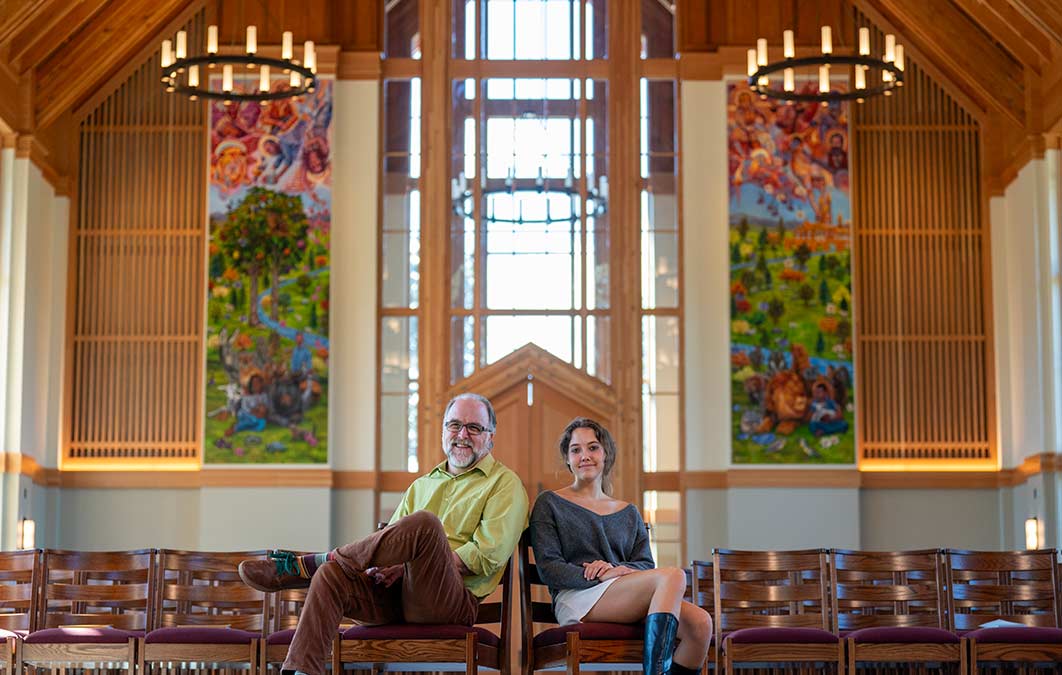
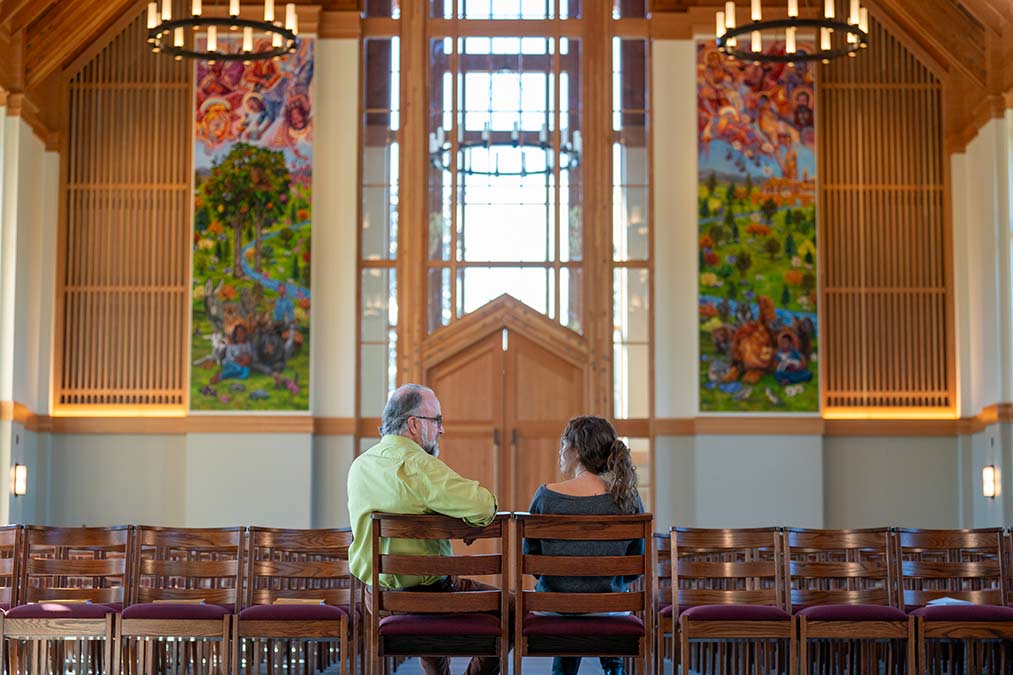
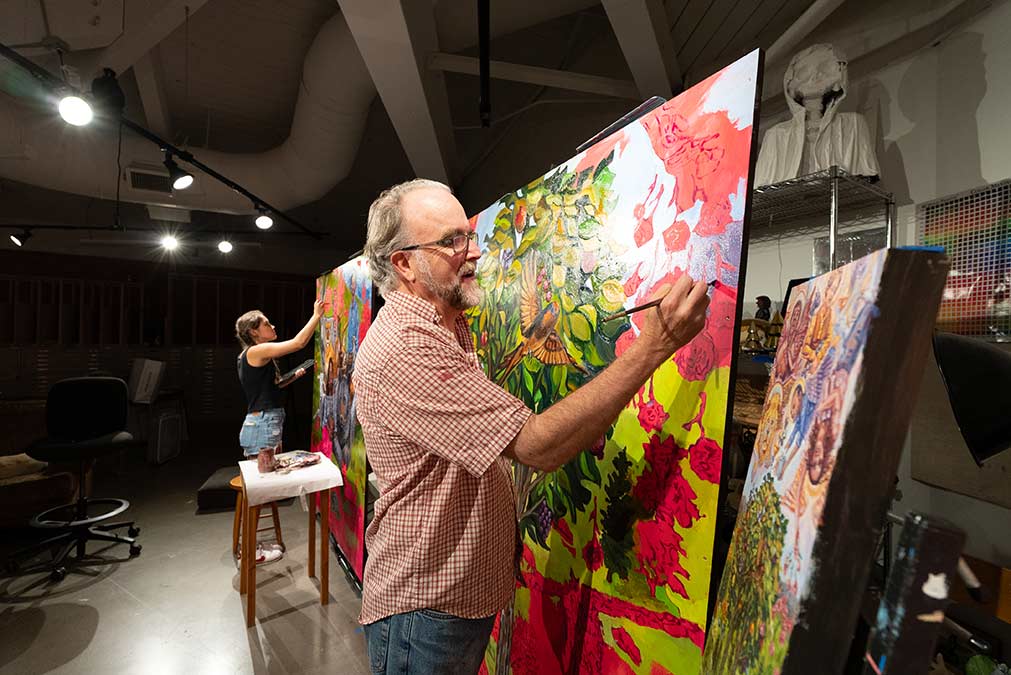
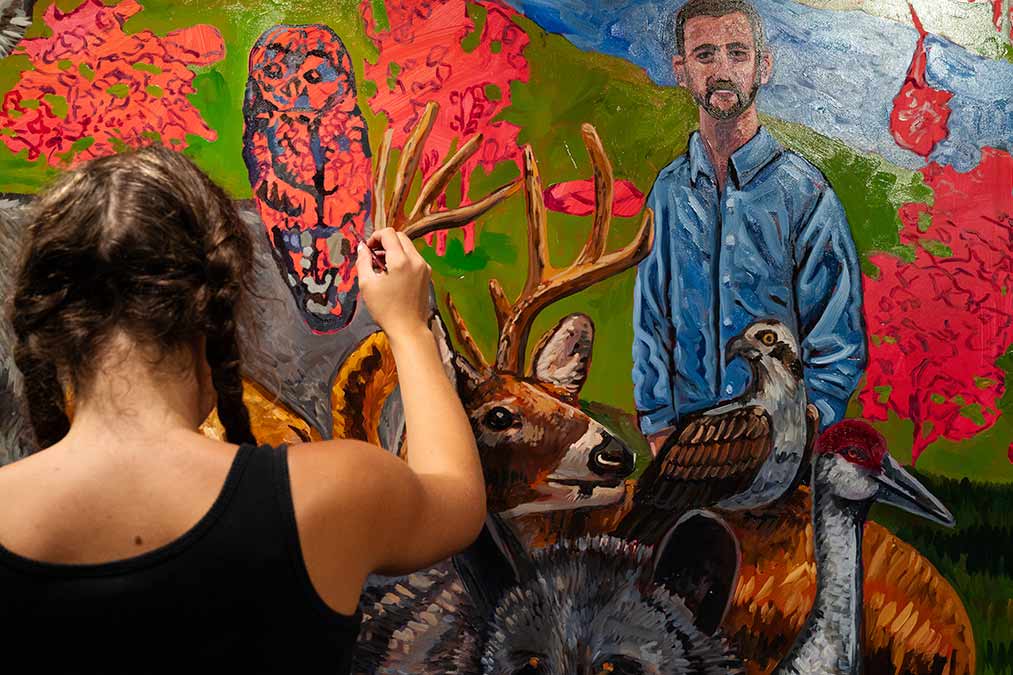
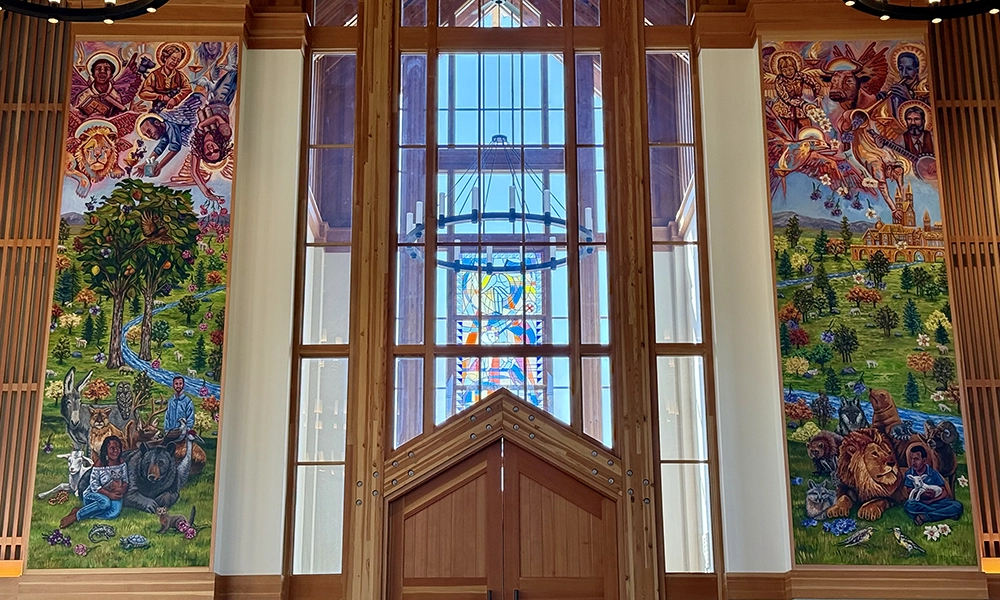
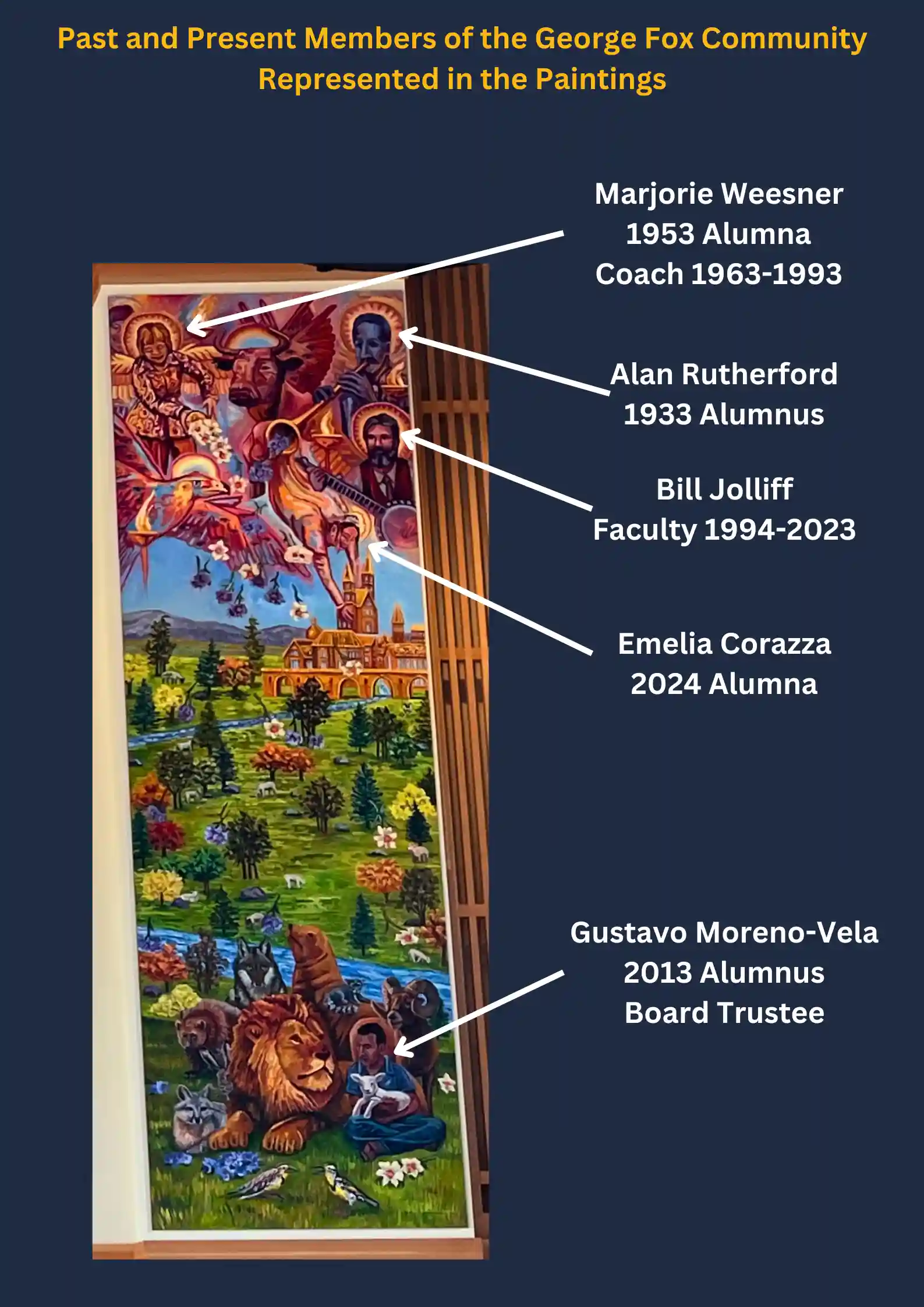
Professor Timmerman, with the assistance of art student Alissa Hrushka, hand-painted two five-foot-wide by 17-foot-tall paintings entitled The Peaceable Kingdom Come on the back walls of the chapel. It can be viewed as you leave the building.
His inspiration for the paintings stems from the messianic prophecy in Isaiah 11, known as the "Peaceable Kingdom," as well as the work of 19th-century Quaker minister and artist Edward Hicks, who created over 60 paintings inspired by this chapter. The Scripture describes a harmonious coexistence where children lead animals that are typically predators.
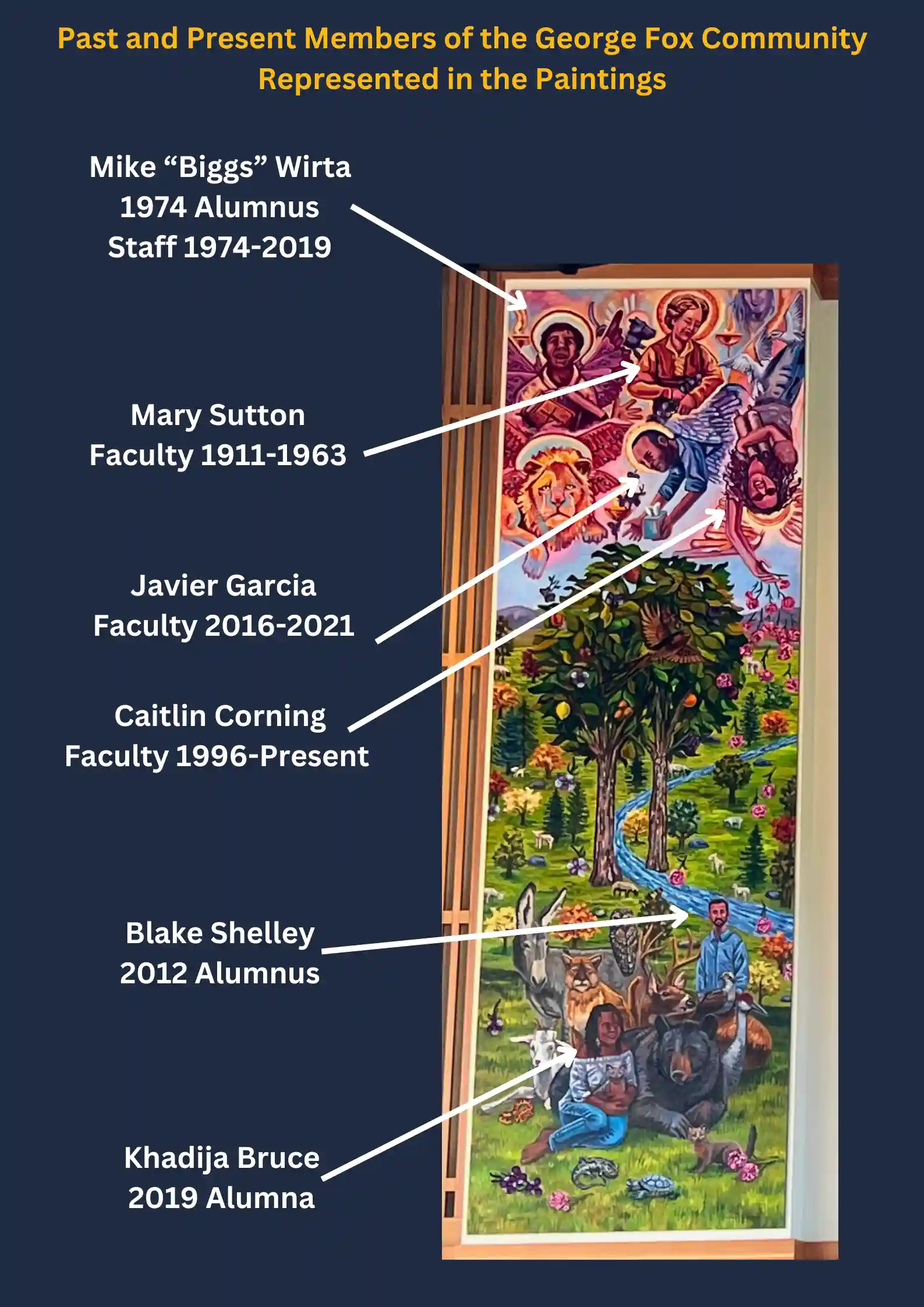
In Timmerman’s work, a blend of biblical animals and those native to the Pacific Northwest is depicted. In this case, it is not children who guide this peaceful community, but rather students represented by George Fox alumni.
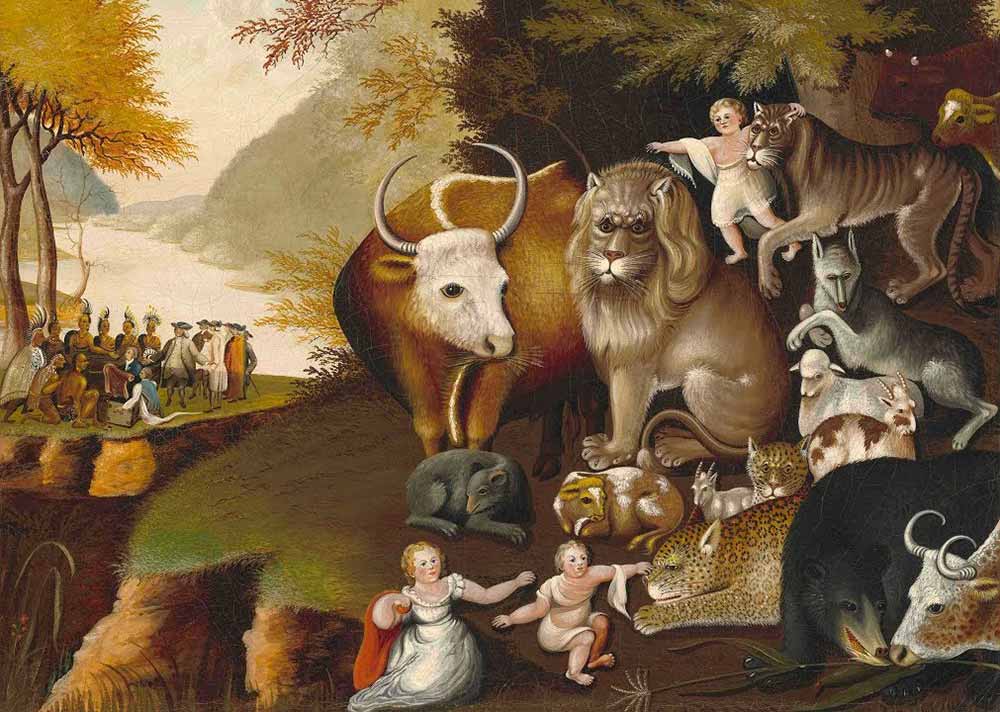
Peaceable Kingdom by Edward Hicks
The work draws significant influence from Revelation chapters 4, 21, and 22, as well as the traditional imagery rooted in Christian heritage. This is reflected in the symbolic winged animals representing the four gospels, such as the ox and lion, the seven lampstands, and the tree bearing 12 fruits, whose leaves bring healing to the nations. Kingdom Come descends from above, with angels resembling past and present members of the George Fox community, joyfully scattering symbolic flowers or gently offering tissue boxes to wipe away every tear. The work beautifully captures the life and hope Christ brings both for this world and the next.
Seasons of the Faithful
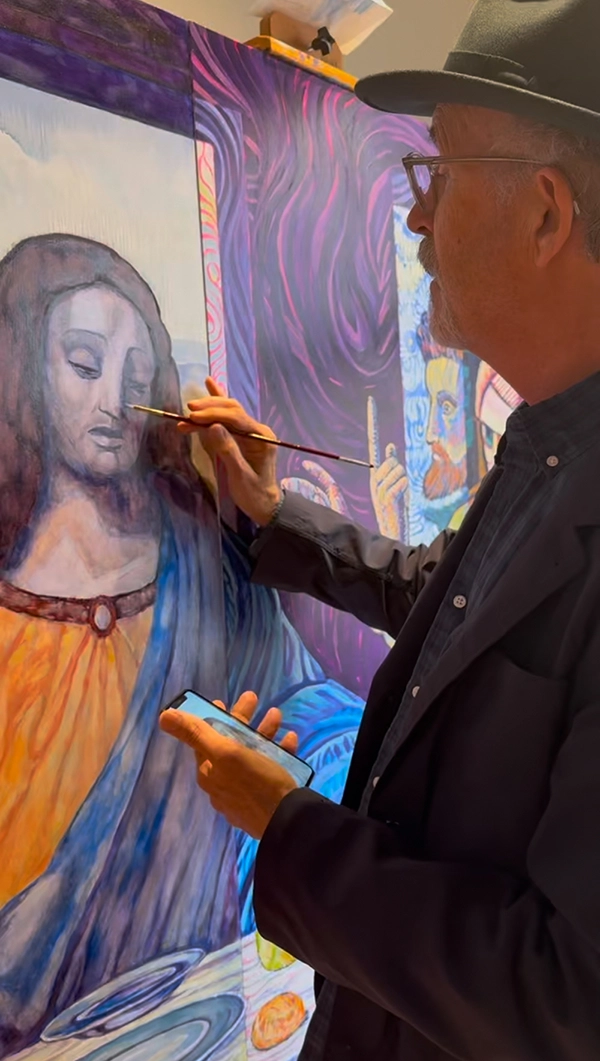
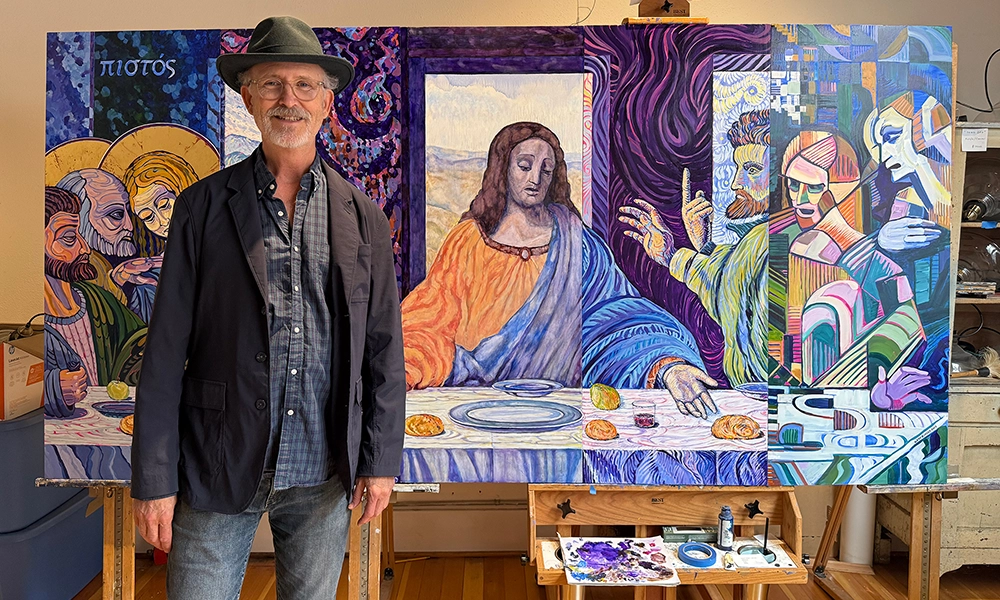
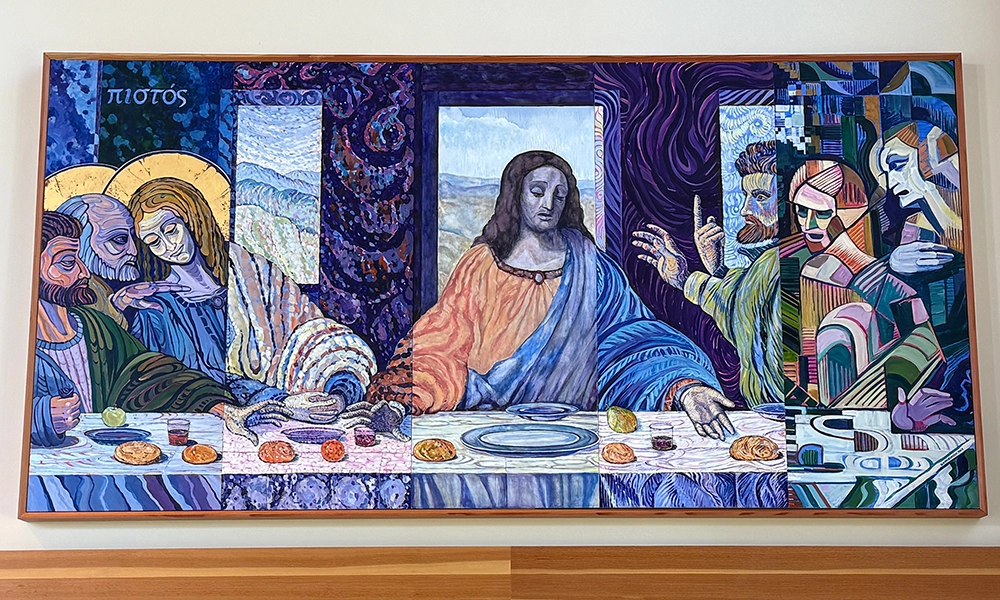
Inspired by Leonardo da Vinci’s iconic The Last Supper, this piece, called Seasons of the Faithful and painted by Professor Emeritus Gary Buhler, mirrors the classic composition capturing the exact moment Christ reveals that one of his trusted followers will betray him. However, in this interpretation, the narrative transcends its original historical setting. Each of the five panels is rendered in a distinct style borrowed from art history. Moving from left to right, the visual language progresses through the Byzantine tradition, Impressionism, the High Renaissance, early Expressionism, and Cubism.
Buhler chose this stylistic evolution to symbolize the passage of time and the vast tapestry of cultures that have encountered the Gospel over the last two millennia. While the artistic movements shift dynamically across the canvas, Christ remains anchored at the exact center. This structural choice demonstrates Christ as the ultimate center of the church, while intentionally reflecting George Fox University’s own Christ-centered mission and focus.
Much has changed in the 2,000 years since Christ walked the earth, yet the faithful still look to him as the unchanging, unwavering author and perfecter of our faith. While we are guided by Scripture, the church and the Holy Spirit on our journey toward sanctification, we also contend with the baggage of our respective cultures and our old sin natures – each generation encountering unique pressures that challenge our devotion.
Buhler’s hope is that Seasons of the Faithful encourages believers to persevere in their commitment to Christ in the face of cultural, personal and political tides. As we grow in grace, may his beauty and truth become ever clearer to us while we live out our own seasons of faithfulness on this earth.