The Stained Glass
Through much of human history the vast majority of people were illiterate. Although Christianity, and Judaism before it, were religions of the Word, few people could read the sacred texts. Beginning around the seventh century, church leaders developed stained glass to illustrate Bible stories for congregations who could not read. These colorful designs filled architectural spaces with storytelling light, turning buildings into living symbols of divine presence. The goal was to communicate God’s word through light and color.
Stained glass became more than decoration – it was a defining element of church identity. Craftsmen developed intricate patterns and vibrant hues to create cathedral windows that seemed to breathe with life. The artistry of these masterpieces elevated even the humblest chapel into a house of awe. From Gothic arches to modern sanctuaries, the spirit of stained glass remains a cornerstone of sacred design. Stained glass serves as a visual form of worship, teaching Scripture, inspiring reflection, and transforming the church interior into a space of divine illumination. Through both image and color, it bridges faith and art in a way words alone cannot.
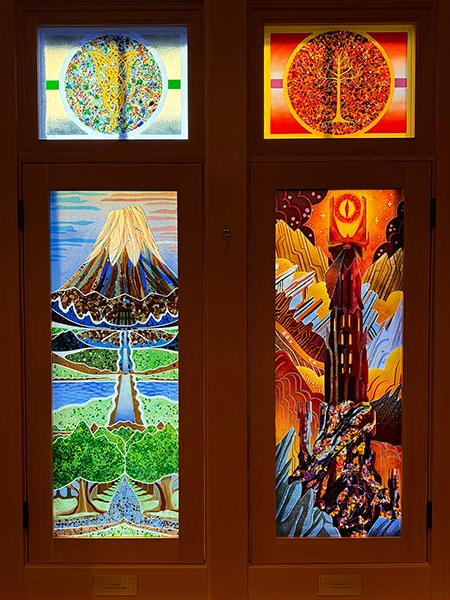
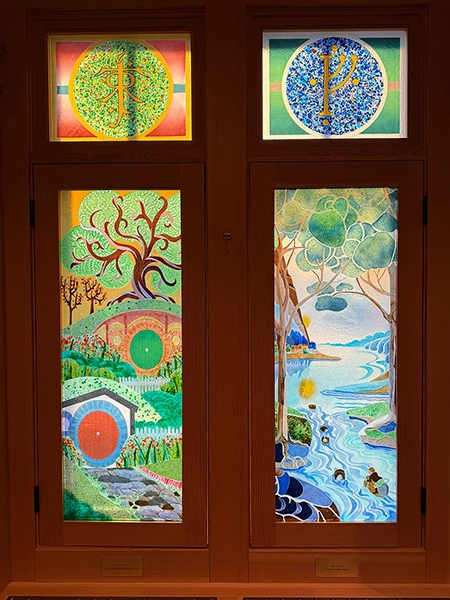
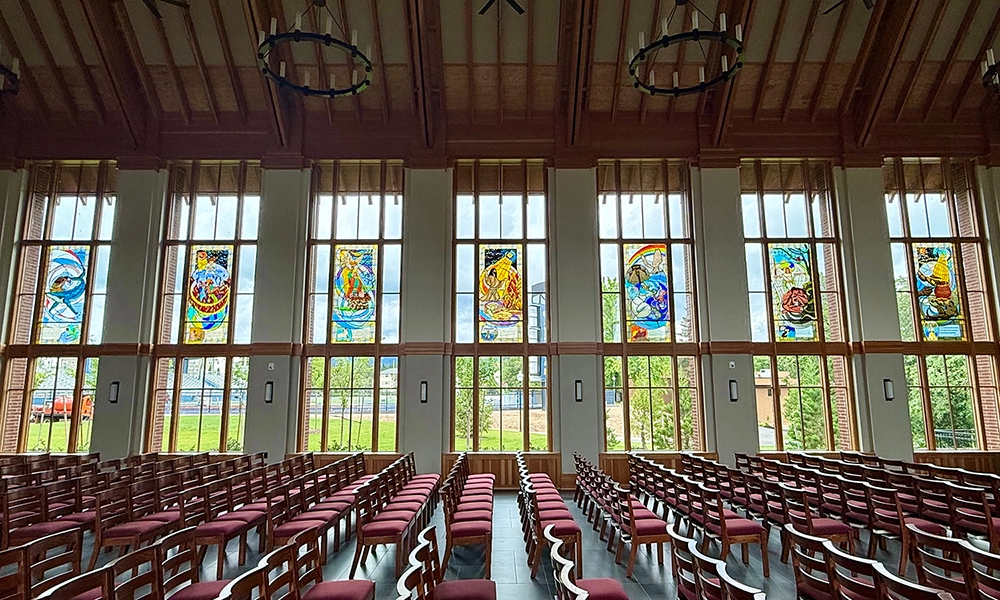
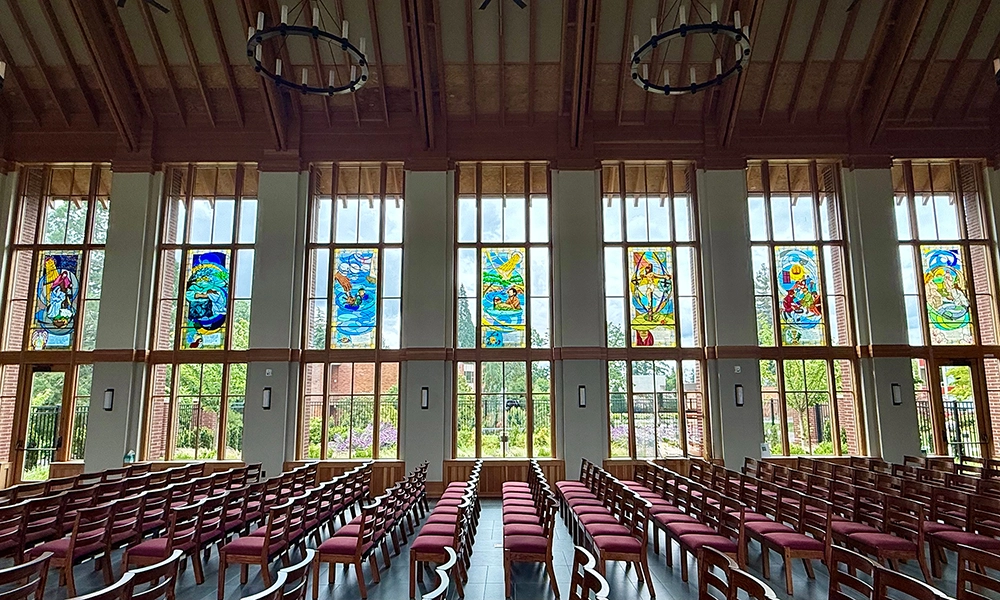
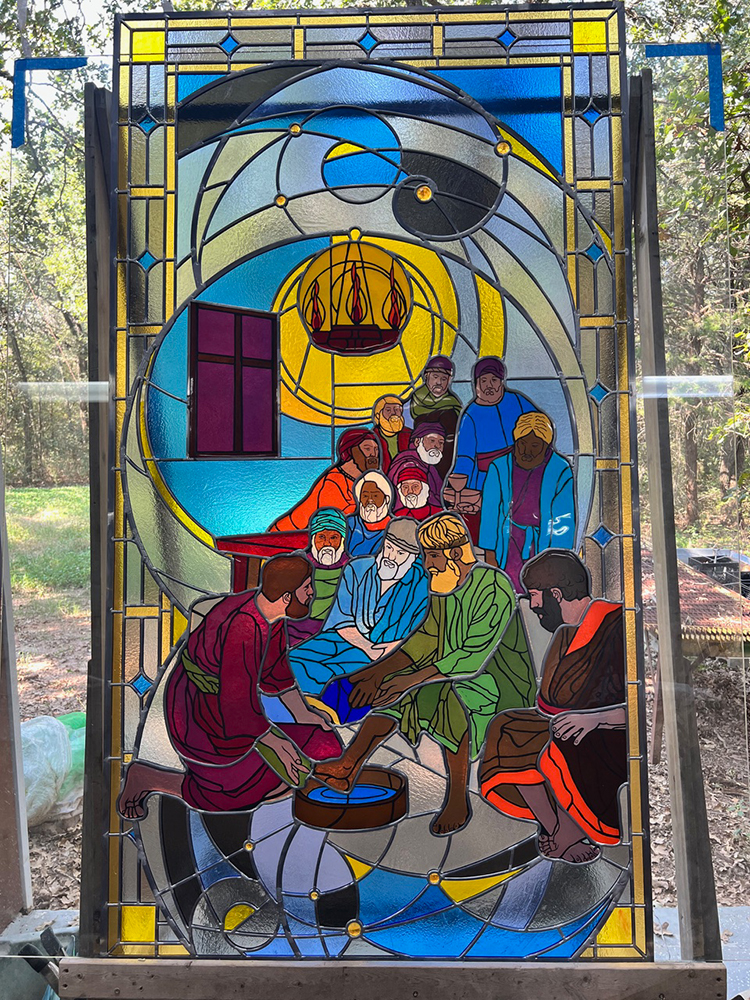
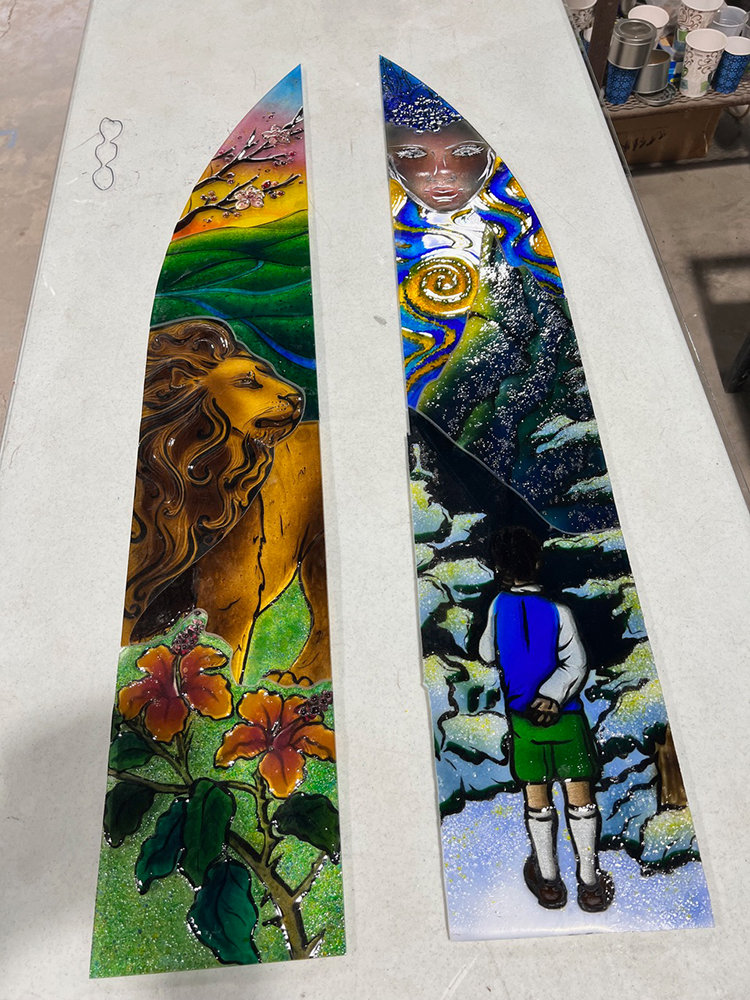
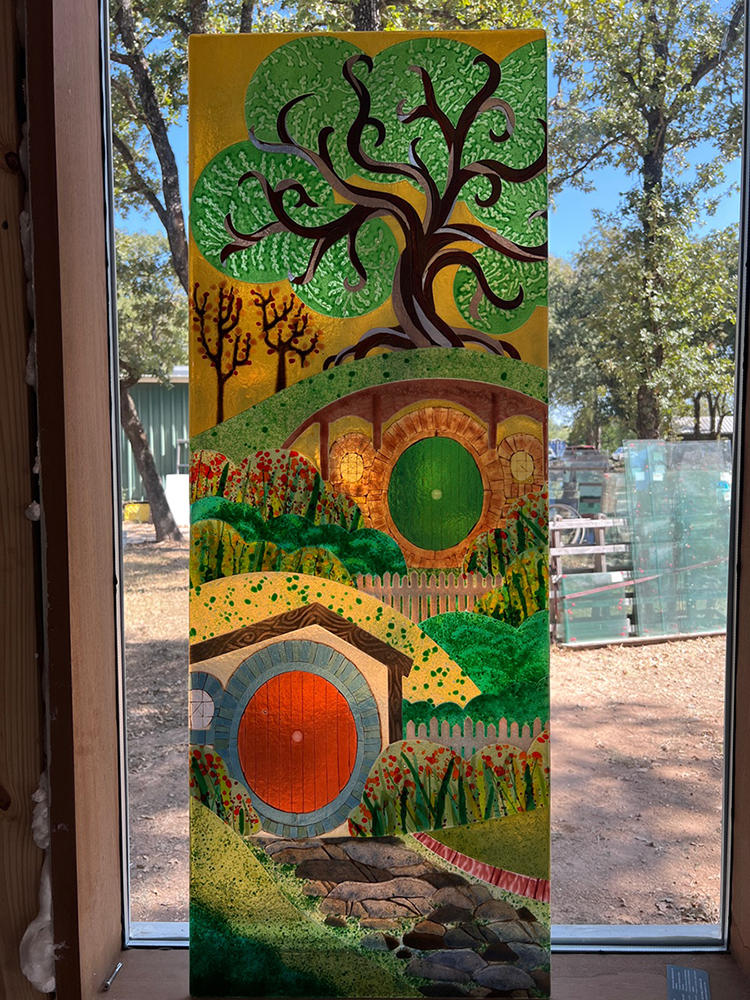
The chapel features 23 stained-glass windows, with seven on the left wall depicting Old Testament narratives and seven on the right illustrating New Testament stories. A stained-glass cross overlooks the nave, positioned above the altar. Additionally, the chapel library is adorned with stained-glass windows inspired by the works of C.S. Lewis and J.R.R. Tolkien.
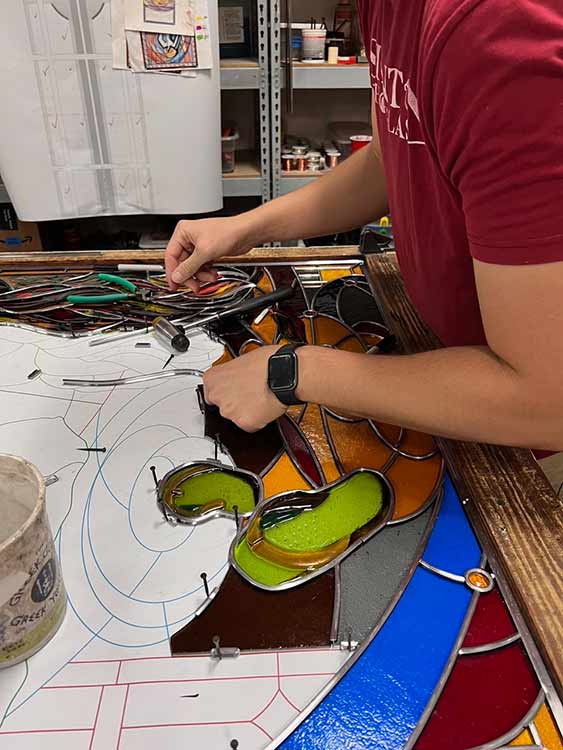
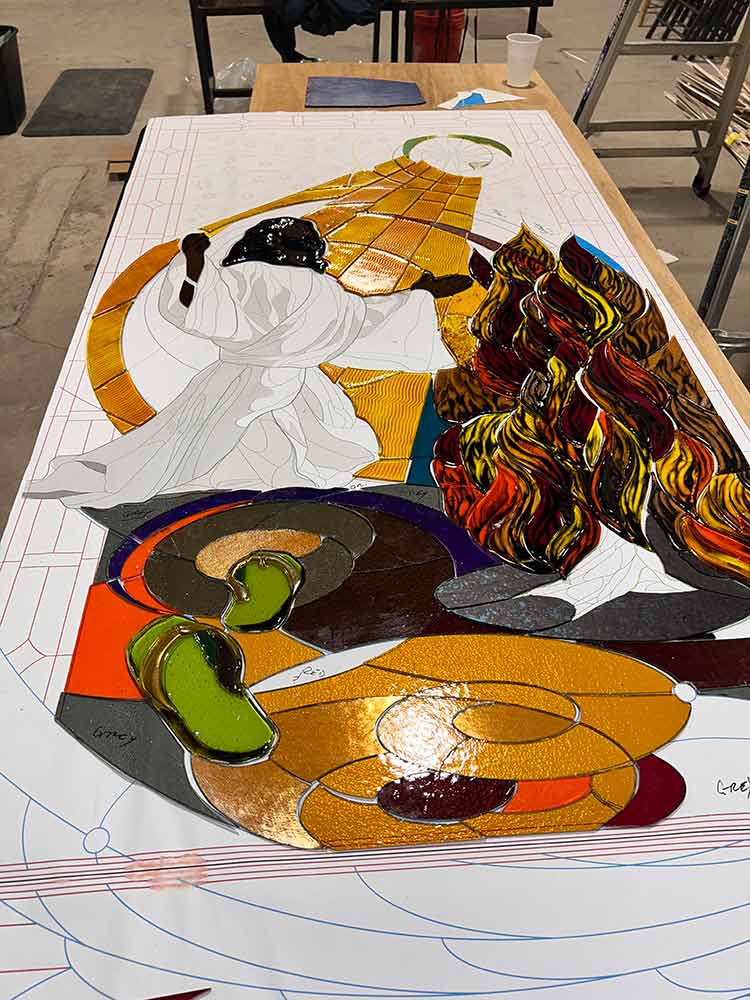
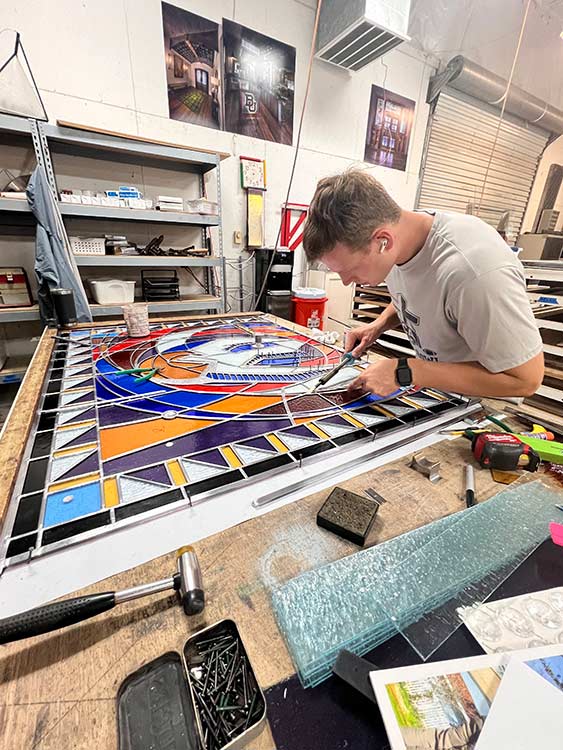
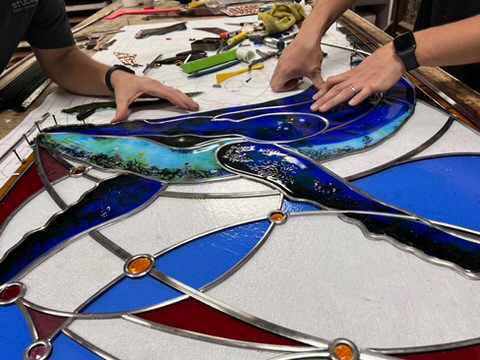
President Baker invited art students to submit proposals for the chapel’s stained-glass windows. Three teams of students presented exceptional designs. Under the guidance of Professor of Art and Design Tim Timmerman, students Corrie Patton, Cassie Johnson, Emily Pulver, Madi Vinje, Yana Ramos Cutrim and Moises Kraft traveled to Waco, Texas, where they collaborated with professional stained-glass artist Bryant Stanton of Stanton Studios. After refining the designs, Stanton Studios took two years using a fused glass process to finish the windows. The entire panoply encourages the viewer to see the redemptive power of God’s love, grace and mercy.
The stained glass windows are shown below, from the Chapel's narthex (up) to the chancel (down).
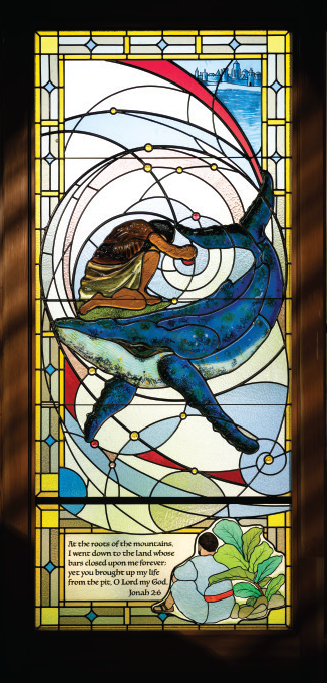
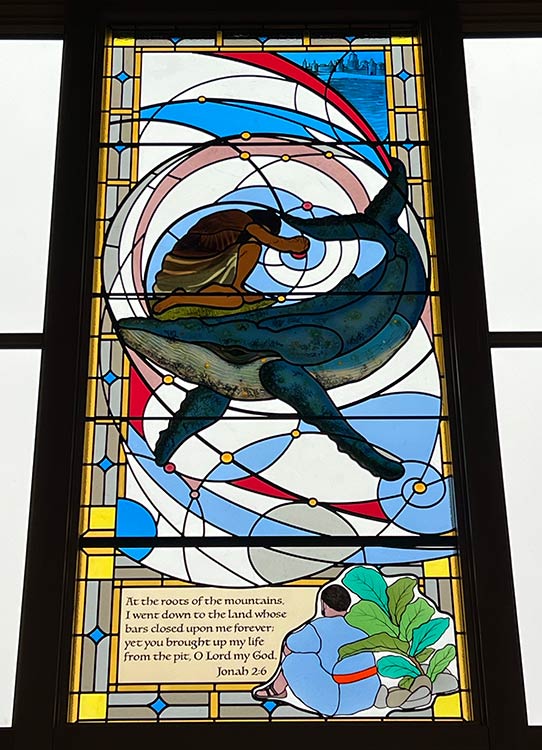
Jonah 2:6
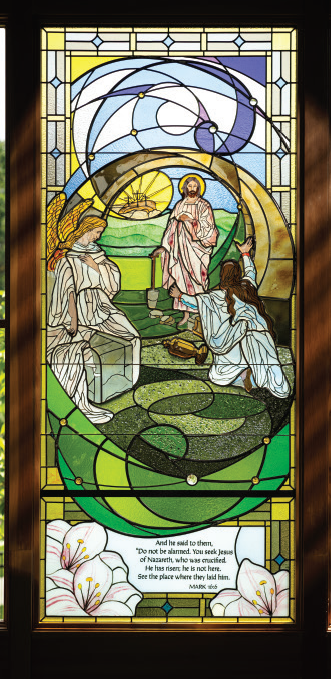
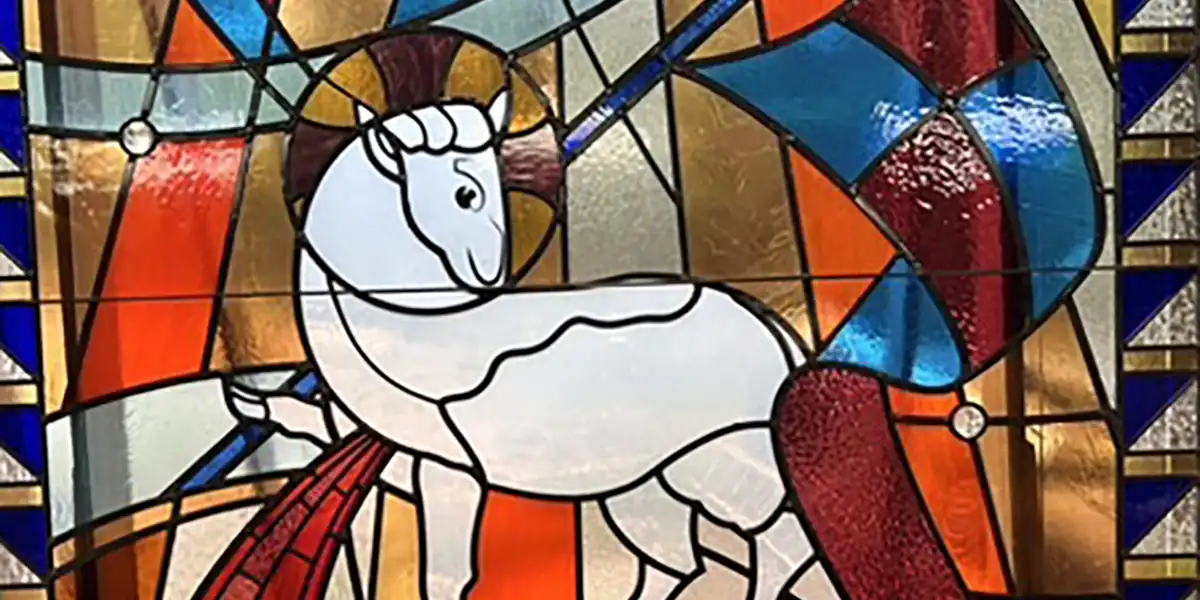
Mark 16:6
Christ noted that the only sign this generation would receive was the sign of Jonah. Just as the prophet Jonah was swallowed by a great fish and spent three days and three nights in the depths of darkness, Jesus would be crucified, buried, and spend three days in the "heart of the earth" before resurrecting.
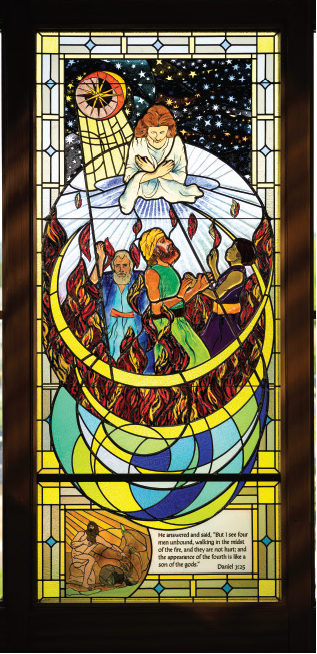
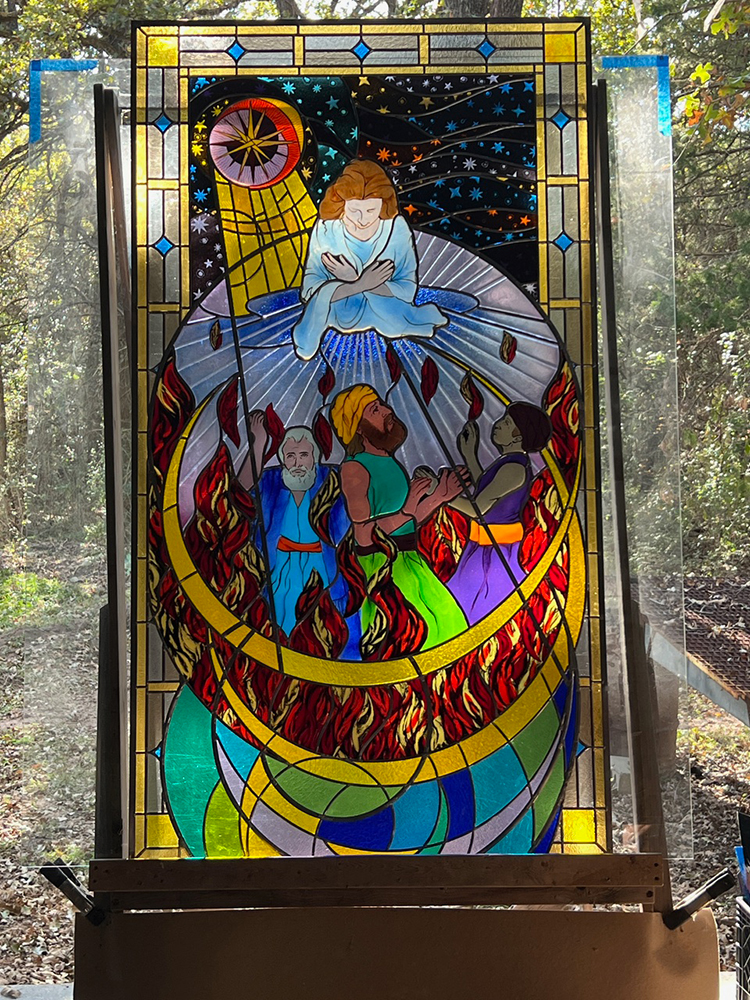
Daniel 3:25
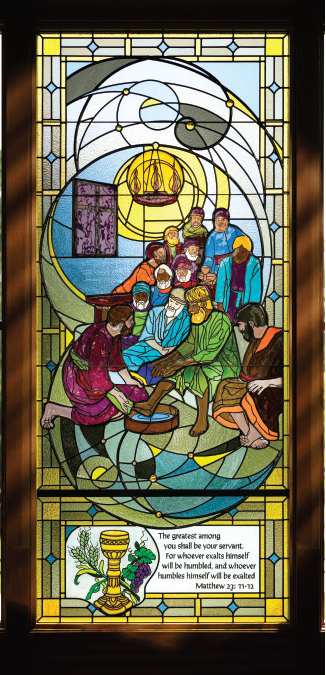
Mathew 23:11-12
These illustrate divine reversal, showing how the men's radical humility in the fiery furnace embodies Jesus's promise that those who humble themselves will be exalted.
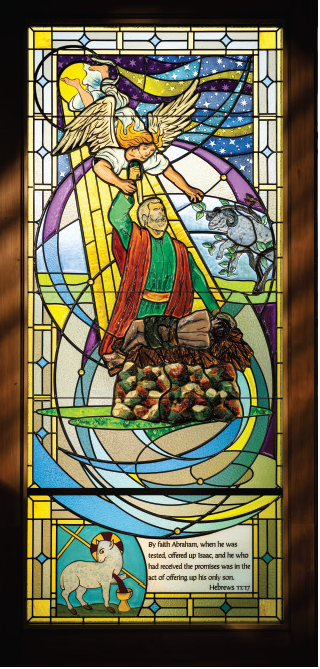
Hebrews 11:17
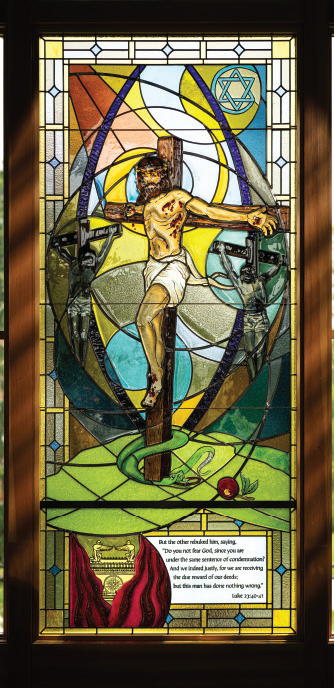
Luke 23:40-41
Both passages highlight the supreme value of sacrificial faith, comparing Abraham's willingness to offer Isaac with the dying thief's fear of God and recognition of Jesus's innocent sacrifice.
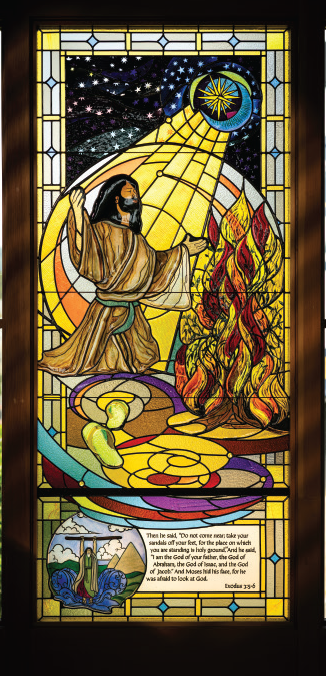
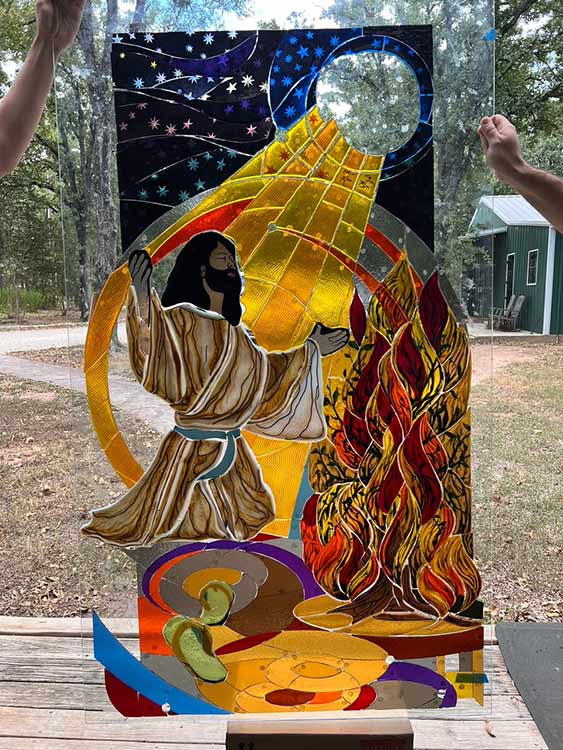
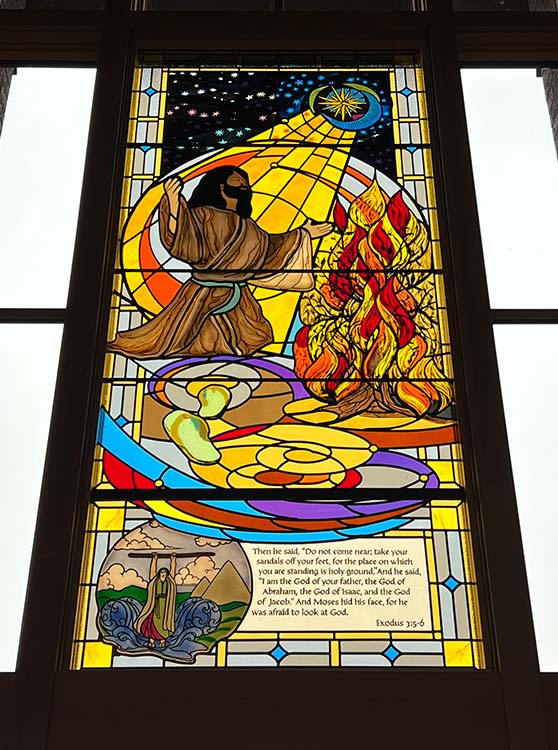
Exodus 3:5-6
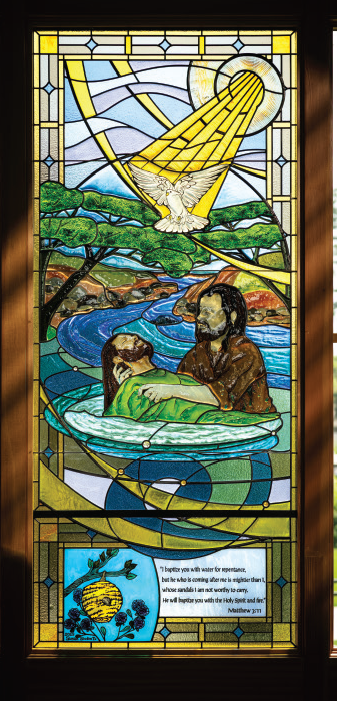
Mathew 3:11
In these scenes, God speaks into history, encountering Moses at the burning bush to deliver his people and declaring Christ as His beloved Son, the ultimate redeemer of humanity.
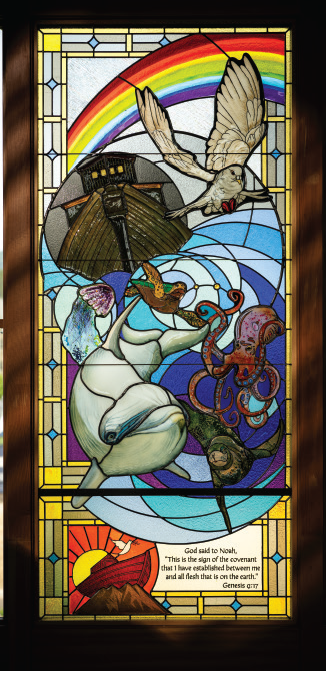
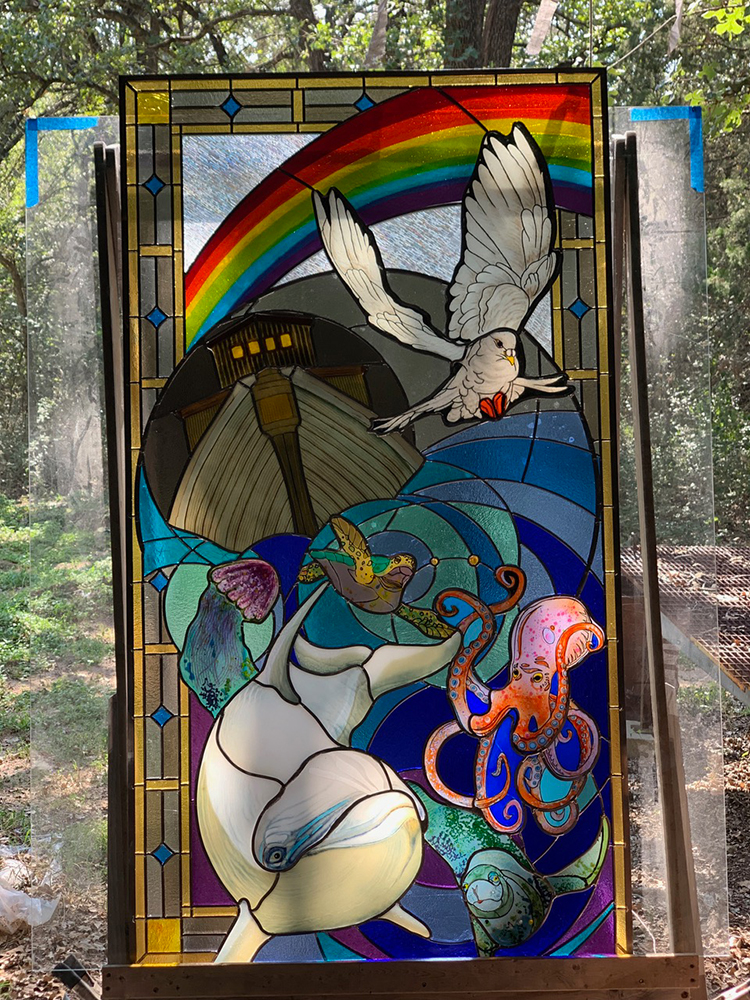
Genesis 9:17
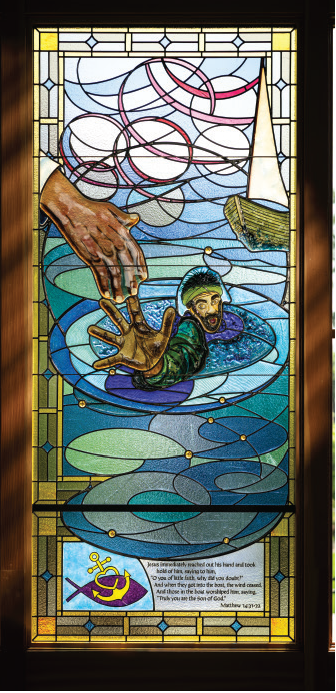
Mathew 14:31-32
In the stories of Noah and Peter, we see God's faithful intervention. The rainbow became a covenant sign of God's commitment to humanity after the flood, while Jesus reached out to rescue Peter from the stormy waters, illustrating God's continued effort to redeem.
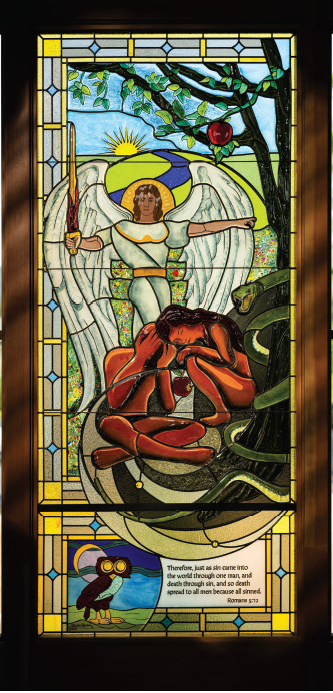
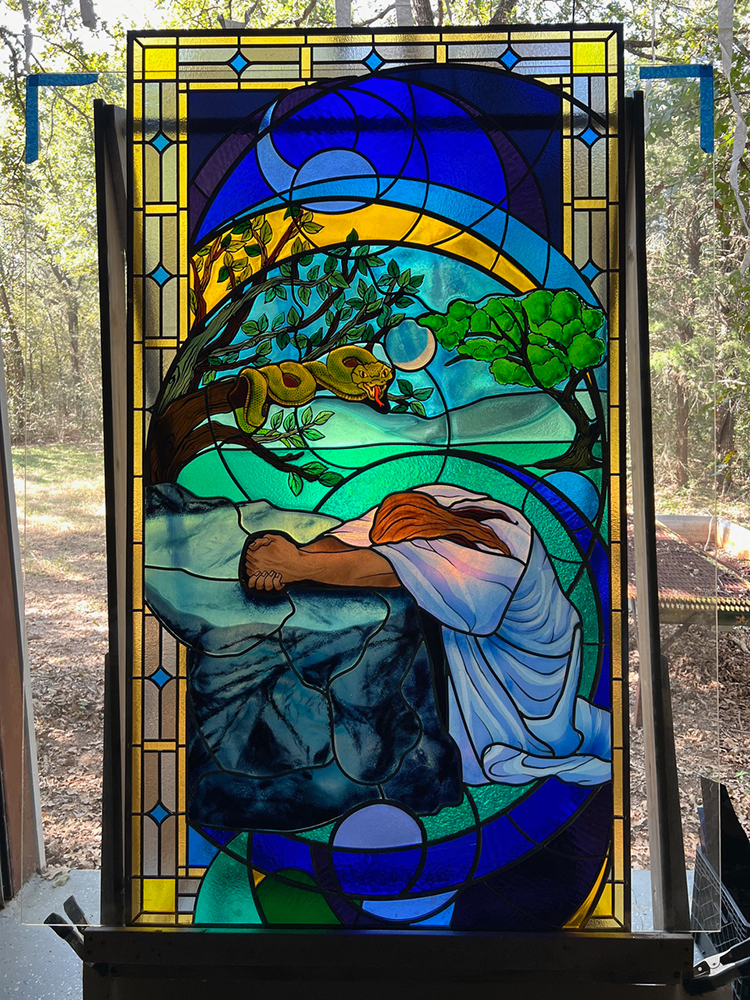
Romans 5:12
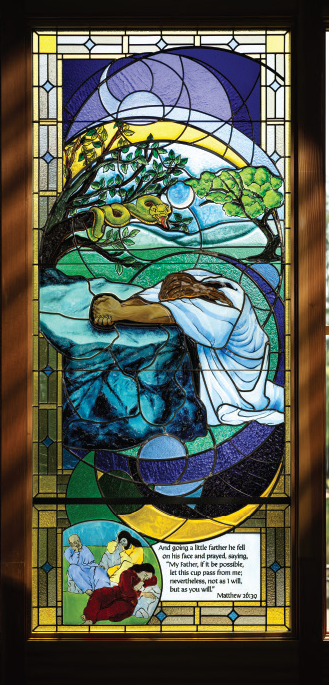
Mathew 26:39
These scenes highlight pivotal human turning points, contrasting Adam and Eve succumbing to temptation and bringing sin and death into the world with Jesus's submission to God's design in the garden, which led to humanity's redemption through the cross.
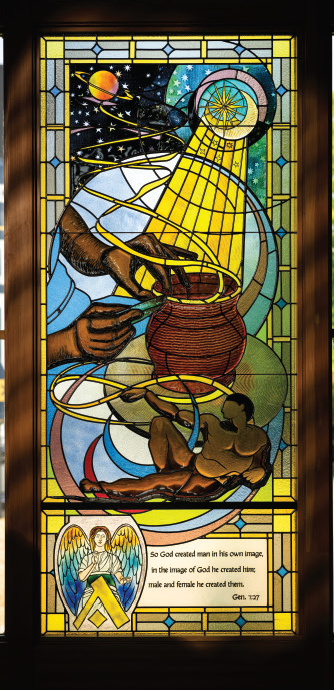
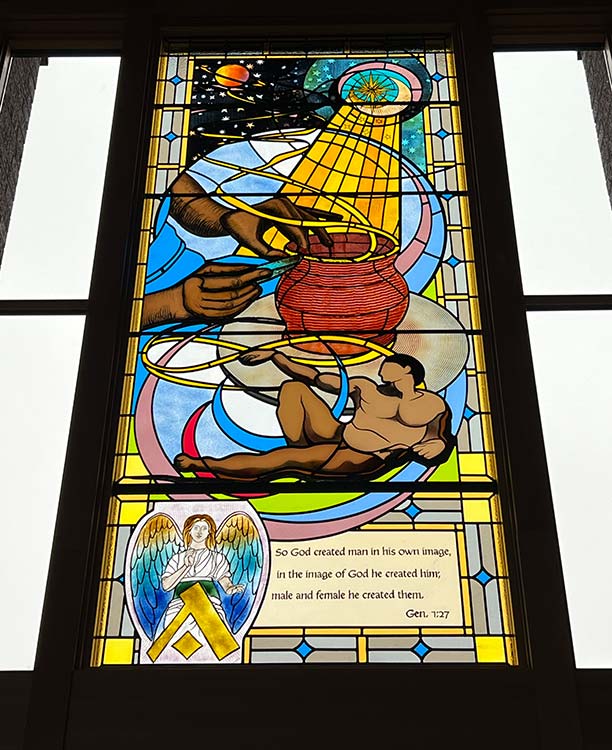
Genesis 1:27
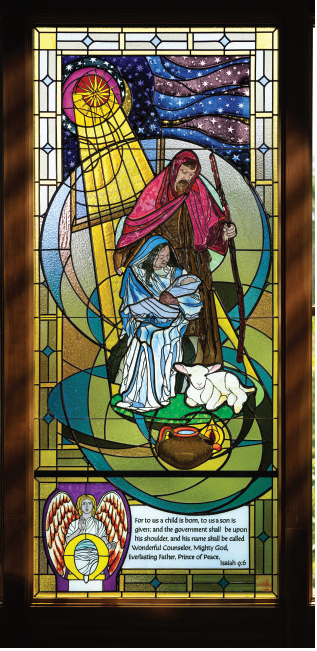
Isaiah 9:6
These Scriptures reveal the profound nature of the Messiah's identity, linking humanity being created in the image of God to the prophecy that the coming child would actually be the "Mighty God."
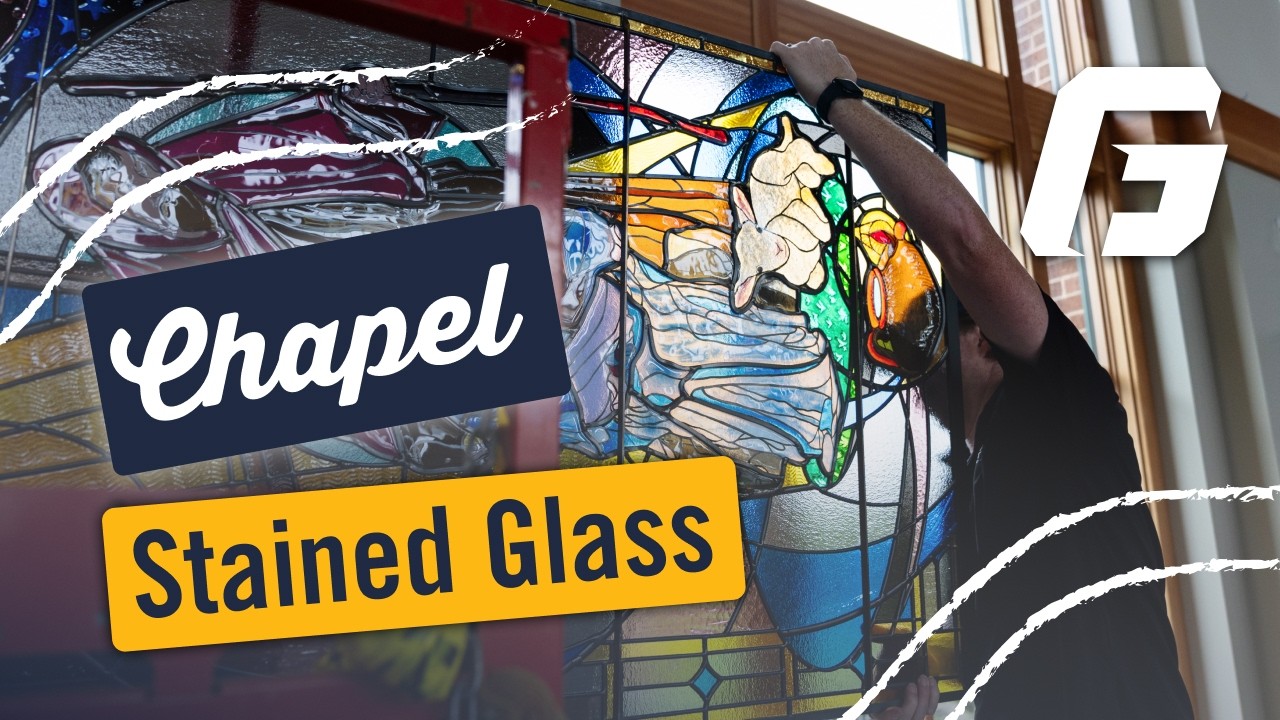
In this behind-the-scenes look at George Fox University's chapel stained glass project, President Robin Baker and the artists behind the windows share the vision and craftsmanship that shaped this remarkable installation.