
What Is a Psychiatric-Mental Health Nurse Practitioner (PMHNP)?
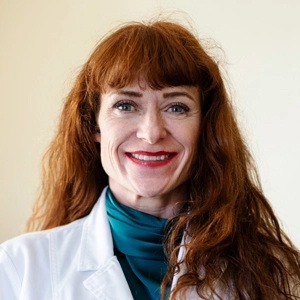
by April Phillips, DNP, PMHNP-BC, FNP-C
Psychiatric-mental health nurse practitioners are advanced practice registered nurses who are educated and clinically prepared to assess, diagnose, and treat psychiatric and mental health conditions across the lifespan.
Their work combines advanced psychiatric knowledge with the nursing profession's longstanding emphasis on whole-person, patient-centered care.
PMHNPs hold a strong knowledge of anatomy, pharmacology, and therapeutic interventions that allow them to work collaboratively with their patients to develop a thorough assessment and plan to address the individual needs.
This whole-person perspective is one of the most important contributions PMHNPs bring to the mental health care system.
Mental health care is rarely as simple as identifying a list of symptoms and prescribing a medication. Depression may coexist with chronic pain. Anxiety may be complicated by trauma, substance use, thyroid disease, or a medication prescribed for another condition. A person experiencing insomnia may be struggling with grief, mania, post-traumatic stress, a medical illness, or significant environmental stress.
A psychiatric diagnosis never exists in isolation from the person who carries it. Patients come to us with medical histories, families, cultures, trauma experiences, financial pressures, spiritual beliefs, relationships, and communities. Effective psychiatric care requires the clinician to understand how these factors intersect.
Table of Contents
- What Does a PMHNP Do?
- What Is the Role of a PMHNP?
- What Skills Are Important for a PMHNP?
- Can a PMHNP Prescribe Medication?
- How Do Patients End Up Seeing a PMHNP?
- How Do You Become a PMHNP?
- How Long Does It Take to Become a PMHNP?
- Is a PMHNP the Same as a Psychiatric Nurse?
- Are There Different Types of PMHNPs?
- Where Do PMHNPs Work?
- How Is a PMHNP Different from a Psychiatrist?
- How Is a PMHNP Different from a Psychologist or Therapist?
- Why Consider Becoming a PMHNP?
- What Are the Advantages of Being a PMHNP?
- What Challenges Do PMHNPs Face?
- How Much Do PMHNPs Earn?
- What Is the Job Outlook for PMHNPs?
- Is Becoming a PMHNP Worth It?
What Does a PMHNP Do?
A PMHNP evaluates and treats people experiencing mental health and psychiatric conditions.
Depending on the practice setting and the needs of the patient population, a PMHNP may:
- Conduct comprehensive psychiatric evaluations
- Obtain psychiatric, medical, developmental, family, social, and substance use histories
- Perform mental status examinations and assess psychiatric symptoms
- Evaluate suicide, self-harm, violence, withdrawal, and other safety risks
- Diagnose psychiatric and mental health disorders
- Develop individualized treatment plans
- Prescribe and manage psychiatric medications
- Monitor medication effectiveness, adverse effects, and drug interactions
- Order and interpret laboratory studies and other diagnostic tests when clinically indicated
- Provide psychotherapy and therapeutic interventions within the clinician's education and scope of practice
- Educate patients and families about psychiatric conditions and treatment
- Coordinate care with primary care clinicians, psychologists, counselors, social workers, pharmacists, and other health professionals
- Connect patients with community resources and higher levels of care when necessary
The role, however, is more complex than completing these individual tasks.
One of the most important skills of a PMHNP is learning to ask, “What else could this be?”
For example, difficulty concentrating does not automatically mean attention-deficit/hyperactivity disorder (ADHD). Insomnia does not always require sleep medication. Agitation is not necessarily a psychiatric symptom. Before reaching a diagnosis, a skilled clinician considers medical conditions, medications, substance use, trauma, sleep patterns, developmental history, and the patient's environment.
I have worked in both primary care and psychiatric care, and that experience has reinforced my belief that mental and physical health cannot be separated as neatly as our health care system often attempts to separate them. Some of the most important psychiatric decisions begin with recognizing that a patient's symptoms may have more than one possible explanation.
What Is the Role of a PMHNP?
The primary role of a PMHNP is to provide advanced psychiatric and mental health care.
In practice, PMHNPs often serve as diagnosticians, prescribers, educators, therapists, consultants, and care coordinators.
Their role may also change significantly depending on where they practice:
- A PMHNP working on an inpatient psychiatric unit may manage patients experiencing acute psychosis, severe mania, suicidal crises, or other complex psychiatric conditions
- A PMHNP in an outpatient clinic may provide ongoing treatment for depression, anxiety disorders, bipolar disorder, schizophrenia, attention-deficit/hyperactivity disorder (ADHD), or post-traumatic stress disorder (PTSD).
- A PMHNP in an integrated primary care setting may work alongside family medicine clinicians to identify and treat psychiatric conditions within the same environment where patients receive their general medical care.
In a rural community, the PMHNP may be one of very few psychiatric providers available across a large geographic region. During my years working in rural and underserved communities, I learned that access changes the way clinicians must think about care.
It is easy to recommend that a patient “see a specialist” when specialists are nearby and accepting new patients. It is very different when the nearest psychiatric specialist is several hours away, the patient has no reliable transportation, or the next available appointment is months in the future.
In these environments, PMHNPs often become an important part of the mental health care safety net.
What Skills Are Important for a PMHNP?
Psychopharmacology and diagnostic knowledge are essential skills for a PMHNP, but some of the most important skills are harder to measure on an examination:
- Clinical CuriosityPsychiatric symptoms frequently overlap. PMHNPs must resist the temptation to reach a diagnosis too quickly and remain willing to reconsider an initial clinical impression as new information emerges.
- Therapeutic CommunicationPatients may disclose trauma, suicidal thoughts, substance use, psychosis, abuse, or experiences they have never previously shared. The way a clinician asks a question can influence whether a patient feels safe enough to answer it.
- ObservationA patient's rate of speech, movements, affect, level of attention, organization of thought, and interaction with others can provide meaningful clinical information.
- Knowledge of PsychopharmacologyPMHNPs must understand mechanisms of action, adverse effects, interactions, monitoring requirements, and the implications of medications for patients with complex medical conditions.
- Trauma-Informed Clinical ReasoningTrauma can affect sleep, concentration, emotional regulation, relationships, substance use, and physical health. Understanding trauma does not mean assuming every symptom is caused by trauma. It means recognizing trauma as an important part of the differential diagnosis and approaching patients in a manner that reduces the risk of re-traumatization.
- HumilityPsychiatry contains uncertainty. Good PMHNPs know when to seek consultation, obtain additional information, reconsider a diagnosis, or refer a patient for a different level of care.
I frequently tell developing clinicians that psychiatric expertise is not demonstrated by how quickly someone names a diagnosis. It is demonstrated by the quality of the questions they ask before reaching one. It is further illustrated by the PMHNP’s ability to work collaboratively with their patients to develop a care plan that meets their individual needs.
Can a PMHNP Prescribe Medication?
PMHNPs can prescribe medication.
PMHNPs are advanced practice registered nurses with prescriptive authority, though the specific laws and regulatory requirements governing nurse practitioner practice vary by state.
PMHNPs may prescribe psychiatric medications such as antidepressants, mood stabilizers, antipsychotic medications, and medications used to treat anxiety, attention disorders, and substance use disorders when those treatments fall within their legal and professional scope of practice.
Prescribing is only one part of medication management.
Before prescribing a psychiatric medication, a PMHNP may consider the patient's medical history, current medications, previous treatment response, allergies, substance use, age, reproductive considerations, laboratory findings, and potential medication interactions. The clinician must also determine how treatment effectiveness and adverse effects will be monitored.
This is particularly important in psychiatry because some medications require metabolic, cardiovascular, neurological, or laboratory monitoring.
In my view, the question should rarely be simply, “What medication treats this diagnosis?” A better question is, “What treatment is most appropriate for this particular patient, at this particular point in their life, given the full clinical picture?”
How Do Patients End Up Seeing a PMHNP?
Patients reach PMHNPs through many different pathways.
Some are referred by primary care clinicians, emergency departments, therapists, school health professionals, or other specialists. Others contact an outpatient psychiatric clinic directly. Patients may also encounter PMHNPs during psychiatric hospitalization, substance use treatment, correctional care, community mental health treatment, or telehealth visits.
Increasingly, psychiatric care is also being integrated into primary care and other health care settings.
This is an area I believe deserves continued attention. Many patients do not initially identify their concern as a “mental health problem.” They may visit primary care because they cannot sleep, are experiencing unexplained physical symptoms, cannot concentrate, are increasingly using alcohol, or simply say, “I don't feel like myself.”
Primary care is often the front door to mental health care; behavioral health needs often appear first outside of specialty psychiatric settings. One study found that nearly half of all primary care visits involve some form of mental-health condition.
For some patients, seeing a PMHNP within an integrated or familiar health care environment may reduce both logistical and psychological barriers to treatment.
How Do You Become a PMHNP?
Becoming a PMHNP requires education as a registered nurse followed by graduate-level advanced practice education in psychiatric-mental health nursing.
The specific path can vary depending on a person's previous education, but the general process includes nursing education, RN license, a minimum of a graduate degree, supervised clinical preparation, national board certification, and state advanced practice licensure. As of 2004, the American Association of Colleges of Nursing (AACN) recommended transitioning to the doctor of nursing practice (DNP) as the entry-level degree for advanced practice nurses.
Educational Requirements
A future PMHNP must first become a registered nurse. RN education may begin through several nursing education pathways, although graduate PMHNP programs establish their own admission requirements.
The nurse then completes an accredited graduate psychiatric-mental health nurse practitioner program. PMHNP preparation may be offered through a Master of Science in Nursing program, a Doctor of Nursing Practice program, or a post-graduate certificate for nurses who already hold qualifying graduate nursing education.
Graduate PMHNP education typically includes advanced pathophysiology, advanced pharmacology, advanced health assessment, neuroscience or neurobiology, psychiatric diagnosis, psychopharmacology, psychotherapy and therapeutic modalities, and population-focused psychiatric care.
Doctor of Nursing Practice education may additionally emphasize evidence translation, quality improvement, health care systems, leadership, population health, and the implementation of evidence into clinical practice.
Clinical Requirements
PMHNP students complete faculty-supervised clinical experiences as part of their educational preparation. The American Nurses Credentialing Center currently requires a minimum of 500 faculty-supervised clinical hours within the PMHNP graduate or post-graduate program for certification eligibility, although national nurse practitioner education standards have moved toward higher direct patient care clinical-hour expectations.
The number of hours is important, but hours alone do not guarantee clinical readiness.
I have spent many years in nursing education, and one of the lessons I have learned is that two students can complete the same number of clinical hours and have very different clinical experiences. One student may evaluate patients across the lifespan and encounter depression, psychosis, substance use, trauma, and complex psychopharmacology. Another may see a much narrower range of diagnoses.
For this reason, I believe strong PMHNP education should evaluate the breadth, complexity, and quality of clinical exposure, not simply whether a student completed a required number of hours.
Early clinical exposure, carefully selected preceptors, case-based learning, simulation, and opportunities to discuss complex cases can help students develop clinical reasoning. Didactic education provides the scientific foundation, but psychiatric assessment is a skill that becomes more sophisticated through repeated clinical practice.
Certification and Licensure
After completing an eligible PMHNP graduate or post-graduate program, graduates may apply to take the Psychiatric-Mental Health Nurse Practitioner Across the Lifespan board certification examination administered by the American Nurses Credentialing Center.
Successful candidates earn the PMHNP-BC credential. The current certification is an across-the-lifespan credential and is valid for five years, with ongoing requirements for renewal and professional development.
PMHNPs must also meet the advanced practice licensure requirements of the state or jurisdiction in which they practice. Because state laws differ, graduates should review the requirements of the applicable board of nursing.
How Long Does It Take to Become a PMHNP?
The timeline to become a PMHNP depends largely on where a person begins.
A person who is not yet a registered nurse must first complete the education and licensure requirements necessary to become an RN. After that, graduate PMHNP education commonly requires approximately two to four additional years, depending on whether the student attends full time or part time and whether the program leads to a master's degree, DNP, or post-graduate certificate.
For a practicing registered nurse, the total timeline may therefore be shorter than for someone entering nursing for the first time.
There is an important distinction between the fastest possible route and the best route for a particular student.
Psychiatric practice requires considerable clinical judgment. I encourage prospective students to evaluate programs not only by length, but also by faculty expertise, clinical placement support, the diversity of patient populations encountered, the strength of psychopharmacology and assessment education, and how the program evaluates clinical competency.
Speed is an understandable consideration. Clinical preparation should be the greater one.
Is a PMHNP the Same as a Psychiatric Nurse?
A PMHNP is not the same as a psychiatric nurse.
The terms are sometimes used casually as if they are interchangeable, but they describe different roles.
A psychiatric nurse generally refers to a registered nurse who works in a psychiatric or behavioral health setting. Psychiatric nurses may provide direct nursing care, administer medications, monitor patient status, support therapeutic interventions, and participate in treatment planning.
A PMHNP is an advanced practice registered nurse with graduate education and advanced clinical preparation in psychiatric-mental health care. PMHNPs diagnose psychiatric disorders and manage treatment, including prescribing medications within their scope of practice.
PMHNPs are sometimes referred to as psychiatric nurse practitioners, mental health nurse practitioners, or psychiatric NPs.
The formal board-certified credential is PMHNP-BC.
Are There Different Types of PMHNPs?
The current PMHNP certification is designed for practice across the lifespan, but PMHNPs frequently develop areas of clinical expertise.
For example, a PMHNP may focus primarily on:
- Children and adolescents
- College students and young adults
- Perinatal and reproductive mental health
- Forensic psychiatry
- Adults with mood or anxiety disorders
- Serious mental illness
- Psychotic disorders
- Substance use and addiction
- Trauma and post-traumatic stress
- Older adults and geriatric psychiatry
- Correctional mental health
- Integrated behavioral health
- Rural mental health
- Veterans' mental health
- Emergency or crisis psychiatry
These focus areas do not necessarily represent separate PMHNP board certifications. Instead, clinicians often develop expertise through their practice setting, continuing education, mentorship, additional training, and years of clinical experience.
One of the strengths of the PMHNP role is its flexibility. The same foundational certification can lead to very different professional careers.
Where Do PMHNPs Work?
PMHNPs practice in a wide range of environments.
These settings include hospitals, inpatient psychiatric units, outpatient psychiatric clinics, community mental health centers, primary care practices, substance use treatment programs, correctional facilities, Veterans Health Administration settings, residential treatment programs, schools and universities, telehealth organizations, and private practices.
They may also work in education, health care administration, policy, research, quality improvement, or program development.
Telepsychiatry has expanded the geographic reach of psychiatric services, but technology alone does not solve access problems. A patient may technically have access to a telehealth appointment and still lack broadband service, privacy in the home, transportation to obtain laboratory testing, or a nearby pharmacy.
My work in rural communities taught me that “access” is more complicated than placing a provider on a screen. True access requires us to ask whether the patient can realistically participate in and continue the treatment we recommend.

How Is a PMHNP Different from a Psychiatrist?
The primary difference between a PMHNP and a psychiatrist is the educational pathway.
A psychiatrist is a physician who completes medical school followed by residency training in psychiatry. Psychiatrists may also complete fellowship training in subspecialties such as child and adolescent psychiatry, addiction psychiatry, forensic psychiatry, or geriatric psychiatry.
A PMHNP is a registered nurse who completes graduate advanced practice education specializing in psychiatric-mental health care and obtains national certification and state advanced practice licensure.
Both may evaluate patients, diagnose psychiatric conditions, and prescribe psychiatric medications within their respective scopes of practice.
The professions have different educational foundations, but high-quality mental health systems should not frame psychiatric care as a competition between disciplines. Psychiatrists, PMHNPs, psychologists, counselors, social workers, pharmacists, primary care clinicians, and other health professionals bring different expertise to patient care.
Some of the most complex patients I have encountered have benefited most when clinicians stopped asking, “Whose patient is this?” and instead asked, “What expertise does this patient need?”
How Is a PMHNP Different from a Psychologist or Therapist?
Psychologists generally receive doctoral education in psychology and may specialize in psychological assessment, psychotherapy, research, or other areas of psychological practice. Their specific scope varies by jurisdiction and training.
Therapists and counselors may include licensed clinical social workers, licensed professional counselors, marriage and family therapists, and other licensed mental health professionals. These clinicians often provide psychotherapy and psychosocial treatment.
PMHNPs are advanced practice nurses who are educated in psychiatric diagnosis and treatment, including psychopharmacology and medication management.
These roles frequently overlap in meaningful ways. A patient with bipolar disorder, for example, may see a PMHNP for psychiatric evaluation and medication management while simultaneously working with a therapist on coping skills, relationships, trauma, or behavioral strategies.
Collaborative care is often more effective than attempting to make one clinician meet every need.
Why Consider Becoming a PMHNP?
Psychiatric-mental health nursing can be an intellectually challenging and deeply meaningful area of practice.
PMHNPs have opportunities to develop long-term therapeutic relationships with patients and to observe changes that may occur gradually over months or years. A patient who initially struggles to leave home may return to work. A person with severe depression may begin reconnecting with family. Someone living with psychosis may achieve stability and pursue educational or vocational goals.
These changes are not always dramatic, and they are rarely the result of one intervention. Psychiatric recovery often occurs through a combination of appropriate treatment, trust, persistence, social support, and time.
For nurses who enjoy complex clinical reasoning, neuroscience, pharmacology, therapeutic communication, and relationship-centered care, the PMHNP role can be especially rewarding.
The profession also provides considerable career flexibility. PMHNPs may work with different patient populations and in clinical care, education, leadership, policy, or health system improvement.
What Are the Advantages of Being a PMHNP?
One advantage is the ability to combine advanced diagnostic and prescribing responsibilities with a nursing perspective on patient care.
PMHNPs also have opportunities to work in many different settings and populations. Some clinicians value long-term outpatient relationships, while others prefer acute inpatient psychiatry, consultation, crisis care, or substance use treatment.
The profession may also offer opportunities to serve communities with significant unmet needs.
As of December 2025, approximately 137 million people in the United States—about 40% of the population—lived in a federally designated Mental Health Professional Shortage Area. These shortages are not distributed equally. Rural communities and other underserved populations frequently face significant barriers to psychiatric care.
For clinicians motivated by health care access, the PMHNP role offers opportunities to work where psychiatric services are urgently needed.
What Challenges Do PMHNPs Face?
Psychiatric practice can be emotionally and cognitively demanding.
PMHNPs routinely work with diagnostic uncertainty. Many psychiatric diagnoses share symptoms, and patients may have several co-occurring psychiatric and medical conditions.
Clinicians must also manage safety concerns, including suicidal thoughts, self-harm, violence risk, substance withdrawal, abuse, and psychiatric deterioration.
Access to services can be another major challenge. A PMHNP may recognize that a patient needs residential treatment, specialized therapy, neuropsychological testing, or a higher level of psychiatric care and then discover that the service is unavailable, unaffordable, or located hundreds of miles away.
Administrative burdens, insurance requirements, medication shortages, prior authorizations, and fragmented health records can also complicate care.
There is also an emotional reality to psychiatric work that should be discussed openly with future clinicians. PMHNPs hear difficult stories. They care for people who have experienced profound trauma and loss. They may work with patients during the most vulnerable periods of their lives.
Professional boundaries, reflective practice, peer support, and personal wellness are not optional extras in this field. They are part of sustaining a long career in psychiatric practice.
How Much Do PMHNPs Earn?
PMHNP salaries vary based on geographic location, experience, practice setting, employment model, and clinical responsibilities.
According to Indeed, the average base salary for psychiatric-mental health nurse practitioners in Portland, Oregon, is $172,000 as of July 2026, but often ranges up to or beyond $200,000 according to Glassdoor. Compensation may differ considerably for PMHNPs working in hospitals, outpatient practices, rural or shortage areas, telepsychiatry, academic settings, or private practice.
Salary is important, particularly when prospective students are considering the cost of graduate education. However, students should be cautious about salary claims that present unusually high compensation as typical.
Job advertisements and social media discussions may not reflect differences in benefits, productivity expectations, call responsibilities, independent contractor status, or the expenses associated with private practice.
A salary number rarely tells the entire story of a clinical position.
What Is the Job Outlook for PMHNPs?
The overall employment outlook for nurse practitioners is strong.
The U.S. Bureau of Labor Statistics projects employment for nurse anesthetists, nurse midwives, and nurse practitioners to grow 36% from 2025 to 2035, much faster than the average for all occupations.
Mental health workforce needs provide additional context. Approximately 137 million Americans lived in a Mental Health Professional Shortage Area as of December 2025, and federal workforce projections anticipate substantial future shortages across several behavioral health professions.
Psychiatric-mental health was also the certification area reported by 7.1% of nurse practitioners in the American Association of Nurse Practitioners' 2024 practice report. In that same report, 98.5% of psychiatric-mental health NPs surveyed reported prescribing.
Numbers alone, however, do not fully explain the future of the PMHNP profession.
The more important question is where psychiatric care will be delivered in the coming decades. Mental health needs are increasingly being identified in primary care, emergency departments, schools, rural communities, substance use treatment settings, and through telehealth. The psychiatric workforce of the future will need clinicians who can work across professional and organizational boundaries.
PMHNPs are particularly well positioned to contribute to that work.
Is Becoming a PMHNP Worth It?
For the right person, becoming a PMHNP can offer a challenging and rewarding career in advanced psychiatric practice.
It is not simply a career for someone who is interested in prescribing psychiatric medications. The role requires comfort with uncertainty, strong clinical judgment, continual learning, and the ability to remain present with people experiencing significant distress.
The best PMHNPs I have known are curious, compassionate, and humble. They ask another question. They review the medical history. They reconsider the diagnosis when the clinical picture changes. They listen carefully to patients and families. They collaborate when a patient's needs extend beyond their expertise.
Psychiatric care is both science and human connection.
For nurses who are drawn to both, the PMHNP profession offers an opportunity to make a meaningful contribution to one of the greatest health care needs of our time.
Learn more about George Fox University’s hybrid-online PMHNP program in Oregon