
250 Years of American History
July 02, 2026
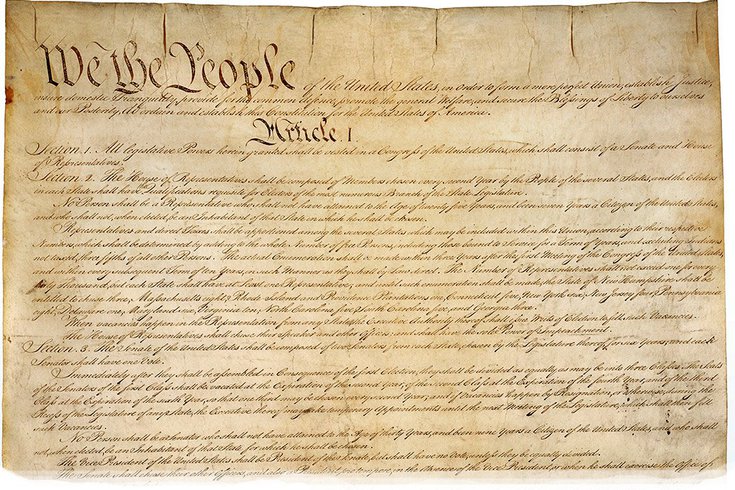
Fifty years ago, I was part of a group of young graduates from Flagstaff High School who were proud of being the bicentennial class. We wore special medals decorated with red, white and blue ribbons that celebrated our special day and also recognized the 200th anniversary of the American Declaration of Independence.
1976 was a year of widespread patriotic events, including parades throughout the country, national fireworks displays, and a fleet of tall sailing ships in New York Harbor. The year-long celebration also featured a traveling history museum on rails – the American Freedom Train. In the aftermath of the Vietnam War, there was a renewed sense of American pride. President Gerald Ford presided over nationally televised celebrations and rang a ceremonial bell 13 times (for each of the original colonies) aboard the USS Forrestal. Additionally, Queen Elizabeth II visited Philadelphia, and France gifted a light and sound show at Washington’s home, Mount Vernon.
Americans do not appear as celebratory in 2026. We are politically divided in ways we have not been since the Civil War. Our national discourse reflects our polarization, and many citizens on the political right and left show disdain for each other. For the past 20 years, conversations in the media (including social media) have focused on America’s shortcomings, of which there are many, and little time has been spent on what makes America one of the most hopeful and best places in our world to live. Our focus has often been on critiquing our past with little effort to build institutions that will sustain our Republic into the future.
It is always difficult to place oneself in the past and experience it as if you were one of the persons present in the moment. Too often, present-day commentators see the men who formed the Republic in light of current sensibilities – wealthy, elite white men, some who were slaveholders, who fashioned a Republic with slavery intact, limiting freedom of faith and expression, providing the right to vote only to property holders, excluding women from political participation, and ignoring the rights and perspectives of the native inhabitants of the country. While much of this narrative provides an assessment of the Founders in 1776 in light of present-day commitments, it does little justice to the radical nature of their proposal considering the world in the 18th century. We can always see the shortcomings of those who came before; the challenge is to assess the past in terms of its own assumptions.
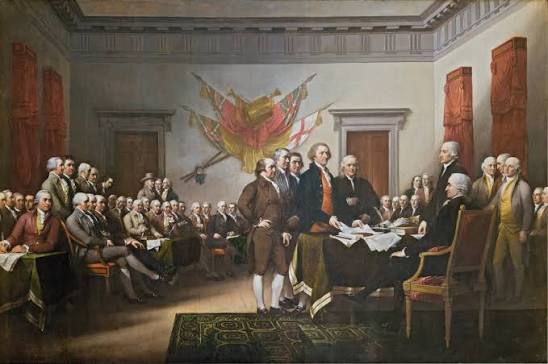 Many historians would argue that the Declaration of Independence was “radical” for its time. In an era dominated by monarchies and social hierarchies that were rigid, it asserted that legitimate government relies on the consent of the governed, fundamentally challenging the divine right of kings, which was a normative assumption in 1776. Further, the bold assertion that “all men were created equal” was transformative, serving as a beacon for future generations as they sought to define and expand the true meaning of equality. Never before had a group of citizens advanced a vision for a new government structure focused on “equality.”
The men present at the vote in 1776 certainly understood the serious nature of their proposal as well. Benjamin Rush, reflecting on that moment in July, wrote to John Adams over 30 years later:
“Do you recollect your memorable speech upon the Day on which the Vote was taken? Do you recollect the pensive and awful silence which pervaded the house when we were called up, one after another, to the table of the President of Congress, to subscribe what was believed by many at that time to be our own death warrants? The Silence & the gloom of the morning were interrupted I well recollect only for a moment by Col. Harrison of Virginia who said to Mr. Gerry at the table, ‘I shall have a great advantage over you Mr. Gerry when we are all hung for what we are now doing. From the size and weight of my body I shall die in a few minutes, but from the lightness of your body you will dance in the air an hour or two before you are dead.’ This Speech procured a transient smile, but it was soon succeeded by the Solemnity with which the whole business was conducted.”
The men who joined the American Revolution understood that they were pledging their livelihood and their very lives for an understanding of liberty that was founded in Christian ideals and principles and might lead to their death. John Adams reinforced this idea in a letter to H. Niles in 1818 …
“But what do we mean by the American Revolution? Do we mean the American war? The Revolution was effected before the war commenced. The Revolution was in the minds and hearts of the people; a change in their religious sentiments of their duties and obligations … This radical change in the principles, opinions, sentiments, and affections of the people, was the real American Revolution.”
When President Abraham Lincoln gathered with other Americans to honor the war dead at Gettysburg in 1863, his reflection focused on the Declaration of Independence. Hopefully you know these words well:
“Four score and seven years ago our fathers brought forth on this continent a new nation, conceived in liberty, and dedicated to the proposition that all men are created equal. Now we are engaged in a great civil war, testing whether that nation, or any nation so conceived and so dedicated, can long endure.”
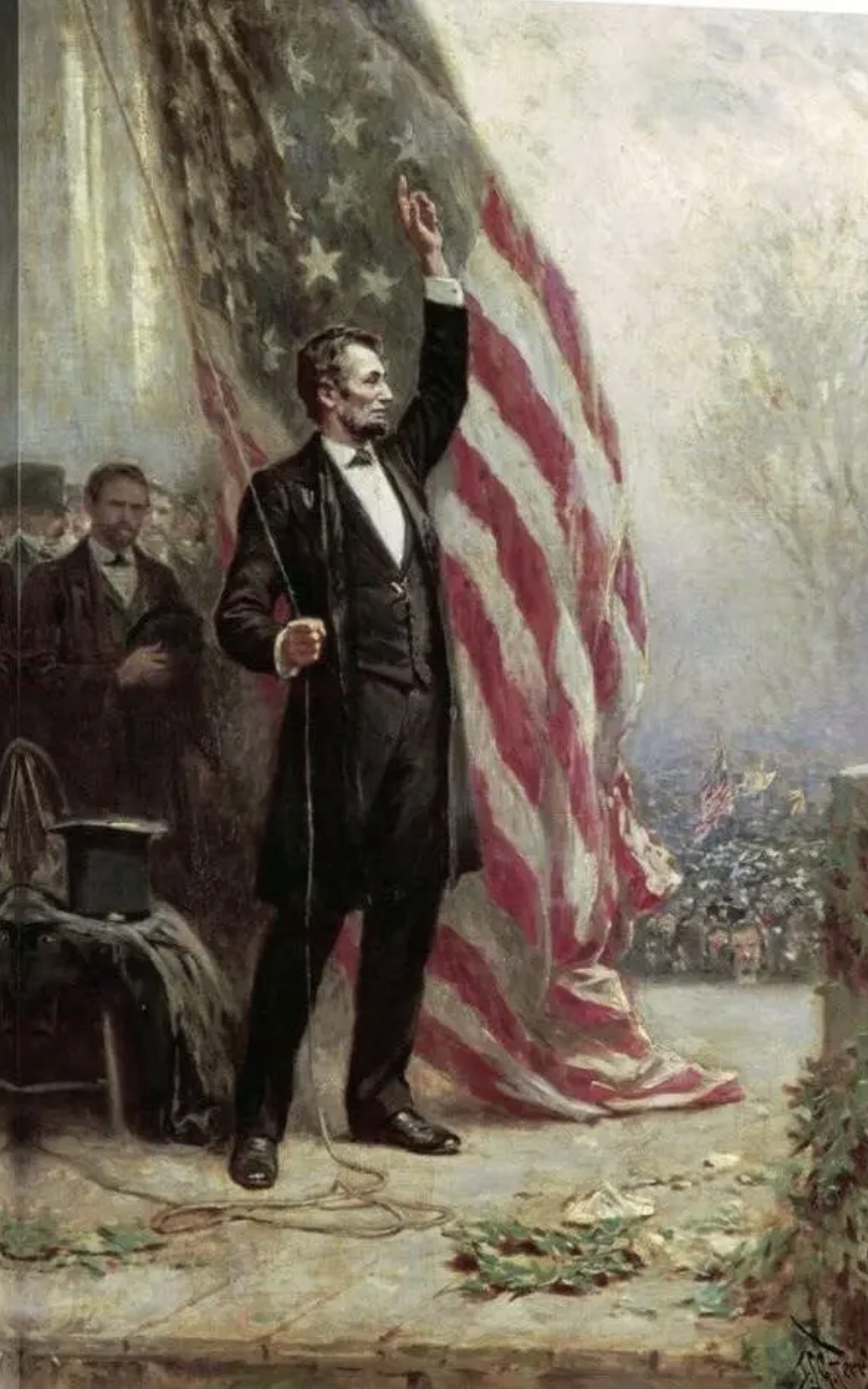 Lincoln rightly stated that the Founders had created a new nation that was conceived in liberty and dedicated to the proposition that all men are created equal. They might not have imagined that African slaves would eventually be granted equal rights (although some surely did). They provided the vision where a nation would embrace “equal” in broader terms than were understood in 1776. Lincoln understood that what they created was an experiment – one where the people would be trusted with creating laws and defining purpose and meaning for future generations. It would be no accident that revolutionaries of all types in the 19th and 20th centuries would cite the Declaration of Independence as the foundation for their movements as well.
Is it right to celebrate the 250th anniversary of American independence? Absolutely. What started in 1776 proved to be the best hope for human creativity, collaboration and human flourishing. The real challenge is the one President Lincoln provided at the close of the Gettysburg Address:
“It is for us the living, rather, to be dedicated here to the unfinished work which they who fought here have thus far so nobly advanced. It is rather for us to be here dedicated to the great task remaining before us, that from these honored dead we take increased devotion to that cause for which they gave the last full measure of devotion, that we here highly resolve that these dead shall not have died in vain, that this nation, under God, shall have a new birth of freedom, and that government of the people, by the people, for the people, shall not perish from the earth.”