
Carrying the Mantle
June 16, 2026

Elijah was one of the great prophets of the Old Testament, and he flourished during the reign of two of the most evil leaders in Israel – King Ahab and Queen Jezebel. Called by God, his mission was to combat the worship of the Canaanite deity Baal and return the Israelites back to the worship of Yahweh.
He is often remembered for his battle with the Canaanite priests on Mount Carmel. When God determined it was time for Elijah to leave this earth, the Bible records that the Lord took him to heaven in a chariot, and as he was swept up his cloak (mantle) fell on Elisha, symbolizing the passing of Elijah’s mission to Elisha. Notably, the metaphor conveys the idea that Elisha was given the approval of God, and the Bible tells us that he accepted the role and continued to call the Israelites back to monotheism.
This Friday, we celebrate Juneteenth – a holiday that commemorates the end of slavery after the Civil War. Although our founders established our country with slavery as part of the institutional fabric, many at least imagined a time when slavery would end. President Lincoln – whom Frederick Douglass noted was tardy to the cause of freedom – grew in his mind and spirit while in office and came to the point where he embraced emancipation and the freedom of African Americans. Much like Elisha before him, President Lincoln picked up the “mantle” established by the writers of the Declaration of Independence and articulated in the Gettysburg address that “this nation, under God, shall have a new birth of freedom – and that government of the people, by the people, for the people, shall not perish from the earth.”
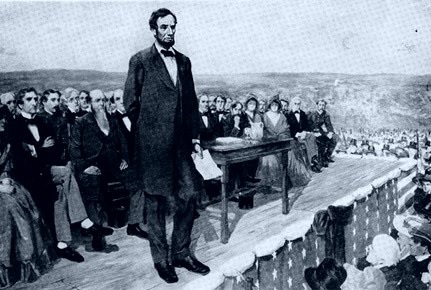
As the Civil War ended, Lincoln turned his attention to the expansion of freedom and the reunification of the United States. On April 11, 1865, he gave his final speech before his assassination. In it, Lincoln only briefly mentioned the great victory of Grant’s army. He wanted citizens to know that the focus had to move from war to peace; America needed to restore the Southern states. He also expressed his support for establishing public schools to equally benefit both Black and White, and to empower Black men with the right to vote. The country Lincoln imagined at the end of the war was far different than the one before. In the audience that day were detractors, including John Wilkes Booth, who, after listening to Lincoln, vowed that it would be the last speech the president ever made.
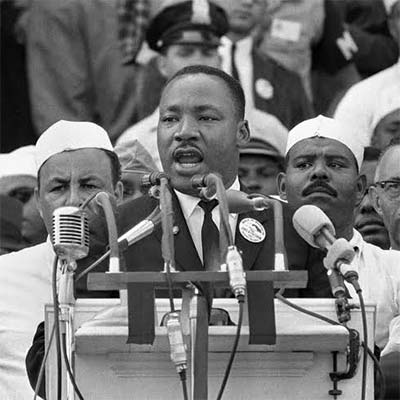
Three days later, Lincoln was shot and killed. His successor, Andrew Johnson, did not pick up the “mantle of freedom” that Lincoln held high and did everything he could to ensure that Black people, although free in statute, would remain second-class citizens. Despite the efforts of the following president, Ulysses S. Grant, the America that emerged in the late 19th century did not fulfill the vision of Abraham Lincoln, and we spent another 100 years struggling to reconcile our ideas with practice. It was in the 1960s that another great American leader, Martin Luther King Jr., took up the mantle of freedom once again and ushered in a new era of race relations in America. He, too, was eventually killed with an assassin’s bullet.
As a nation, we still have much work to do. Those of us who follow Christ need to pick up the mantle of freedom to make sure that our brothers and sisters, no matter their racial background, are treated equally and fairly. On this day, we consider the past and commit to a better future.