
A Night at the Rodeo
July 17, 2026
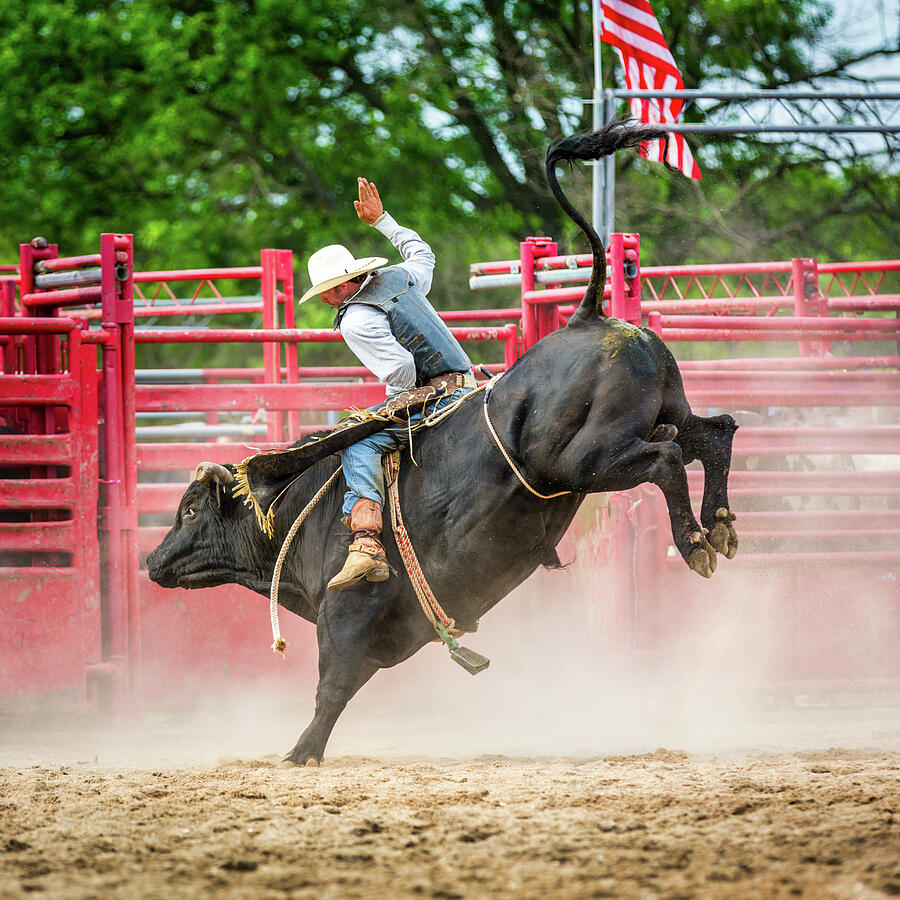
On Tuesday, July 2, David and Susan Case, our pastor and his wife, invited us out to an evening at the St. Paul Rodeo. It was a gift of an evening out, which was a rare treat for us. St. Paul is an iconic small American town. The sign as you come into town suggests there are 434 residents, and I am not sure that number has changed that much in the past 125 years.
St. Paul is home to Oregon’s first Catholic Church, which sits prominently in the center of town. There are a few stores, one gas station, a coffee shop, a small U.S. post office, and a nice pub restaurant called The Harvester. The largest business in town is probably the John Deere farm equipment store. U.S. Bank retained a branch in the community, but it closed recently. It is one of those towns where the concept of “neighbor” still means something, and if you are a visitor, you can feel the ties that bind people together as you walk through the community – the school, the church, the cemetery.
If you are on your way to Salem from Newberg, St. Paul is just a four-way stop on River Road as you wind your way to Salem. Most people rarely see St. Paul, as modern highways have long bypassed the town. I have a feeling that this is not something the residents lose much sleep over. Once a year, leading up to Independence Day, the citizens of St. Paul welcome thousands of visitors for the St. Paul Rodeo. The rodeo began in 1935 on the grounds of an old baseball diamond, and today it draws more than 75,000 people to the small community for several days of competition. It’s one of the top 10 rodeos in the country.
Bull and bronco riders come from literally all over the world to compete for top prize money and showcase their skills. Run completely by volunteers, the whole event is quite a show and raises money for the local school and other organizations. In fact, the rodeo grounds double as the St. Paul football stadium. As soon as the rodeo conducts its last show, volunteers go to work laying sod for the upcoming football season.
We wore our best American flag shirts to join in the spirit of the event. I grew up in towns just like St. Paul in Arizona. Much of my upbringing in Arizona was done in towns with names like Hayden, Kearney, Florence, Ajo and Mayer. For most visitors, Phoenix is synonymous with Arizona – much like Portland is for Oregon. If you're coming from out of state, you’ve likely never heard of these smaller towns.
Many St. Paul families have long, deep roots in the area where it’s common to be a rancher or a farmer. The boots and hats they wear are not symbols but expressions of a work life that centers around horses, cattle and crops. In fact, though I own all the trappings of cowboy attire, I chose not to wear them to the rodeo, knowing real cowboys would be there. Growing up, our community called folks like me “drugstore cowboys” – we might dress up like we knew what we were doing, but there was no substance once you got behind the counter (or, in this case, past the belt, hat and boots)!
The rodeo began with dozens of riders entering the arena, all carrying an American flag. As the riders circled the arena, the announcer noted that we were here to celebrate the best of the American experience and to revisit the great history of the American West. He reminded the audience of the pioneers who carved out communities from the raw land and established civilization amidst the wilderness. Through hardship, blood and sweat, the pioneers laid the foundation for what has become the American dream.
These people were resilient and survived hardships we cannot imagine from the lens of our experience today. He further acknowledged the sacrifice of community members who had served in the armed forces and provided our generation with freedom. When his story was complete, the horses paused their gaits and a woman stepped forward in the center of the arena – a prayer was offered and then she sang the Star-Spangled Banner. After the ceremony, no one doubted that God had indeed blessed America.
As I sat in the stands, it was clear to me that the people of St. Paul had a shared story of the American experience they wanted to tell, and they used the rodeo to do it. It was a compelling and heartfelt message. It is also true that some 40 miles to the north, the St. Paul history lesson would be largely rejected by the urban dwellers of Portland who construct an entirely different narrative, if you can even call it that, of the American experience.
I was reminded that evening of how communities differ in their perspectives on the past. Perhaps I am one of the few people who sit in the rodeo stands considering how stories are told. As I considered the St. Paul story, I became more convinced that the narratives we tell each other guide future direction and paths. Humans need stories to understand the present and to provide a vision for the future. Without them, hope dies and our communities fracture.
At the same time, it is important to acknowledge that our stories are fraught with failure and conflict. We all know that the American story, while one of vision and hope, is also a story that includes slavery and the destruction of the indigenous inhabitants of the continent. Our forbearers did not always choose wisely, and their vision of the future did not include all people – at least in ways we now understand. Nevertheless, the Founders did provide a direction and vision that was more inclusive and broadly representative than leaders before them. In many ways, that was what the story at the St. Paul rodeo attempted to embrace.
Ruth and I visited Phoenix the week following the rodeo to celebrate my mother’s 90th birthday. It was a joy to be together with family and to share memories. One evening we decided to watch a movie, and we happened to find one that appeared intriguing – Sarah’s Oil. A movie that gets a 97% rating on Rotten Tomatoes has to be worth watching!
The movie tells the story of Sarah Rector, born in 1902 near the all-black town of Taft, located in Indian Territory. Her parents were Rose McQueen and her husband Joseph Rector (both born in 1881), who were the black grandchildren of Creek Indians enslaved before the Civil War. Their ancestors became members of the Muscogee Creek Nation and, as such, were given access to land allotments as a result of the Dawes Act. Like many African-Americans after the Civil War, Sarah’s family moved into areas of the country where they lived in segregated communities to create a future that might escape discrimination. The land allotments provided to these new citizens raised little interest until oil was discovered on many of the allotments. The film details the frustrations and real fear that both indigenous people and African-Americans felt in the early 20th century as they attempted to gain access to the American dream.
The typical white settler does not come off well in the film (nor in real life), as they consistently find ways to restrict African-Americans in the new segregated society that developed after the Civil War. The film successfully portrays, in many cases, the complexities of living in a society where racism is so open and common. Heroes and heroines are flawed but admired for their willingness to see differently at times.
Primarily, we were impressed with Sarah Rector, a young African-American woman who argued and defended her rights as a human being in a society that did not acknowledge her humanity. She called to task, in thoughtful ways, the system that had been created to limit her success and she drew partners into that effort who never imagined they would help a black woman. She would eventually win the rights to her land, lease it to Standard Oil, and become a wealthy and influential leader in her community. In fact, due to her wealth and prowess, in 1913, the Oklahoma legislature tried to have her declared an honorary “white person,” allowing her the benefits of elevated social standing in the segregated society, such as riding first-class on trains. Even in a segregated society some citizens tried to expand the boundaries of race and class.
Broadly speaking, the historians of the St. Paul Rodeo captured the core of the American narrative – a story rooted in liberty, freedom and hope. It is a narrative that strives to build community amidst a vast diversity of thought, relying deeply on trust and fellowship. Yet, while the foundation of this story is good, it must be broadened to include those who have fought to be grafted into the American dream, challenging the historic limitations placed upon it.
Sarah Rector’s story is a testament to this struggle. She simply sought access to what was rightfully hers, yet she was denied because of the color of her skin. Ultimately, her journey became a powerful testimony of what America can achieve when it truly extends its promise to everyone.
Every generation must reevaluate this shared narrative, translating its vision for a new cultural landscape. Rather than rejecting our foundational commitments, we must find ways to adapt our stories to embrace new generations and diverse cultures. Martin Luther King Jr. in one of the most articulate expressions of the American narrative put it this way:
“When the architects of our great republic wrote the magnificent words of the Constitution and the Declaration of Independence, they were signing a promissory note to which every American was to fall heir. This note was a promise that all men, yes, black men as well as white men, would be guaranteed the inalienable rights of life, liberty and the pursuit of happiness. It is obvious today that America has defaulted on this promissory note insofar as her citizens of color are concerned. Instead of honoring this sacred obligation, America has given its colored people a bad check, a check that has come back marked "insufficient funds." But we refuse to believe that the bank of justice is bankrupt. We refuse to believe that there are insufficient funds in the great vaults of opportunity of this nation. So we have come to cash this check, a check that will give us upon demand the riches of freedom and security of justice.”
Much like Sarah Rector before him, Dr. King acknowledged the vision of the Founders and argued that they signed a “promissory note” in July of 1776 – one which every American would fall heir to. They set the vision even though they did not fully understand where it would go. What they did express was the commitment that God had created each and every person and given them the right to life and liberty. That story still animates the commitment of republican systems across the globe today.
As a nation of immigrants, our greatest strength has always been our ability to find common ground within our differences – to embrace others into the story of liberty and freedom. Emma Lazarus, a young Jewish woman, penned the famous poem at the base of the Statue of Liberty that welcomes people into New York Harbor. Her poem emphasized that America was different from the empires of the past who were grounded in power and military victory.
The New Colossus
Not like the brazen giant of Greek fame,
With conquering limbs astride from land to land;
Here at our sea-washed, sunset gates shall stand
A mighty woman with a torch, whose flame
Is the imprisoned lightning, and her name
Mother of Exiles. From her beacon-hand
Glows world-wide welcome; her mild eyes command
The air-bridged harbor that twin cities frame.
“Keep, ancient lands, your storied pomp!” cries she
With silent lips. “Give me your tired, your poor,
Your huddled masses yearning to breathe free,
The wretched refuse of your teeming shore.
Send these, the homeless, tempest-tost to me,
I lift my lamp beside the golden door!”
“Keep your storied pomp” you ancient lands, writes Ms. Lazarus. The American story is different. It is one of embrace. We welcome the “tempest-tost” to our shores.
The American story is one worth living into even though its application is imperfect. Perhaps more importantly for those that follow Christ, he calls us to be people of “embrace.” The gospel offers redemptions door to all. Our hope at George Fox University is to develop leaders who discern God’s vision for the future, helping to build a society that reflects true Kingdom values.