
The Joy of Giving Thanks In All Circumstances
November 23, 2026
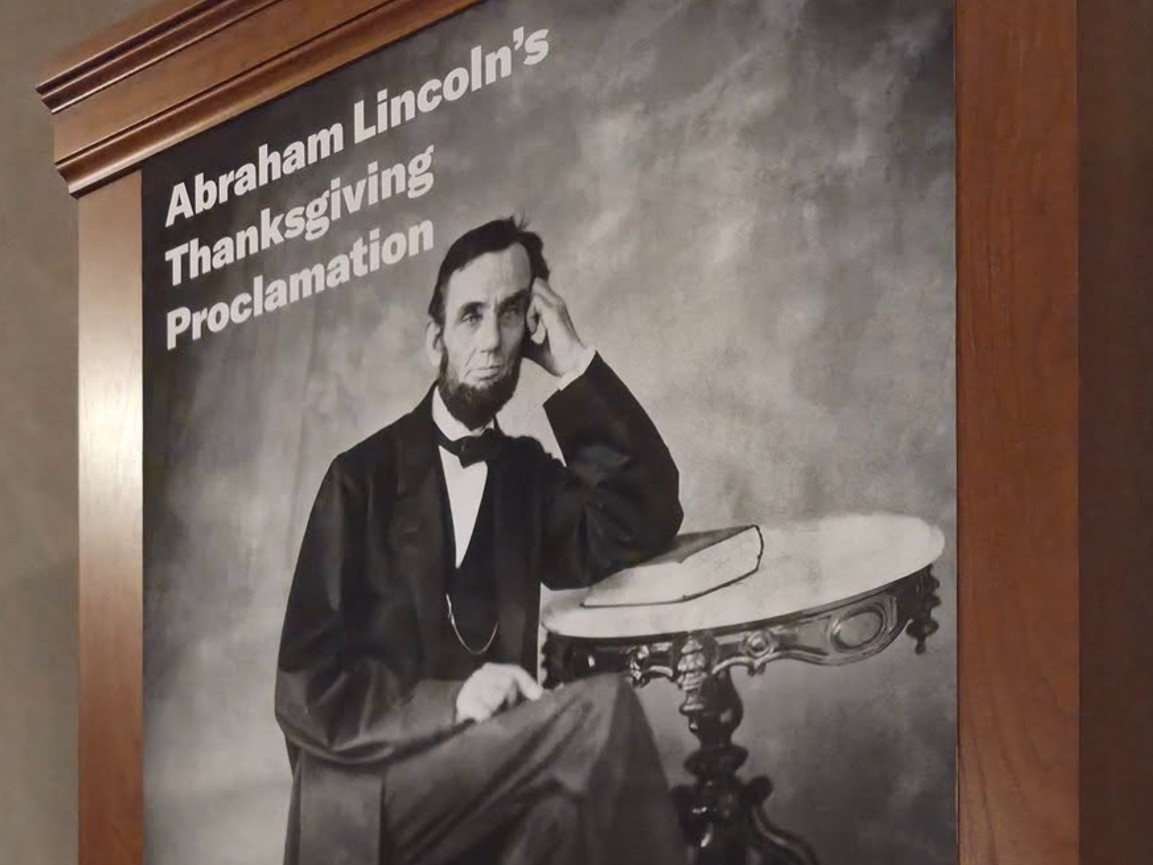
Just 30 years before George Fox University was founded, America was walking through one of the darkest chapters in its history. With 250,000 soldiers and civilians already dead from two years of horrific Civil War, Americans killed Americans on the rolling farmland and rocky ridges of Gettysburg, Pennsylvania. After three days of constant fighting in July of 1863, soldiers from the North won a victory that left 50,000 wounded or dead.
In the midst of this pain and suffering, President Abraham Lincoln chose to plant a seed of hope. A few months later, he issued a proclamation inviting the nation to look upward:
“I do therefore invite my fellow citizens in every part of the United States … to set apart and observe the last Thursday of November next, as a day of Thanksgiving ... And I recommend to them that while offering up the ascriptions justly due to Him … they do also, with humble penitence for our national perverseness and disobedience, commend to his tender care all those who have become widows, orphans, mourners or sufferers in the lamentable civil strife in which we are unavoidably engaged, and fervently implore the interposition of the Almighty Hand to heal the wounds of the nation and to restore it as soon as may be consistent with Divine purposes to the full enjoyment of peace, harmony, tranquility and Union.”
The middle of the Civil War would seem an unlikely time to issue a proclamation of gratefulness that would birth a uniquely American tradition. Thanksgiving was not created during a time of peace and plenty. It was developed in a time of war and suffering. Lincoln understood that gratitude isn’t just a reaction to good times.
We see that same resilient joy in one of Scripture’s most famous passages on gratitude, from Paul’s letter to the Thessalonians: “Rejoice always, pray continually, give thanks in all circumstances . . .” When Paul wrote those words, the Thessalonian Christians were being persecuted by their fellow citizens. Much like Lincoln, how could Paul expect that people should give thanks during times of grief? Those are the kinds of moments where it is most difficult to summon up “thankfulness.” Why the admonition to give thanks in difficult times by both outstanding leaders?
Perhaps we can learn a little from the Old Testament story of Joseph, who experiences family betrayal, enslavement and unjust imprisonment but eventually achieves redemption and is used to save his family from famine. God is at work in his life at all times. The “thanks” we owe in our context is not “for” what is happening to us but for the One who is present in our circumstances. We are confident that God is at work bringing our stories (the broad story, my story, your story) to the end he desires. My responsibility is to remain faithful and to give “thanks” for his work even when I cannot see through my tears and pain. “All things are working together for his story.”
We recognize first that we are not to give thanks “for” the circumstances. A significant part of the human experience results in sorrow, whether that is in illness, accident or ultimately death. Paul put it this way in his letter to the Romans: “We know that the whole creation has been groaning together as it suffers together the pains of labor, and not only the creation, but we ourselves, who have the first fruits of the Spirit, groan inwardly while we wait for adoption, the redemption of our bodies.” God’s world, his creation, is not what it was intended to be. We see it and feel it around us.
The Christian story is unique because our God does not just empathize with our experience; he has chosen to enter into our experience. He became a child, born of a virgin, lived among us, suffered with us, and ultimately endured a horrible death on the cross so that all humanity and the creation of God could be redeemed.
So this Thanksgiving, we celebrate with genuine joy, not because life is always easy, but because we know God is bringing “all things” together for good, leading us toward a future filled with redemption and new birth.