
Japanese Art of Mending With Gold Becomes a Spiritual Exercise for Ceramics Students
Professor Tiffany Hokanson incorporated a kintsugi section into her fall ceramics courses, teaching students to see brokenness as part of the redemptive process
by Victoria Payne
“I think we can all relate to feeling broken.”
That’s what one student wrote after learning kintsugi — the Japanese art of repairing broken ceramics with gold — in Tiffany Hokanson's ceramics course. What started as an exercise in embracing failure became something deeper: a space where students connected their work, their faith and their stories.
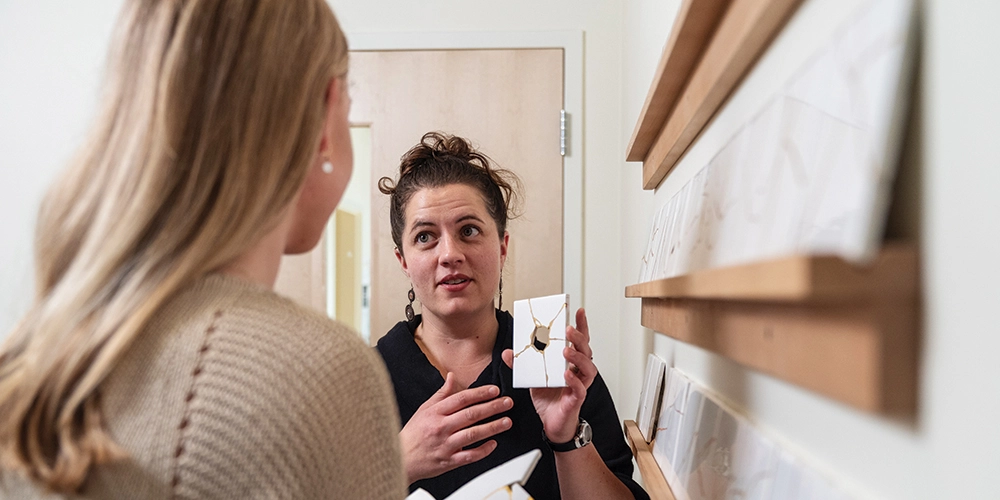
Hokanson incorporated a kintsugi section into her fall ceramics course, teaching students to see brokenness as part of a redemptive process. In the kintsugi tradition, a repaired piece becomes more valuable in the process — the gold-filled cracks becoming part of its story rather than something to hide. Hokanson’s research on failure and the aesthetic of wabi sabi, combined with her training under Portland-based kintsugi artist Emi Joyce, provided a rich conceptual framework, allowing her to bridge the technical aspects of ceramic repair with a deeper theological and philosophical conversation about beauty, brokenness and repair.
“It was Spirit-led,” Hokanson says about deciding to bring kintsugi into her classroom. “It checked so many boxes that I really care about — the opportunity for a deeply contemplative artistic process, conceptual art, a faith-based foundation, and teaching students that mistakes are OK. Plus, by training with a kintsugi artist, I was able to connect what I learned directly to my students.”
The process involves more than technique. Students work with ceramic tiles they break themselves and then mend. As students inlaid their tiles with gold, Hokanson opened conversations about 2 Corinthians 4:7: “But we have this treasure in jars of clay to show that this all-surpassing power is from God and not from us.” Students began talking about the great falling away and the need for spiritual repair, sharing places they felt were broken in their own lives.
“Students brought an openness and willingness to the project that I didn’t expect to see during the first weeks of classes. They were really craving an authentic connection to each other, which seemed to evolve naturally during a shared hands-on experience,” Hokanson says.
Mid-semester evaluations confirmed what Hokanson was seeing. Students asked for more of this kind of reflective work where they’re invited to talk about their faith in class. One student wrote: “I can talk about my imperfections with others.” Another added: “I don't feel left out or alone anymore.” A third student reflected: “It taught me not to judge others just because their cracks are in a different spot than mine. We are all made whole in Jesus.
Hokanson’s workshop was made possible thanks to a microgrant from the Program for Leadership & Formation, funding 53 kintsugi kits for all of her students, from beginner to advanced. The funding invited Hokanson to dream up projects that align with her own values and coursework, to teach students about redemption and restoration not just through lectures but through their art.
The ripple effect of the project, however, wasn't limited to the students. For Hokanson, the experience has been formative as well. She distinctly remembers the faculty kickoff workshop when she came to George Fox in the fall of 2024. The facilitator said the best way to incorporate faith into teaching is to develop your own faith first.
“It’s full formation with me as a teacher, too,” she says. “I feel so taken care of and seen here. It’s not just students who are benefiting. I see this continuing a ripple effect throughout my classes.”

Related Posts
A Community of Art: The Process of a Mural
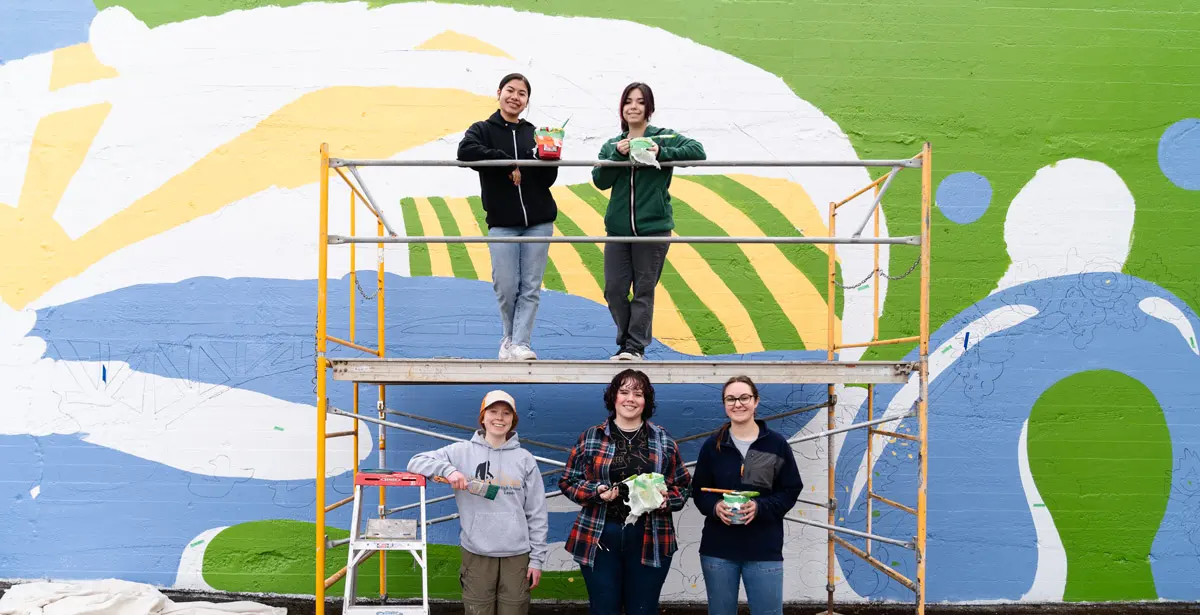
During the spring, several art students, under the guidance of Professor Seth Van der Eems, worked together on a new mural for the community. We asked the contributors to reflect on the unique process.

5 Reasons Why You Should Take Summer Online Classes
Students at George Fox – including incoming new students – can take up to three courses during our summer term. This means that you can split the difference and make sure your fall semester is not overbooked, so you have time to breathe, socialize, and participate in what makes George Fox great – being known. Every credit counts.

Choose Joy
Artist Christine Joy Swanson has built a career capturing beauty on canvas – and now she’s bringing it to the page, pursuing her calling to inspire joy and healing in others
Graphic Design Class Partners With Portland Rescue Mission To Bring Dignity to Food Outreach
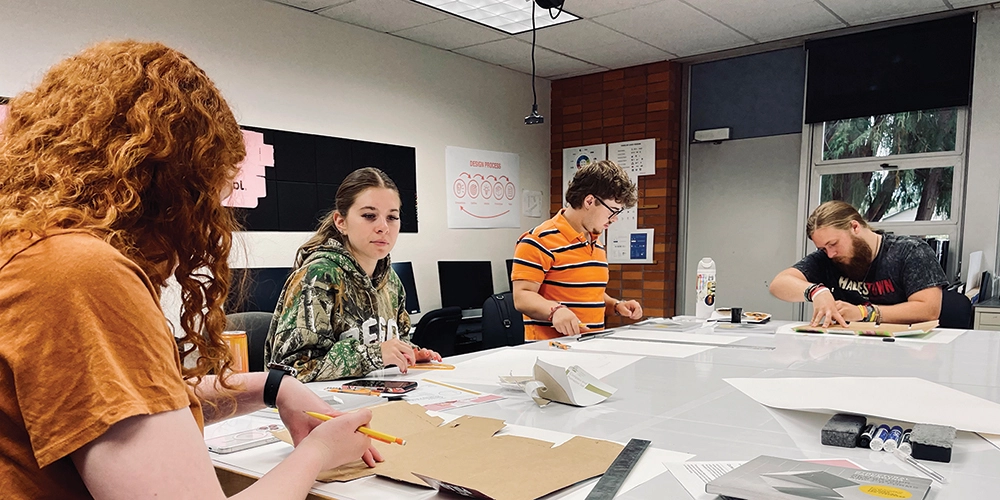
By creating packaging for Portland Rescue Mission’s food service provider, professor Marvin Eans and his students are using their graphic design skills as a vehicle of compassion
‘Hope Dealers’
A group of George Fox students use their vocational skills in art to serve in Philadelphia