
How to Choose an Occupational Therapy Doctorate (OTD) Program
by Sean Patterson
You’ve landed on your desired career path – occupational therapy. What are the factors to consider and the questions to ask when considering the ideal occupational therapy doctorate program for you?
You’ll be investing up to three years of your life – not to mention thousands of dollars – at your chosen institution, so finding the right school for you is critical for a wide range of reasons. And while occupational therapy doctorate (OTD) programs share the same goal of educating and equipping OTs, the experience of getting there can vary considerably.
Following are some questions you should consider as you research, apply to, and ultimately choose an OTD program.
What should I look for in an OTD program?
Start with how you learn best. One of the biggest differences among OT programs is how much instruction happens in person versus online. Some programs rely heavily on asynchronous coursework with periodic on-campus intensives. Others are primarily campus based, allowing you to learn a concept, watch it demonstrated and immediately practice it with faculty on hand.
Neither approach is the clear-cut choice. Ask yourself whether you thrive with independent, flexible learning or prefer regular face-to-face interaction and hands-on instruction.
Then look deeper. Consider fieldwork, faculty, cohort size, advising, the curriculum, and the overall culture of the program. How accessible are professors? Will they know you individually? How does the program help arrange fieldwork? How soon will you begin practicing clinical skills?
In George Fox University’s occupational therapy doctorate program, for example, students spend their first four semesters primarily in campus-based coursework, semesters five and six in fieldwork, and their final two semesters completing doctoral capstone work. Cohorts generally include 22 to 24 students, which helps faculty build individual relationships with students.

“Having an idea as you begin those searches of what you’re looking for in a program is the first thing to consider,” says Kate Turner, director of George Fox’s OTD program. “Ask yourself if you want to have more individualized hands-on instruction in a classroom from a faculty professor or if you prefer working on your own, on your own time, having the flexibility of asynchronous work, but having to kind of teach yourself.”
“So it’s a preference, really, of what kind of learning and instruction you do best with. For the on-the-ground, in-person type of a program, which George Fox is for the most part, we require you to be on campus for classes during the week, and in those classes integrate hands-on instruction.”
The important thing isn’t finding a program that looks exactly like this model. It’s understanding what the experience behind the degree will actually be like.
What makes one OTD program meaningfully different from another?
There are more differences between OTD programs than students sometimes realize. Programs vary in length, class size, learning modality, summer schedules, fieldwork structure, faculty backgrounds, and institutional culture.
Some students also care deeply about the mission of the university. They thrive in a smaller, faith-based program with a strong tradition of service and want to find a place that aligns with their values and priorities as future OTs. Others prefer a program that simply emphasizes the fundamentals of the profession and isn’t as service-minded.
Faculty is a big differentiator. Look at who will actually be teaching you. Are they active clinicians? Researchers? Authors? What are their areas of expertise?
Consider all this and then think about your own goals. If you want to become a practicing clinician, you may value faculty members who remain connected to patient care. If you’re interested in research, perhaps you’re looking for faculty with strong scholarly backgrounds.
Either way, these are the people who may become your mentors, so find out if their interests and experiences resonate with where you hope your career will go.
How should I evaluate the curriculum and teaching approach?
Don’t just read the list of course titles. Look at how learning happens.
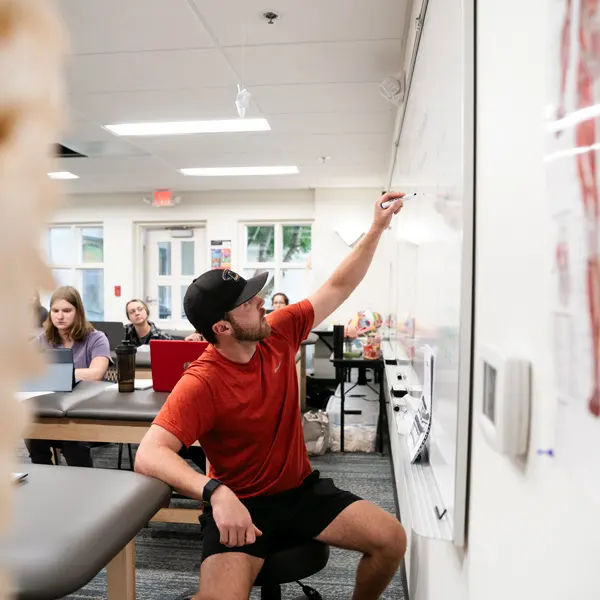
Ask when students begin hands-on work. How is classroom learning connected to fieldwork? When does the doctoral capstone occur? How much time is spent learning independently versus interacting with professors and classmates?
Also consider the academic calendar. Most doctoral programs fall within a relatively narrow range in overall length, but how they use summers – and whether they are on a quarter, semester, or eight- to nine-week course pattern – can make a difference.
George Fox’s OTD program, for example, runs for eight consecutive semesters over about 2.8 years, including summer semesters. Continuing through summers means students can complete the degree and move toward the board examination and employment sooner than they might in a program with summer breaks.
That may appeal to one student. Another may value having summers free. What matters is understanding the trade-off.
“My advice is to take a broad look at the very nature of the programs you’re interested in,” says Trisha Stickler, admissions counselor for George Fox’s OTD program. “Think intentionally about what you really want in a program. What kind of classroom connections do you want? Do you want a large program? Do you want a small program? And do you want connection with your classmates, your cohort, because you’re with them all the time? Do you want connections with your professors? These are all the things you should consider, beyond curriculum, location and whether it’s more hybrid or in-person.”
What practical factors should I consider?
Think about how school will fit into the rest of your life. Will you need to move? Could you commute? What will housing cost? Are you leaving behind family or another support network?
Don’t compare programs based solely on tuition. Relocating to attend a less expensive school could potentially eliminate much of the savings. Likewise, differences in program length affect how soon you can begin earning an OT salary.
Look closely at the weekly schedule, too. Are classes during the day, evening or weekend? How many days per week will you be on campus? And if you hope to work while attending OT school, ask whether that’s realistic. Some students successfully maintain part-time jobs. Others discover that any outside work makes graduate school difficult to manage.
Faculty who have watched multiple cohorts go through the program can help you understand what previous students have been able to handle.

What are the steps I should take to apply to an OTD program?
Start early – potentially during your junior or senior year of college. Research programs and make a list of prerequisites and deadlines. Attend virtual or in-person information sessions. If you have questions about whether a course satisfies a prerequisite, contact the program rather than guessing.
You may not need to have every prerequisite completed when you apply. Some programs allow prerequisites to still be in progress as long as they’re completed before the program begins.
Then pay close attention to application timelines. Programs may have priority, regular and final deadlines, and some use rolling admissions. If a program fills seats as applications arrive, applying earlier can work in your favor.
Finally, use the application to demonstrate that you understand occupational therapy and have made an informed decision to pursue it. Shadowing an occupational therapist can be particularly valuable. Even when it isn’t required, spending time observing an OT helps you understand the profession and explain why it’s right for you.
Typically, you can apply through the institution’s website – arguably the best route if you only plan to apply to that school – or through the Occupational Therapy Centralized Application Service (OTCAS). The OTCAS option is best if you plan to apply to more than one program.
Should I apply to more than one OTD program?
In general, you should apply to more than one OTD program. You can absolutely have a first-choice school, but OT admissions can be competitive. Applying to several programs gives you options if your first choice doesn’t work out.
Ultimately, keep in mind that choosing a program is a two-way process. You’re deciding which schools appeal to you, while programs are deciding which applicants they want in their next cohort.
How competitive is it to get into an OTD program – and how can I make my application stand out?
It can be competitive to get into an OTD program, but it varies by school. Cohort sizes differ, programs receive different numbers of applicants, and some schools admit students more than once a year.
Instead of fixating on a particular acceptance-rate number, focus on becoming a strong applicant. Grades – especially in prerequisite courses – matter, but they’re only one part of the application.
“From our perspective, our admissions committee is taking a holistic look at your application,” Stickler says. “Looking beyond just grades, other things are considered, such as healthcare experience, or if you’ve done amazing volunteer work, or if you have a very compelling essay. In terms of setting yourself apart, obviously having strong grades in your prerequisites is important, but it’s just one piece.”
“Really highlighting in your resume or your essay the other parts of you, like your volunteer work, why you want to be an OT, your understanding of or experience with the profession – those things are all taken into consideration.”
In short, schools typically want to see someone genuinely passionate about OT. They may ask you why occupational therapy is your choice rather than another healthcare profession – and what experiences have helped you reach your decision to pursue this complex, person-centered healthcare profession.
And don’t be discouraged by a waitlist. Being waitlisted can simply mean the cohort filled before a spot was available. Students do get admitted from waitlists.
Does an OTD program’s accreditation status matter?
An OTD program’s accreditation status is very important. ACOTE accreditation should be one of the first things you look into. It isn’t something to assume. Ask about it and verify it.
Accreditation helps ensure that programs meet established standards and protects the investment students are making in their education. Graduating from an appropriately accredited program is also critical to the process of becoming professionally credentialed.
Newer programs may still be progressing through the accreditation process, so if you’re considering one, understand exactly where it stands and what must happen before your cohort graduates.
Students who hope to practice outside the U.S. should do additional research about whether their education will be recognized in the country where they eventually want to work.
“Accreditation is key,” Turner says. “You will not be able to sit for your boards if you have not completed a degree conferred by an accredited institution. And so accreditation really is the consumer protection arm of higher ed. It’s there helping to protect students’ investment in their education.”
What should I ask current OTD students?
Current students can answer a different kind of question: What does this program actually feel like?
Ask whether professors know them personally and are accessible when they need help. Ask whether the amount of hands-on learning matched what they expected. Find out whether classmates support one another, how manageable the workload feels, and how much assistance students receive with fieldwork.
Good questions include, “What surprised you about the program?” and “What do you wish you had known before you enrolled?”
You aren’t looking for someone to tell you that everything is perfect. You’re trying to understand whether their experience sounds like one in which you could thrive.

What should I pay attention to during a campus visit?
If possible, sit in on a class. You can learn a tremendous amount by seeing a program in action. How do professors interact with students? How much are students participating? Is instruction hands-on? Can you imagine yourself sitting in that room every week?
Meet faculty members and, if possible, the program director. If you’re interested in a particular fieldwork or capstone experience, try to meet the people who coordinate those areas.
Pay attention to the larger environment, too. Does the OT program feel connected to the university? What resources are available outside the department?
Most importantly, notice the culture. A visit isn’t just an opportunity for a program to evaluate you. You’re evaluating the program, too.
What warning signs should I watch for?
If you’re looking for a personalized, relational program and you consistently can’t connect with a real person, that’s a red flag. If admissions staff don’t answer your questions, faculty seem inaccessible, or you attend an information session and don’t feel heard, ask yourself whether you should expect the experience to change after you enroll.
Also look closely at the program’s mission and educational philosophy. If its values or approach to learning clearly don’t fit what you need, that’s another warning sign.
In addition, pay attention to what happens after admission as well. Are people communicating with you? Do you know what you need to do before classes begin? Can someone connect you with faculty, financial aid or other resources?
You may be admitted many months before you actually begin school. A healthy program should have systems for helping students navigate that transition.
“What we do here at George Fox are what we call OT Connect meetings that happen between January and June,” Stickler says. “They are for our admitted students to help them stay connected, and faculty lead the discussions. They have proven to really be of value to our students, making them feel like they belong even before they begin the program.”
What should I absolutely not compromise on?
Don’t compromise on ACOTE accreditation for an OTD program, and don’t ignore fundamental questions of fit.
You’re making a substantial investment of time, money and energy. If you know that you need close faculty relationships, don’t choose a program where students largely learn on their own simply because it’s convenient. If flexibility is essential to your life, don’t choose a highly structured campus-based program and assume you’ll make it work.
Know what matters most to you before you start comparing schools.

How should I compare multiple acceptance offers?
If several programs offer you admission, congratulations – now go back to the priorities that started your search. Identify the two or three factors that matter most. Is it location? Faculty? Cohort size? Cost? Fieldwork? Teaching style? The university’s mission?
If you’re still uncertain, visit again. Talk to the program director or faculty. Ask questions you didn’t know enough to ask the first time. And once you decide, communicate with the other schools promptly. When you hold a seat in a cohort, another applicant may be waiting for it.
Then there’s one final question worth asking yourself: Which program are you most excited to tell people you’re attending? That feeling shouldn’t replace careful research, but after you’ve compared the practical details, it may reveal where you can most easily imagine yourself.
Ultimately, choosing an OTD program isn’t about finding the school that looks best on someone else’s list. It’s about knowing yourself well enough to identify the environment where you can learn, grow and prepare to serve others as an occupational therapist.
“You could be a great candidate at three different programs, but at the end of the day you really have to narrow down what it is you’re looking for, then decide which of those programs is going to deliver what you value most in your educational experience – and where it will take you,” Turner adds.
Learn more about George Fox University’s occupational therapy doctorate (OTD) program in Newberg, Oregon.