
Opening Doors to ‘Big Ideas’
by Jane Gonzales
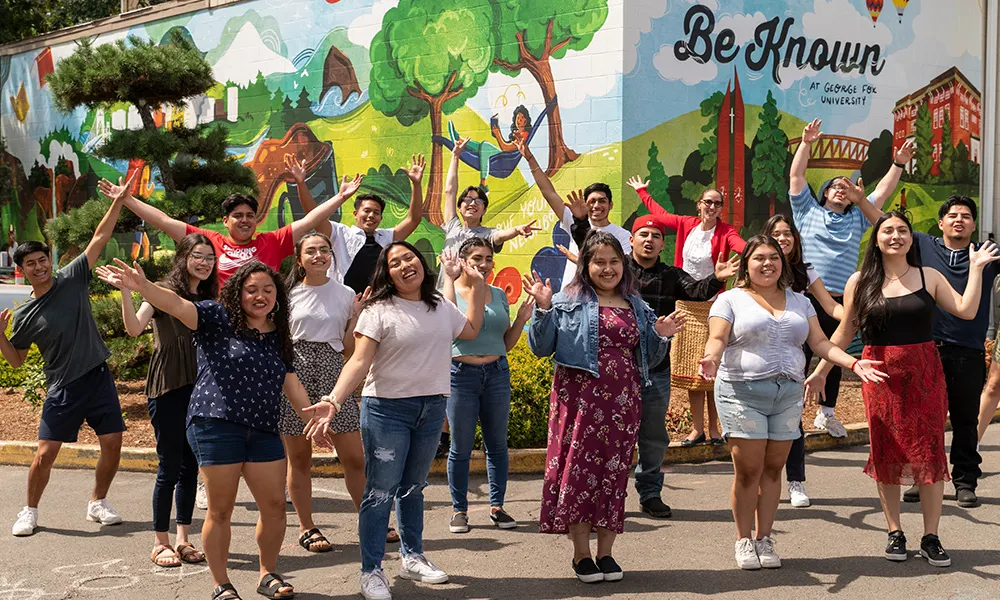
Through George Fox University’s Liberation Scholars program, Latino/a students attend a free, two-week seminar to expand their knowledge, chart their future, and equip themselves to be leaders and difference makers in their communities.
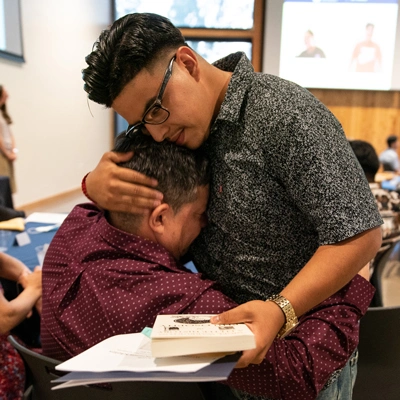
As the closing banquet wound down and attendees began to gather their things, two students dressed in the teenage-boy version of formalwear (jeans and button-down shirts) approached the front of the room. Just two weeks earlier, they had been strangers: one from Ecuador, the other from Woodburn, Oregon. But as roommates, they had bonded over music. Before leaving, they offered a gift to their new friends: a nervous but heartfelt duet on guitar and violin.
Moments like this capture the spirit of George Fox’s Liberation Scholars program – the Teagle Foundation’s Knowledge for Freedom initiative that aims to bring college-level humanities education to underserved high school communities.
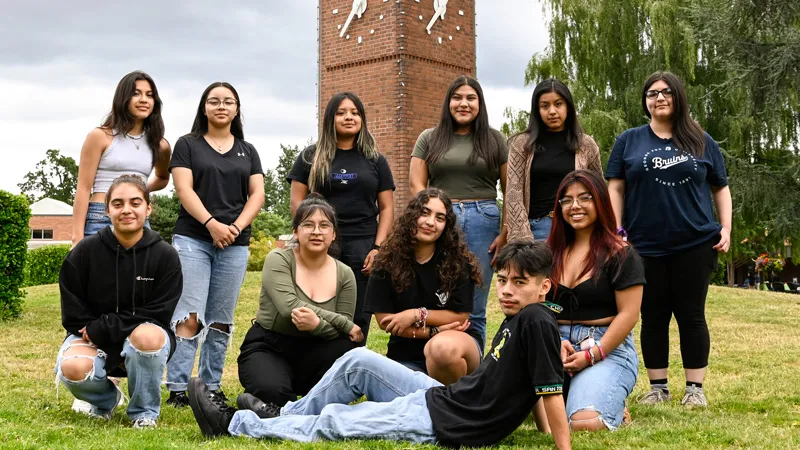
For five years, the initiative has funded George Fox University’s Liberation Scholars program. Currently led by professor Dana Robinson, it offers first-generation Latino/a students entering their senior year of high school the opportunity to study great philosophical, political and literary texts – much like those taught in the George Fox Honors Program – while experiencing a taste of college life.
An On-Campus Experience
Over the course of two weeks, students earn two college credits. Mornings are spent in seminar-style discussions and afternoons in reading and writing. By the end, each student produces a multi-page essay engaging one of the course texts, and all essays are compiled into a printed booklet for them to take home.
Outside of class, students live in the dorms, eat in Canyon Commons, play in Hadlock, and explore the George Fox campus and downtown Newberg. For the past two years, Liberation Scholars has also partnered with the Pre-College Institute, aligning schedules, joining PCI workshops and evening activities, but continuing for an extra week after PCI concludes.
A Foundation for College
The program has a twofold aim: to introduce students to both classical humanities education and college life. The latter goal is especially significant for first-generation students – and it appears to be working.
“Most of them go on to four-year degrees, and every year some of them also come to George Fox,” says Robinson, an assistant professor of history and theology and associate director of the university’s honors program. “Students self-report an increase in confidence and an ability to imagine themselves in college. We’ve even had younger siblings and cousins of previous scholars attend later, which is a great testimony to the value they find in it.”
Equally important is the emphasis on the humanities. As Robinson explains, “The resources for college access are obviously important for students from underserved communities and provide a concrete metric for success. But I think there's something even more important about being able to catch a vision for education that involves conversation about big ideas, about justice and the good life.”
An Introduction to ‘Great Books’
My love for the honors program and my interest in high school teaching led me to apply as a student mentor for Liberation Scholars this past summer. My coworkers and I had a variety of responsibilities: providing academic support during reading and writing hours, planning games and excursions, hosting a late-night writing party, mediating conflicts, and even catering.
In terms of curriculum, the students were exposed to classic “Great Books” like Plato and Aristotle, Hobbes and Rousseau, as well as more contemporary writers, like Gloria Anzaldua and Dan-el Padilla Peralta, who could speak directly to the Latino/a experience. The latter authors, in particular, seemed to help students recognize that their own experiences mattered, and that whether English was their second language or they had never learned Spanish, there was no singular Latino/a narrative into which their stories had to fit.
‘My Heart Was Warmed’
For a long time, I vowed I would never become a teacher. Maybe it was partially because everyone assumed I was going to be a teacher when they heard I was an English major, and I wanted to subvert their expectations. But mostly I think it was because I remembered the way my classmates treated my high school teachers, and I just didn’t think I could handle it.
My time with these students, however, put those fears to rest. Sure, they weren’t always the most considerate or diligent, and sometimes needed instructions repeated more than once. But they also carried a sense of hope that feels rare in many social spaces – a belief in kindness, and a genuine passion for their hobbies and activities.
What began as several small cliques (the boys grouped together, as did four friends from the same school) slowly transformed into a lively, mixed community of varied talents, interests and personalities. My heart was warmed time and again watching isolated students be invited in. It honestly surprised me, remembering high school and even much of college, that no one was left out unless they chose to be (limited social batteries and what-not).
My Observations
From what I observed, the students learned a lot from this experience. For one thing, I saw many of the classic freshman life lessons playing out on a small scale. For instance, students would stay up until the early-morning hours, and then fall asleep in class the next day.
But what really convinced me of the program’s impact was how many students said they felt more confident in their ability to engage with philosophy and to wrestle with big questions about humanity, society and justice. They had always assumed that philosophy was beyond them, but they discovered that even when they didn’t understand everything, they could stretch their minds and still come away with something meaningful.
This happens to be Robinson’s favorite part of directing the program: “seeing the students gain confidence in the seminar environment – to start joking about Aristotle, to realize that they like philosophy, and that they have a voice in the great conversation.”
Related Posts
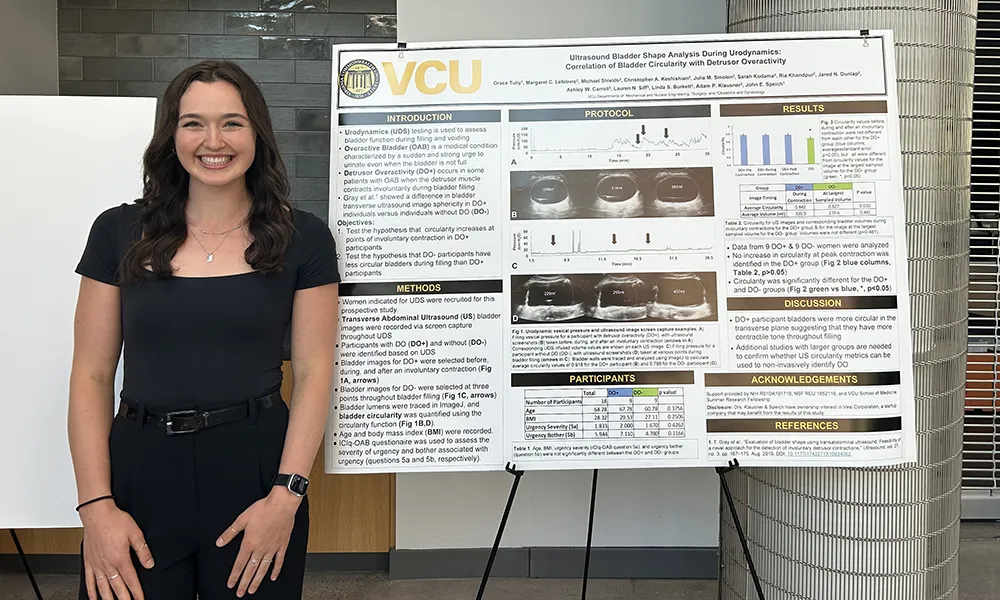
Engineering Hope Through Patient Advocacy
For Grace Tully, a fourth-year biomedical engineering student, her work is more than engineering medically necessary devices; it’s about engineering hope.
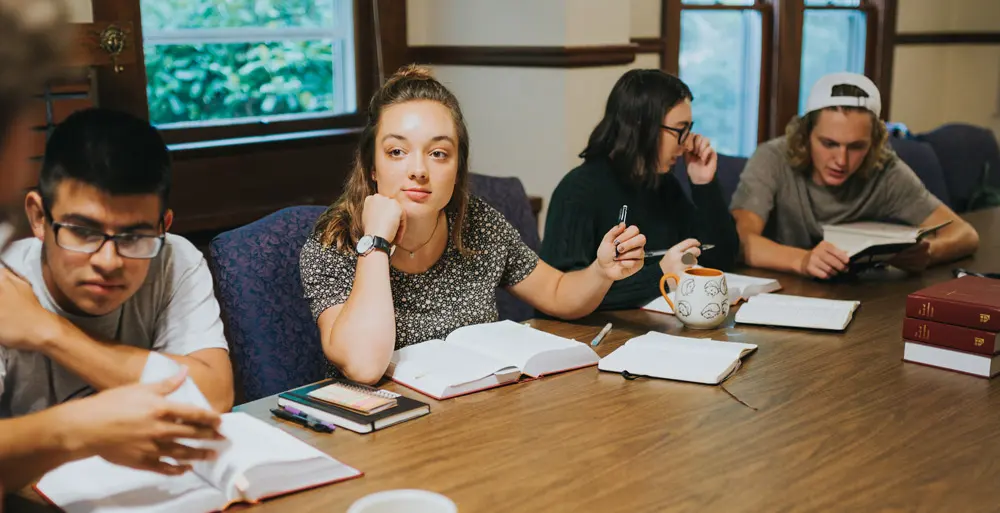
The Great Books and Homeschooling: Literature-Based Homeschool Curriculum for High Schoolers
Literature-based homeschooling is exactly what it sounds like: an educational model that is primarily structured around reading. How does it work?
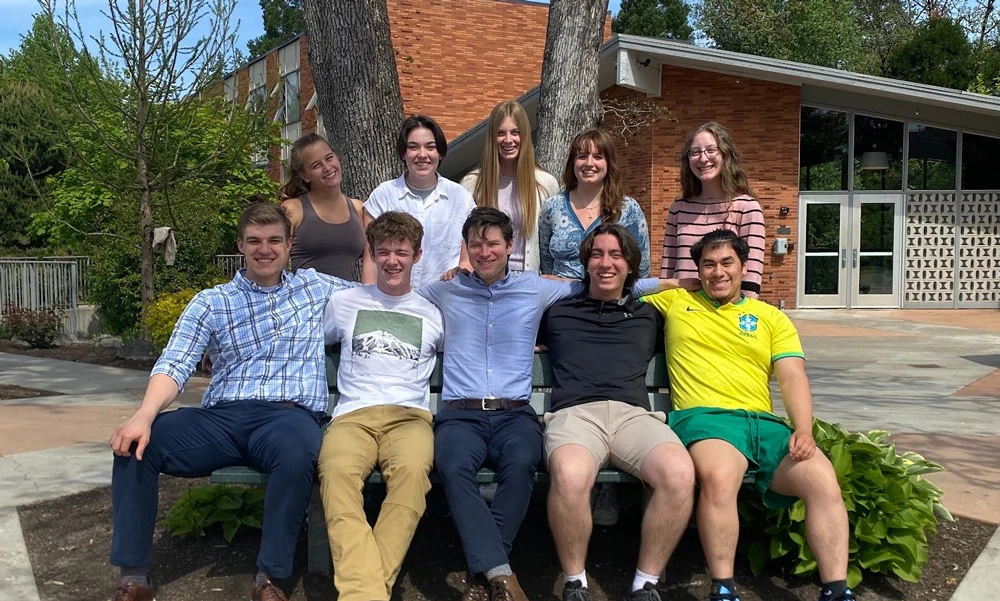
Honors and STEM: A Holistic Education Worth Pursuing
Think you can't major in a STEM field as an honors program student? Think again. Though it's a challenge, combining the two results in a rich educational journey that will give you a well-rounded college experience.
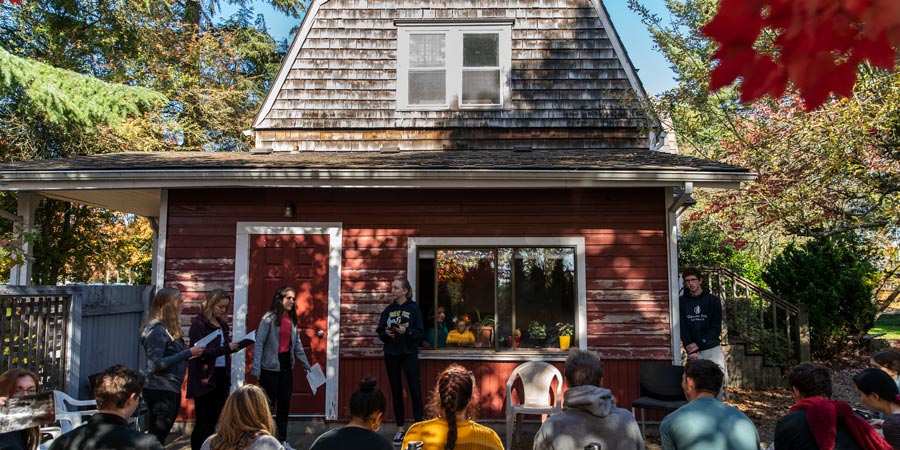
The Best and Most Approachable Texts from Honors 150
The honors program lasts for six semesters, with two classes for each underclassman year and one each during junior and senior year. While I cannot guide you through a seminar of discussing a text over a blog, I can give you my recommendations for the best and most approachable texts in the honors program (in my opinion).
A Lasting Impact
Three professors retire this summer after serving a combined 91 years at the university
Transfer Story: Noah Koshi
On April 8, 2022, I made the difficult but much-needed decision to enter the NCAA transfer portal and leave the university I was attending, Utah Valley University. I made the decision for a number of reasons, but the primary reason was I wanted to be at a place where I could feel more comfortable being myself.