
From the Pulpit to the Clinic: A Minister’s Journey to Social Work Practice
Unsure of his future, Trevor Owen finds a new sense of purpose and direction with his decision to shift from full-time ministry to trauma counseling
by Sean Patterson
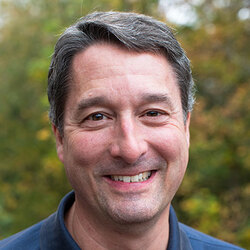
There was a point, after years of ministry, that Trevor Owen arrived at a crossroads without a clear path forward. Burned out as a pastor, yet eager to still use his compassion for the betterment of the world, he went to God with some blunt questions.
“I didn't know what was going to come next, so I basically said, ‘OK, God, what am I supposed to be doing? What now?’” he recalls. “I was doing some part-time work with a ministry in Africa, but I had no idea what my next steps were going to be. There was a lot of soul searching going on – a lot of unanswered questions.”
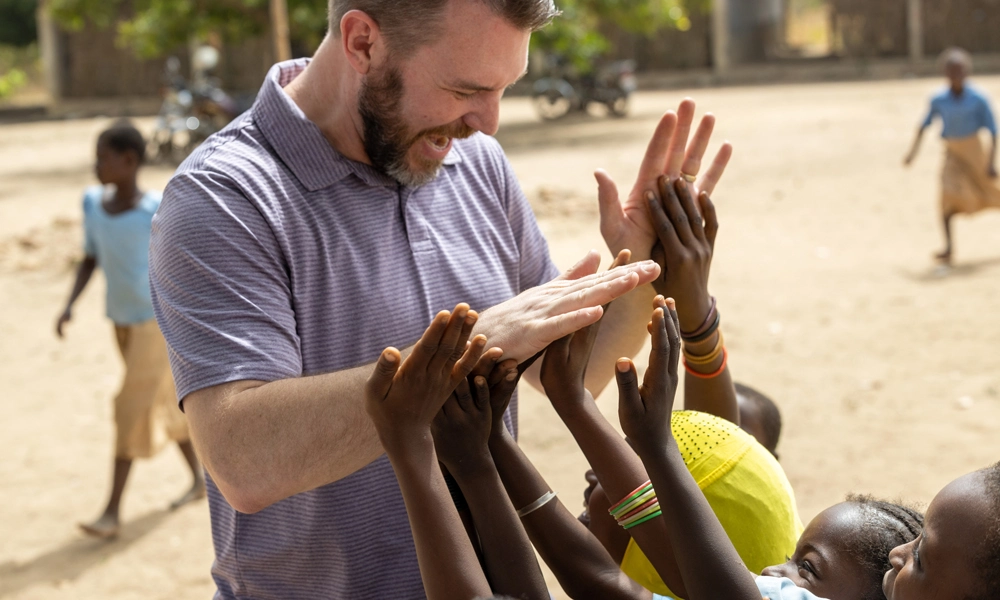
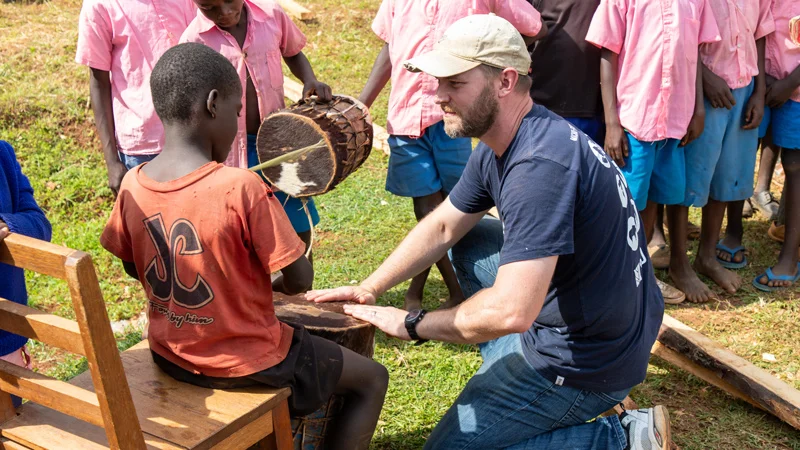
The answers didn’t come immediately, but on a regular trip to Liberia to work with families and schools his eyes opened to a new possibility: trauma counseling.
“I had just been in a place with a huge history of civil war and lots of trauma among the people, and I remember thinking, ‘I would like to speak to that,’” he says. “It was then I had a conversation with someone who had earned a social work degree decades earlier. They said, ‘If you’re working internationally with nonprofit organizations and wanting to do the counseling piece, you really ought to consider a social work degree.’ And I was like, ‘Oh, maybe that’s a better fit than just counseling.”
Within months, Owen acted on his hunch and enrolled in George Fox University’s Master of Social Work program. His future now in better focus, he has dreams of opening a trauma counseling clinic after graduation.
A Dream Derailed
Owen grew up in Silverton, Oregon, with dreams of playing collegiate soccer. A goalkeeper throughout high school, he planned to attend George Fox and compete at the next level. But a serious injury changed everything. After paralyzing his left hand – an injury that required it to “grow back one finger at a time,” as he describes it – his soccer career came to an abrupt end.
“I went to George Fox for a year and a half, but after that I dropped out and went into ministry,” Owen recalls. What followed was more than a decade immersed in pastoral leadership, entrepreneurial business, missions and nonprofit work. He served as a youth pastor, worked in the business world, did work in international missions, attended a Bible college in Maui, and ultimately returned to Oregon to attend Portland Seminary, where he earned a Master of Divinity degree.
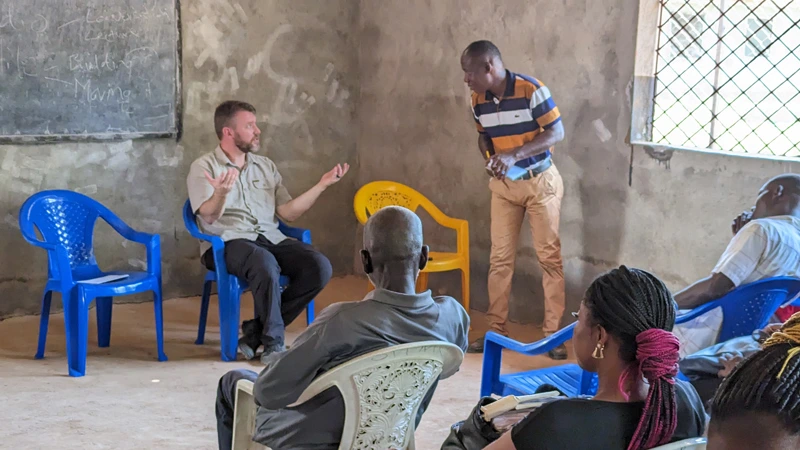
In the ensuing years he pastored churches in Lebanon, Salem and Silverton, Oregon, while also helping launch Mission Catalyst, a nonprofit focused on short-term humanitarian mission work. Through that organization and his work with the Free Methodist Church, Owen led teams and coordinated ministry efforts in Africa, Asia, Latin America and the Middle East.
Ultimately, he landed in the Tri-Cities area of Eastern Washington, where he and his wife settled while she worked on her medical school residency. She now works as a doctor with the Yakima Valley Farm Workers Clinic, serving vulnerable populations across the region. Owen continued pastoring for a time, then stepped down from church leadership and began working at the denominational level as the West African Regional Coordinator for International Childcare Ministries.
The Missing Piece
It was during that international work – particularly with refugees and communities shaped by war and displacement – that Owen sensed something missing from his vocational toolbox.
“I had a lot of experience as a pastor and in personal counseling,” he says. “But I wanted a more holistic understanding of what was going on with people – what was happening in the mind and body, not just being present and praying with them.”
A pivotal moment came while working alongside a licensed clinical social worker during refugee relief efforts. “The wisdom they had in approaching people who had experienced horrific trauma really stuck with me,” Owen says.
Meanwhile, he felt called to step down from his pastoral position at the time, leaving him directionless. The providential conversation with the family member who had earned a social work degree gave him a renewed sense of purpose.
“Social work gives language and structure to what I’ve been trying to do my whole life,” he says. “It allows you to work at the micro, mezzo and macro levels – helping individuals, families, communities and even addressing policy issues that affect entire populations.”
A Return to George Fox
Owen enrolled in George Fox’s MSW program because it offered both continuity and flexibility. Having already completed seminary at the institution, he knew the culture and the faculty. The program’s hybrid format – combining in-person and online learning – allowed him to continue living in Washington while traveling to Oregon for classes.
“I don’t think you can do counseling or social work entirely online,” he says. “This is a relational craft. You have to personally interact.” For Owen, the in-person component has been critical, not only for skill development but for forming deep relationships with classmates and professors.
Those relationships, he says, have been the most meaningful part of the program. “We know each other’s lives. We text to check in when someone’s parent has surgery. Those connections make us better social workers.”
Academically, Owen has been especially drawn to trauma-informed practice and the integration of faith and science. He credits faculty members for encouraging thoughtful engagement across disciplines and for modeling care that is both rigorous and compassionate.
“There’s a seriousness about the training here,” he says. “But there’s also an understanding that we’re whole people, learning how to sit with pain without being overwhelmed by it.”
That tension – between hope and heartbreak – is one of the greatest challenges Owen sees in social work. “Once you become aware of the scope of need in the world, it can feel overwhelming,” he says. “The temptation is to despair or to give up. Learning how to stay present and hopeful in that space is hard work.”
Future Hopes
After completing his degree in the spring of 2026, Owen intends to pursue licensure as a clinical social worker, eventually opening a trauma-informed private practice in the Pacific Northwest. He hopes to serve refugees and others who have experienced significant trauma, while also continuing international work that focuses on training and systems development.
Long term, he envisions a practice that bridges local and global care, combining clinical counseling with international trauma education. “I want to help move people out of the ‘just tough it out’ mindset,” he says, “and into ways of actively loving and healing.”
Although Owen no longer serves in a traditional pastoral role, he still sees his work as ministry. “I may not go back into the career of a pastor,” he says, “but being a source of hope and peace in the world – that calling hasn’t changed.”
At its core, Owen’s vocation is driven by a simple but profound conviction: restoration is possible.
“God wants to restore creation to how it’s meant to be,” he says. “That restoration is holistic – rooted in love, connection and hope. Social work gives me another way to participate in that work.”
For Owen, the MSW program at George Fox has not been a departure from his calling, but a deepening of it, equipping him to serve with greater wisdom, humility and care in a world that desperately needs all three.
Related Posts
Practicing Presence: Medical Social Work and the Power of Listening
For Kim Nguyen, the strongest prescription isn’t a medication at all; it’s a simple practice: listening.
Opening Doors of Faith, Family, and Radical Hospitality in Salem
Driven by her own journey through hardship, online student Vicki Pastre turns trauma into transformational mental health advocacy and community support.
Instilling a Sense of Worth
Social worker Tina Deleon Guerrero lends her voice to the unseen, unheard and unnoticed as she advocates for vulnerable populations
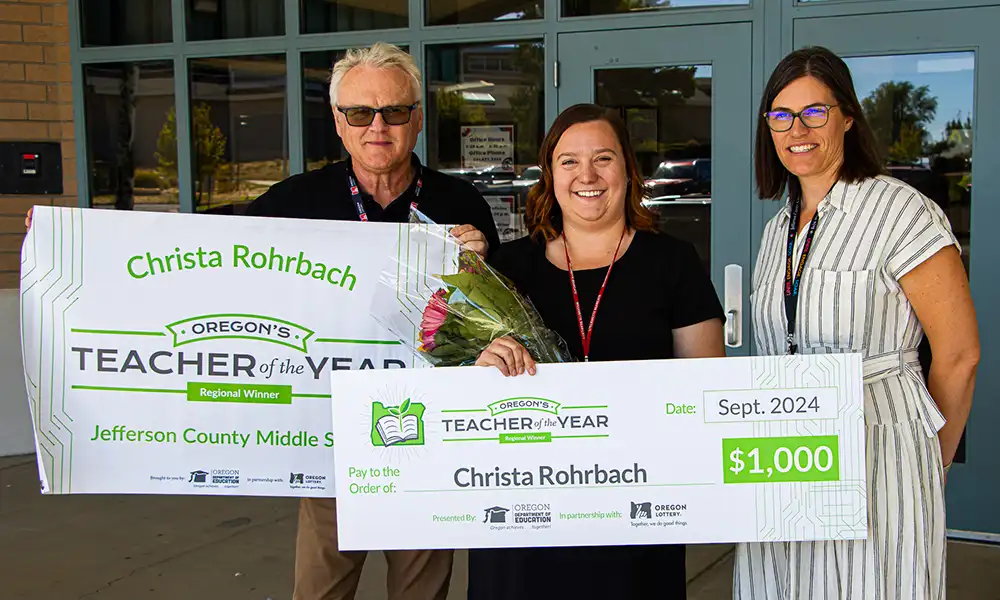
Bringing ‘Community’ to the Classroom
Her role as coordinator of her middle school’s Where Everybody Belongs program earns MAT alumna Christa Rohrbach recognition as a 2024-25 Regional Teacher of the Year.
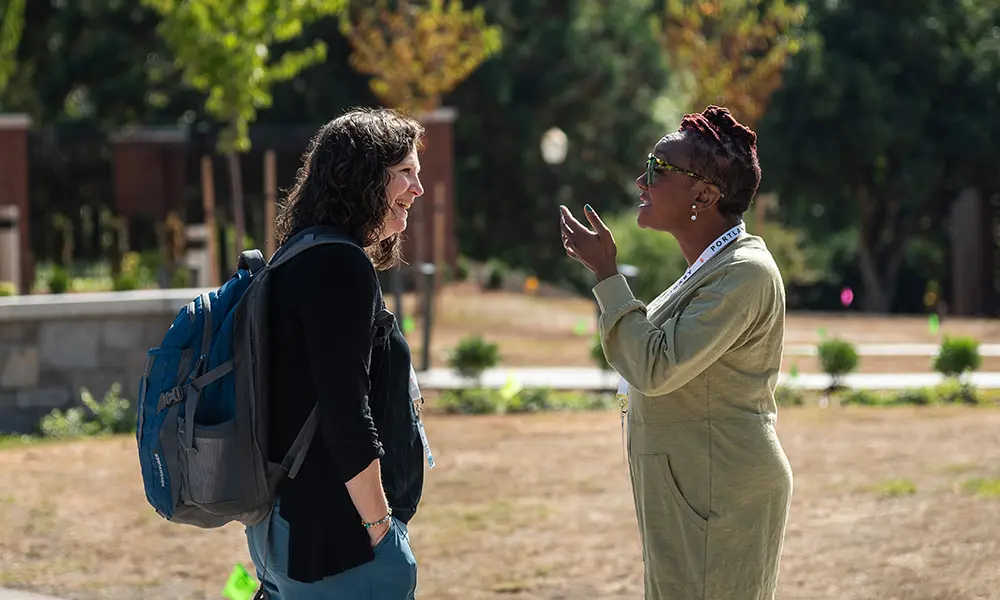
The Hands and Feet of Christ
At Portland Seminary, graduate students are learning about God’s deep love for humanity and how they can spread his message of love and peace in their communities. We interviewed four seminary students to find out how they got here, and their answers may surprise you.
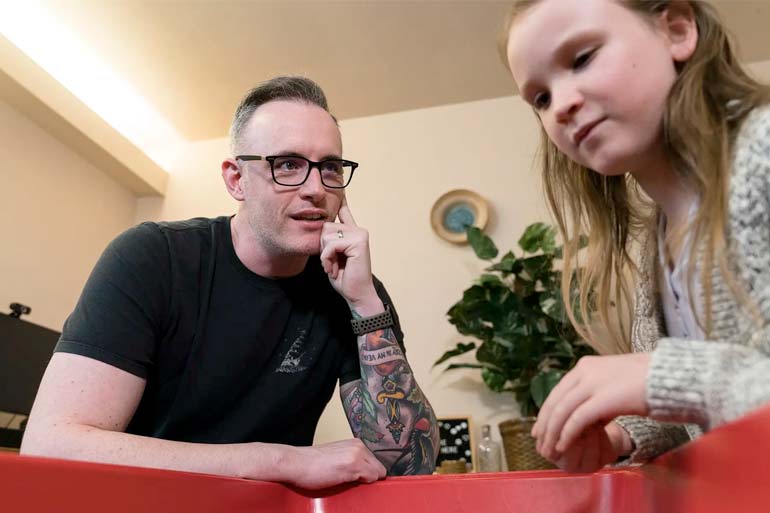
A Hero for ‘Superheroes’
Chris McMullan’s passion to advocate for children was inspired by the care and love he received from his own childhood mentors