
The Church in a Secular Age: Helping People Discover God Again
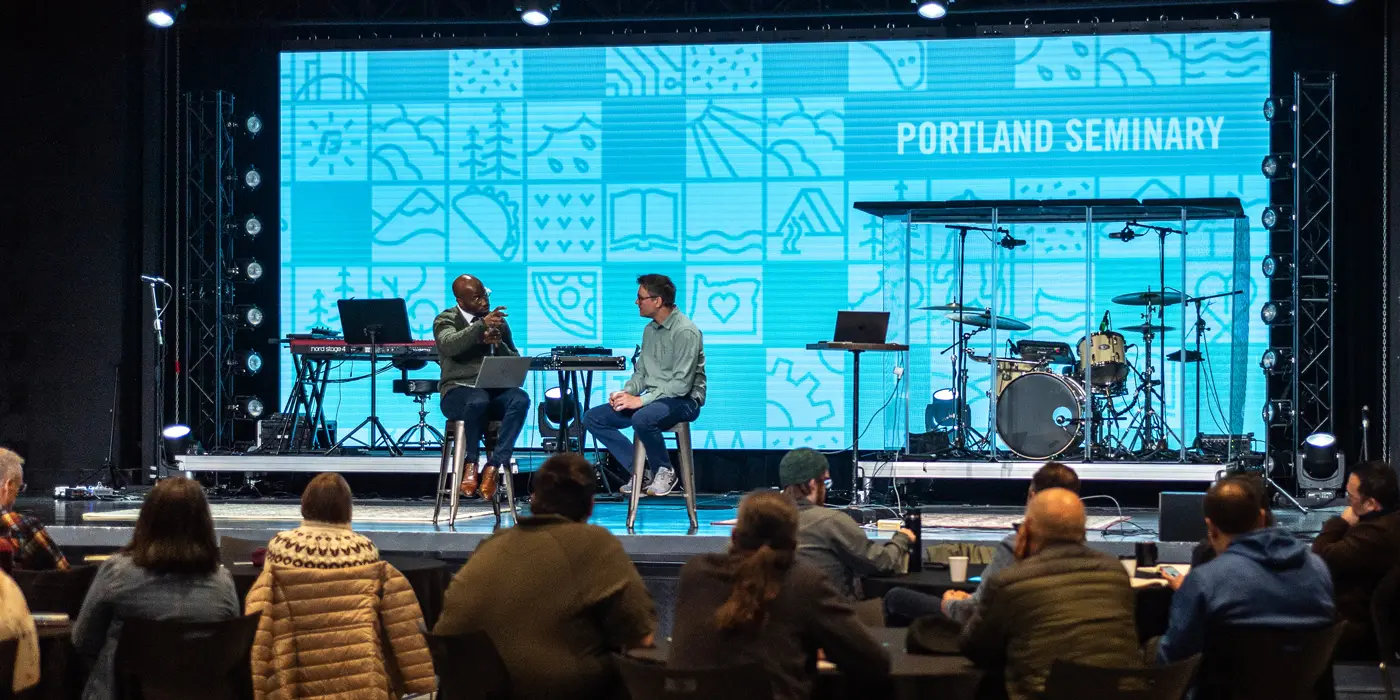
Christians throughout the region gather for Portland Seminary’s Spring Conference to discuss the implications of a cultural truth: We now live in a time when belief in God is no longer assumed.
by Loren Kerns
Many pastors and church leaders today feel the pressure of declining attendance, thinning commitment, and a culture that seems increasingly indifferent to faith. But according to practical theologian Andrew Root, these visible challenges are only symptoms of something deeper. The real shift is cultural: We now live in a time when belief in God is no longer assumed.
That was the central question explored at Portland Seminary’s Spring Conference, themed “The Church in a Secular Age.” Hosted at Grace Chapel in Wilsonville, Oregon, the gathering brought together pastors, ministry leaders, students, alumni and members of the wider Christian community to reflect on what it means to nurture faith in a world where religious belief has become optional.
Rather than focusing on strategies for church growth or institutional survival, the conversation centered on a deeper theological question: How does the church help people encounter and recognize the living God in a culture that instinctively makes sense of life without reference to transcendence?
Understanding the Cultural Moment
Root began by helping participants understand what scholars mean by a “secular age.” Drawing on the work of philosopher Charles Taylor, Root explained that secularity does not simply mean fewer people attending church. Instead, it describes a cultural shift in how people experience belief itself.
In earlier centuries, belief in God was embedded in the fabric of society. Religious meaning was assumed in public life, nature and community. Today, however, belief has become one option among many, and individuals feel responsible for constructing meaning for themselves.
Root illustrated this shift through cultural examples, including media portrayals of parenting, spirituality and everyday life. In modern culture, he noted, belief and behavior are often separated. People are frequently encouraged to pursue moral values or kindness without reference to religious conviction.
The result is a world where faith is easily unsettled. Even committed believers experience moments of doubt, while people who do not consider themselves religious may still sense moments that point them toward something beyond themselves. As Root explained, belief and unbelief now coexist in a constant tension.
Why Church Decline Is Not the Real Issue
Many churches interpret declining attendance as the central problem they must solve. Root suggested this diagnosis mistakes the symptom for the real problem.
When churches focus primarily on regaining cultural influence or religious market share, they risk responding to the wrong challenge. The deeper change is that belief in God is no longer assumed, and faith is increasingly treated as a private matter rather than something that shapes how we live together in public.
In such a setting, ministry cannot simply rely on institutional participation. Programs, services and strategies may attract attention for a time, but they do not address the deeper cultural condition. Instead, pastors and congregations must grapple with a more fundamental question: How is faith formed when belief itself is no longer taken for granted?
The Hidden Spiritual Longing of Late Modern Life
One of the most striking themes of the conference was Root’s observation that modern people still experience moments of transcendence, even if they struggle to interpret them.
Through interviews conducted during his research, Root found that many Christians could recall meaningful encounters with God or moments of profound spiritual awareness. Yet many had never shared these experiences with their pastors or church communities.
In a culture shaped by what Taylor calls the “immanent frame,” people instinctively interpret life in purely natural terms. Spiritual experiences may occur, but they often remain unspoken or unexplored. Root suggested that the church has a unique role to play here. Congregations can become places where people learn to recognize and interpret these experiences as encounters with God rather than dismissing them as coincidence or emotion.
Engaging the Questions: Conversations with Faculty
The conference also featured thoughtful engagement from Portland Seminary faculty.
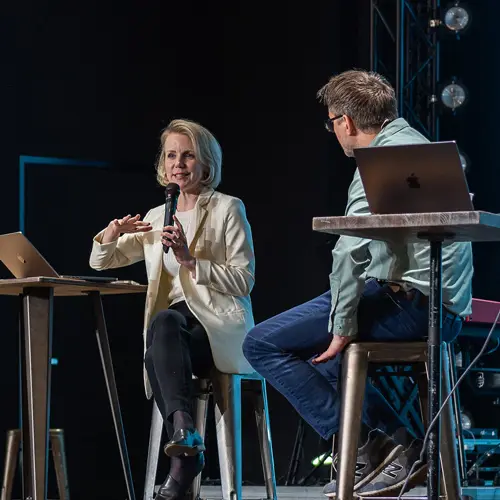
During a live conversation, Dr. Kurtley Knight explored the implications of Root’s work for spiritual formation and theological education. Their discussion highlighted a growing tension in ministry today. Practices designed to deepen spiritual awareness can easily become forms of self-improvement unless they remain oriented toward God’s action beyond the self.
Later in the day, historian Dr. Leah Payne reflected on how Root’s framework intersects with broader trends in American Christianity. Drawing on her research into Pentecostal and charismatic movements, Payne noted that many Christians within these traditions continue to emphasize divine action and spiritual experience even within a secular cultural environment.
Their conversation revealed both the strengths and limits of secularization theories. While Western culture may often assume a closed, purely natural explanation of the world, many Christian communities continue to cultivate a more open imagination for God’s presence and activity.
The Pastoral Task Today
The conference concluded by turning toward practical implications for ministry.
Root suggested that the central pastoral task today may be less about defending doctrine or encouraging institutional participation and more about helping people interpret their lives in light of God’s presence.
Many individuals carry experiences of suffering, beauty, loss, or unexpected grace that hint at something beyond themselves. Yet in a secular cultural framework, those experiences often remain unexplored.
Pastoral ministry, Root argued, involves coming alongside people in those moments, helping them see their circumstances with fresh eyes and recognize the possibility that God is already at work. Faith often grows not through abstract arguments but through meaningful encounters with God that are recognized, named and shared within community.
Serving the Church in a Secular Age
The Spring Conference reflects Portland Seminary’s ongoing commitment to serve the church by engaging the most pressing questions facing Christian leaders today. By convening scholars, pastors, students and ministry practitioners, the seminary seeks to create spaces where the church can think deeply about its calling and mission in a changing cultural landscape.
Events like this also shape the formation of Portland Seminary students, inviting them to reflect on how theology, culture and ministry intersect in real congregational life.
As participants left the conference, the central question lingered: If belief in God can no longer be assumed, how might the church help people recognize God’s presence already at work in their lives?
It is precisely this kind of reflection that lies at the heart of Portland Seminary’s mission to equip thoughtful, faithful leaders for the church and the world.

Related Posts
Message from the President - Say 'Yes!'
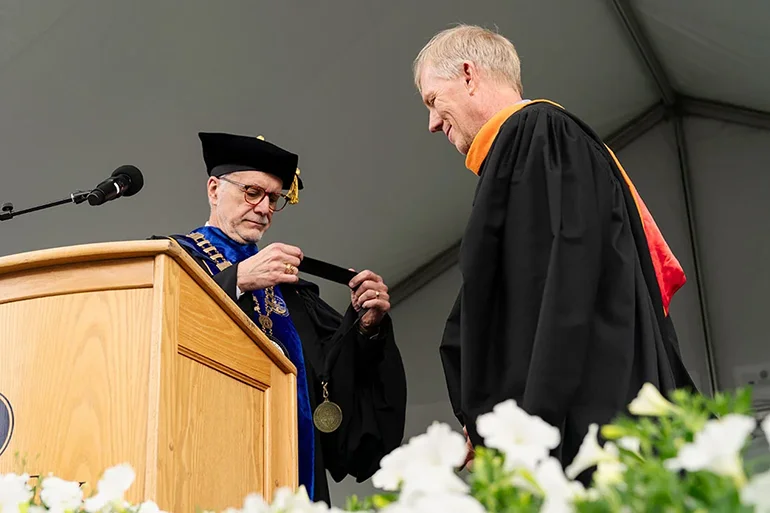
Robin Baker reflects on the 2025 graduation and how God calls us to opportunities
Takeaways From 'Civic Friendship in a Polarized Age': How to Live and Interact in a Divided World
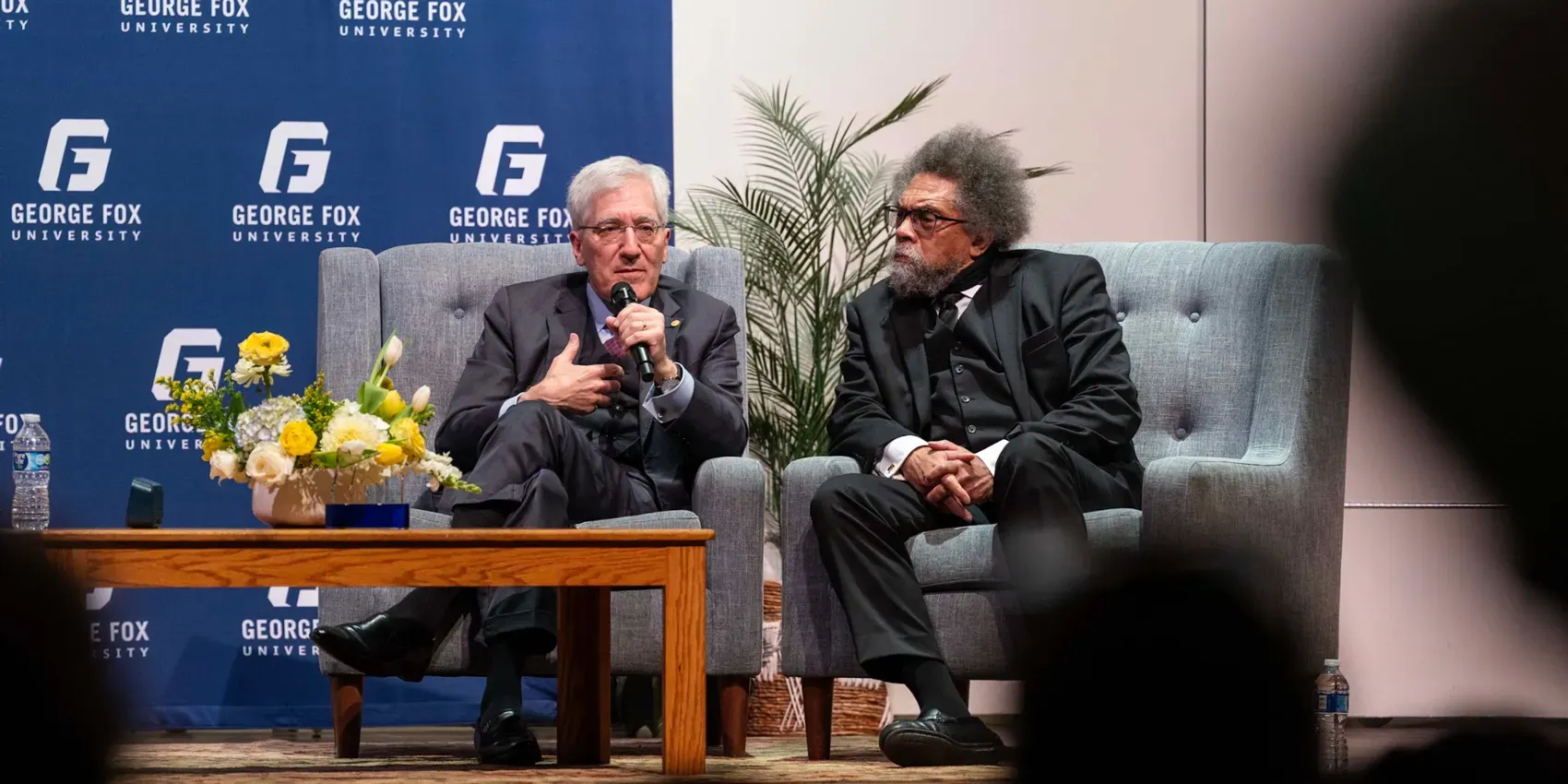
George Fox University's joint lecture by Cornel West and Robert P. George exemplifies how deep disagreement can coexist with genuine respect, friendship and shared purpose.

Happy 400th Birthday, George
He’s the founder of the Quaker movement, the namesake of our university, and in July, 2024 we’re celebrating the life and legacy of George Fox on what will be his 400th birthday.
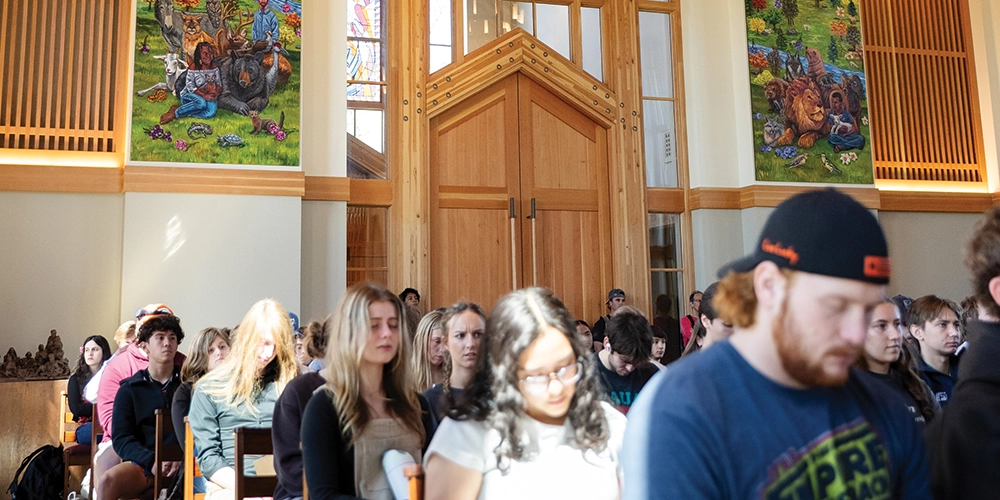
New Campus Chapel Offers a Tech-Free Haven for the Hurried Soul
Students and staff find a quiet refuge from the digital noise of academic life.
Saturn Macias, Isabela Flores and Kade Sorrenson share their stories
Three students share their stories of faith, grit and joy

Keeping the Faith
CEO Aly Salz found her calling to ministry in an unexpected place – her business