
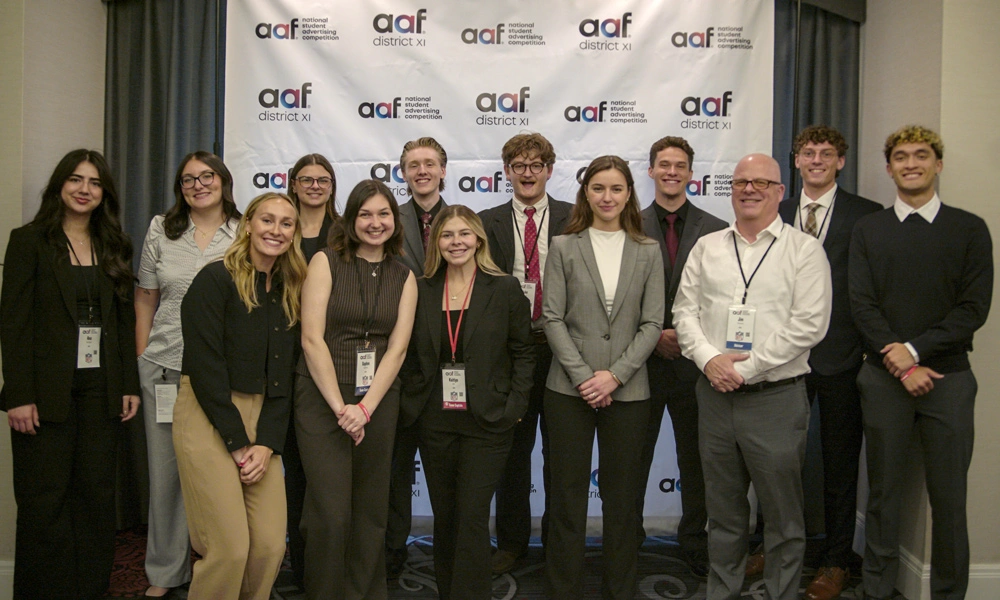
The National Student Advertising Competition (NSAC): A Team, a Client and a Vision
How George Fox University, a Division III school, has built a reputation as a national contender in a sea of large, Division I institutions
by Ana Rodriguez
Long after class had actually ended, a team of George Fox University students remained hard at work inside a dimly lit building. The hustle and dedication of this classroom stands in vivid contrast to the quiet atmosphere of a university campus after hours. Here, students from diverse majors and backgrounds are collaborating toward a shared vision and know that the finish line is clearly within reach.
Students on the creative team are huddled around a phone listening to different soundtracks in search of the perfect song that will bring their video ad to life. Across the hall is the strategy and research team, where I reside, and we are staring intently at our laptops, posture long forgotten. We are scouring through survey results and listening to interviews so we can find the right quotes to finalize our writing. Nearby is the media team, passionately discussing marketing ideas, trying to convince one another why their media strategy belongs in the final campaign.
This is the National Student Advertising Competition. In this class, students work together with one shared purpose: to create a unified and impactful advertising campaign that will eventually compete against other universities. The class is intense, competitive and a serious commitment for already-busy college students, but beyond this, it’s a transformative experience that’s insanely rewarding.
Not Just ‘Beginner’s Luck’
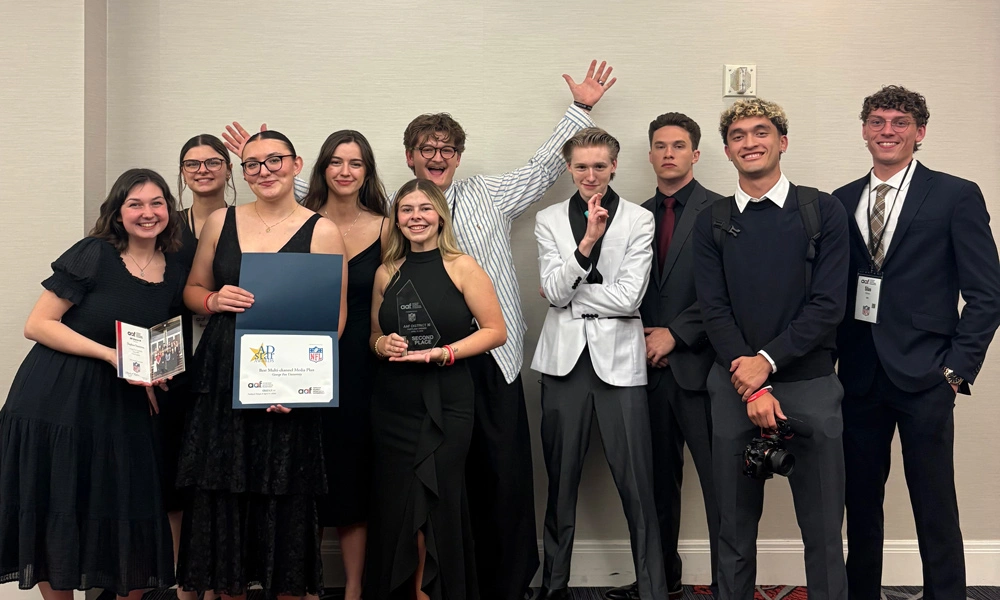
George Fox first entered the National Student Advertising Competition in 2024. Although the university was seen as unlikely underdogs – first-timers up against experienced Division I schools in our district – we quickly exceeded expectations. In just a few short years, George Fox has earned a reputation of producing high-quality work by placing first our debut year and in a close second the following two years. We are now a contender that other universities know to keep an eye on.
A large part of our success is owed to our dedicated professor, Jim Simmons. He advocated for the launch of this class at George Fox, as he recognized a critical need on campus that NSAC could fulfill. He saw that students across different specializations such as marketing, communications and creatives have naturally overlapping skill sets. Despite this, he says, universities rarely give these students an opportunity to collaborate in ways that they would within an actual workplace.
“You have marketing students and graphic design students, all working together and trying to solve problems, and each student brings their own unique skills, talents and abilities to the class,” he says.
The structure of NSAC teams facilitates the crossover of these talents so students can learn from each other, explore different roles, and ultimately thrive. This collaboration is what makes us so strong.
The Value of Competition
The competitive nature of NSAC introduces a powerful dynamic of shared personal investment for students. Our success within the classroom represents George Fox and the immense amount of time spent collaborating with each other throughout the year. We get to watch the pieces of their hard work take life in the form of a fully comprehensive professional marketing campaign. Because of this, our efforts are worth so much more than a simple letter grade.
To add to the competitive aspect, we have the rare opportunity to pitch our final campaign to a panel of industry professionals.
“It's a real client with a real problem, and you are under tight deadlines,” Simmons says. “You’ve got basically 10 weeks in the class to create a comprehensive advertising campaign that includes research strategy, media planning, and creative development. And the other aspect of this, too, that makes it different is that you're presenting your recommendations in front of a panel of four judges, all professionals in their industry.
“Beyond that, you're competing against six other Division I universities that are anywhere from eight to 10 times the size of George Fox. It really gives students an opportunity to see how they kind of stack up against the students that they’re going to be competing for jobs with.”
For the students who choose to join the traveling team for the final competition, the actual competition becomes a great place to network. The other students from competing NSAC universities who have spent their semester tackling the same campaign are finally gathered in one place. This presents us with an opportunity to network with other teams, swap LinkedIns and watch each other's presentations. A semester's worth of competition is finally playing out.
Simmons emphasizes the fact it’s an opportunity to scout out the people who are going to be in the workforce with you in the future.
Making Connections
This trip also encourages us to connect with industry professionals from all areas. There is allocated time within the busy competition schedules to network, learn more about the marketplace, and have meaningful conversation. At the end of the day, every single student is walking away with experience and portfolio-ready work. As professor Simmons points out, students can say to their future employers, “Here is something tangible that I have done, for a real client, a real problem, and I can demonstrate how I thought and what I can actually produce.”
A competitive class such as this one is often understandably intimidating for incoming students. However, having gone through the course, I can vouch that the competitive element adds an immense depth to the work that we do and the personal growth we experience.
Students truly want to win, and no “one” student can win on their own. It requires the class as a whole. Competition fosters camaraderie between students who may have never even found themselves inside the same classroom without NSAC. I fondly remember the late nights spent working with my team, laughing at ridiculous things, providing each other emotional support, and creating connections. No student is going through NSAC alone; it's a team of passionate and talented students who you are working alongside each other. People want to see each other succeed!
Stepping Up
What's it actually like to step into the NSAC classroom? What does it mean to become a team contributor?
I would say it means choosing to become truly present and allowing yourself to be immersed in the challenge. This class calls for students to step away from an observational role and become an active participant. It gives them the opportunity to step into a collaborative mindset, take on leadership roles, and truly take initiative.
I remember my first day in class. I had spent a significant amount of time reviewing the case and researching. On paper, I was prepared and more than confident in the knowledge I had of the case and my ability to be useful. However, as a more soft-spoken student, the challenge actually lay in figuring out how to navigate a room full of other talented, vocal students. I had to become comfortable with taking up space and overcome the urge to take a backseat.
As I reflected on my growth this semester, I think the No. 1 thing I realized is that becoming a good leader doesn't mean completely changing myself but leaning into my strengths. Letter grades can’t teach you how to find your own voice or overcome imposter syndrome; you do this through hands-on experience.
“The No. 1 thing that pops to my head is students growing in confidence,” Simmons says. “They leave the class more confident in what they can do and their abilities.”
This growth is fueled by the environment of the classroom and driven by a sense of mutual accountability. Students hold each other to high standards. “Students step up not because of me, but because everyone sets very high expectations in terms of work quality, and that challenges and pushes people,” Simmons adds. “It’s an accountability and desire to perform well when you know it's a real thing.”
Professor Simmons says the most rewarding aspect of this class is watching how people grow and step up. “It is great to see how, once students immerse themselves in something, they grow well,” he says, pointing to team members who took on massive challenges. He watches creatives step out of their comfort zones and become presenters, and initially anxious students become class leaders. “I think this course attracts people who want to be challenged,” he says.
The Final Presentation
I was fortunate enough to travel to the final presentation with a portion of our team and watch our four talented presenters represent our class on the big stage. Sitting in the audience, a massive wave of pride washed over me as I watched the culmination of our year’s work.
Our success was only possible because of the collaboration of all three teams, the leadership of our team executives, our presenters, and the guidance of our professor. Our creative team, responsible for bringing our ideas to life visually, had created a striking presentation and impressive physical media. I remember watching as the presenters handed judges personalized cards from our physical media bundles. That small moment instantly brought smiles to the faces of our serious judges, and for just a second they looked like kids again.
The campaign captured our strategic insights, informed by the work of our strategy and research team – hours of research, surveys, interviews and writing coming together to support our campaign. The media team’s strategy was so compelling that it earned us the “Best Media Campaign” award.
If you were to ask me if I recommend participating in this class, I would wholeheartedly say yes. It ultimately depends on your individual goals: You get out of the experience as much as you invest into it. Be intentional about how you allocate your time, and prioritize making the absolute most out of the opportunities available to you in college.

Related Posts

Enterprise: Our Internship Experience
Students Karis Lee and Kalu Stricklin share experiences in an internship with the global company Enterprise Rent-A-Car.

I Built an AI Board of Advisors. Here's Why You Should Too.
When you're facing a decision where being wrong costs years, not hours, you need AI that pushes back. I want to walk you through how I set that up.
‘Even when it gets dark, there is still hope’
By caring for the whole person, PsyD student Manesha Ram leads people to a place of healing and peace. Manesha Ram was intent on pursuing a career in nursing until she changed somebody’s life simply by listening.

Chris McCoy: ‘I didn’t realize what I had’
The senior business administration major and football player reflects on perspective gained during the pandemic and opportunities ahead
Sabrina Bailey: Full-Circle Impact
Trailblazing alumna and donor Sabrina Bailey defines what it means to give back