
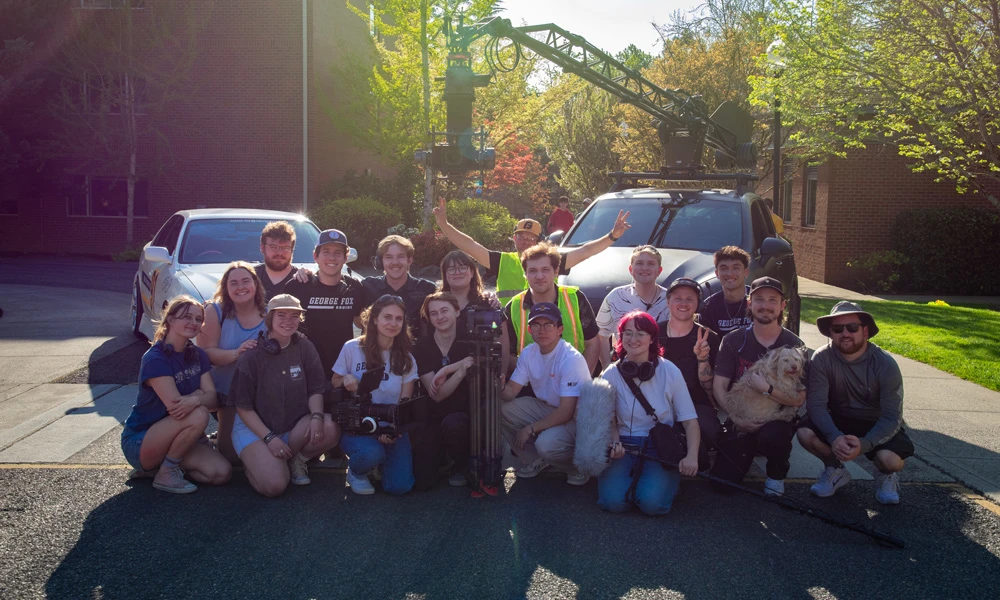
What It’s Actually Like to Study Cinematic Arts at George Fox
by Maia Kill
When I was a senior in high school, I didn't plan on studying cinematic arts. I came to George Fox thinking I would major in theology – or maybe marketing. Ultimately, leaning towards something that felt more safe, was more practical, or made sense on paper.
Film felt like the thing I loved, but not necessarily the thing I could build a career on.
Then I walked into the cinematic arts department during Scholarship Summit – which I attended for theology – and something shifted. Was this actually a possibility for me?
A Choice That Made Me ‘Come Alive’
In the end, despite my initial misgivings, I pursued a degree in cinematic arts, graduating in December of 2025 with a concentration in film and video production. I did it because I fell in love – with the department, with the people, and with the way storytelling was treated like something real and sacred.
And that changed the trajectory of my life, although I didn't think this was the “responsible” choice (at first). At 17, I had questions. A lot of them.
Is this realistic?
Will I regret not choosing something more stable?
Am I even good enough?
If you're in high school thinking about cinematic arts, you might be asking the same things. What I didn't realize then is that film production isn't just about loving movies – it’s about showing up and developing life skills like commitment and perseverance. It’s staying up late editing because you care. It’s getting to the set early. It’s going the extra distance, even when no one’s asking you to.
It’s collaboration, especially when it would be easier to work alone. The more time I spent in the program, the more I realized this wasn't the less responsible choice.
It was the one that made me come alive.
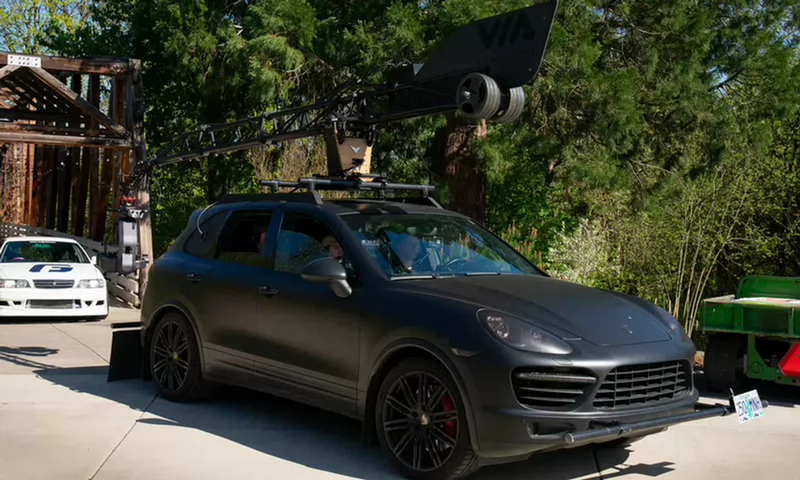
Students assist in operating a camera car to film a promotional video for the 2025 George Fox Film Festival.
What the Student Experience Is Actually Like
When I first arrived, the film department was small, but determined. We were tucked away in a little building. Equipment overflowed onto tables. Cables ran across the floor. We barely had room for everything – even the robot arm we had been dying to use. Every shoot felt like a puzzle.
But we made it work – because the stories mattered.
That’s something I said at the art building dedication, and I still stand by it. Even when we were cramped and improvising, we believed in what we were making.
Cinematic arts at George Fox is hands-on from the start. You're not just learning about film – you're making it. You're operating cameras, shaping light, editing and color grading, directing talent, coordinating safety, doing paperwork and solving problems. You're constantly behind the scenes, figuring it out in real time.
Over three and a half years, I learned how to actually make things happen. I learned how to walk onto a set and understand what I'm looking at, how to shape light so it feels like something, how to take messy footage and turn it into a story that lands. I learned how to direct people with clarity and care, and how to keep a production moving when things inevitably start to fall apart.
And somewhere along the way, I learned how to take an idea that only exists in your head and carry it all the way through to something real – something you can show people, something that holds weight.
As I grew as a filmmaker, the program grew too. And eventually, so did the space. The new art building – with a sound stage, a color grading suite, and a green room for talent – felt like a reflection of that growth. A space that could finally keep up with the stories people were trying to tell.
At the dedication, I said spaces like this tell students, “Your art matters. Your voice matters.”
That’s not just a nice phrase. It’s something you carry with you.
A Real-World Project That Changed Me
One of the most defining projects I worked on was producing the 2025 George Fox Film Festival promo: a drift car stunt video.
Yes, a real drift car. The project was cinematic arts in action. It wasn't just creative – it was logistical. I had to coordinate safety, crew, timing, equipment, permits, shot lists and locations. I had to think like a producer: How do we protect people? How do we maximize time? How do we execute this well?
Film production is collaboration at every level. You rely on your director of photography, your camera assistant, your director, your driver and your team. You learn to communicate clearly and adjust quickly. You learn that storytelling isn't always glamorous – it’s cables, problem-solving, long hours, late nights and a lot of trust.
It stretched me. But when that promo played at the film festival, something clicked.
This is what the real world feels like.
And I didn't feel intimidated.
I felt ready.
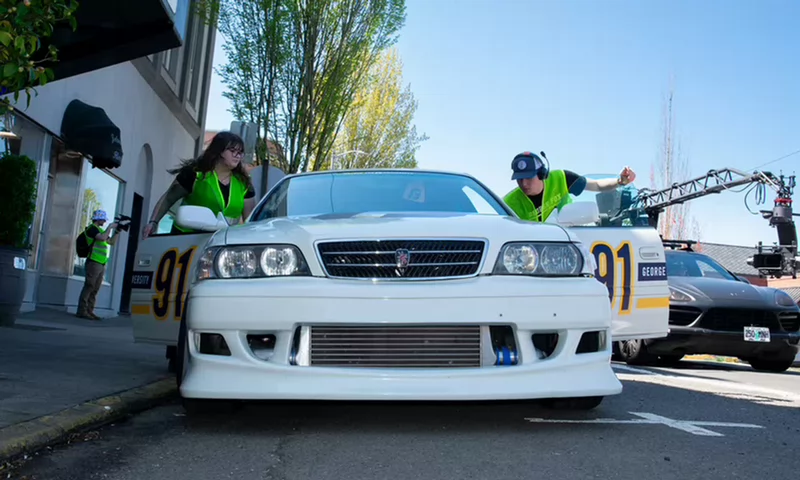
Maia (left) and a classmate prepping the drift car between takes.
Growth Beyond the Technical
The technical skills matter. But the growth goes deeper. Filmmaking asks a lot of you – your time, sleep and comfort, and sometimes relationships. You face critique. You redo scenes. You scrap ideas and start over.
And somewhere in that process, you change. You stop saying, “I think I like film.” You start saying, “I'm a filmmaker.”
By the time I graduated, I wasn't just leaving with a degree. I was leaving with confidence built through collaboration, hands-on learning, real projects, and mentors who pushed me to be better than I thought I could be.
What I'd Tell a 17-Year-Old Considering This Path
Start telling stories now. Use your phone. Practice framing. Practice editing. Learn how to work with people. Film is teamwork. Collaboration is everything.
Build a small portfolio. It doesn't have to be perfect – it just has to be yours. And don't wait until you feel fully certain. With that said, honestly, this path isn't easy. If you want to build a career in cinematic arts, you may relocate, you'll start from the bottom, and you'll have to persevere.
But if storytelling feels like something you cant ignore – if you feel most alive behind the camera, in the edit bay, or on set – don't dismiss that. George Fox gave me more than technical training. It gave me a creative community. It gave me real-world projects. It gave me mentorship. And it gave me the confidence to step into film production after graduation and say, “I belong here.”
If you're in your final years of high school and unsure, just know that your art and voice matter. And sometimes, the best decisions are the ones you didn't plan for.
Related Posts
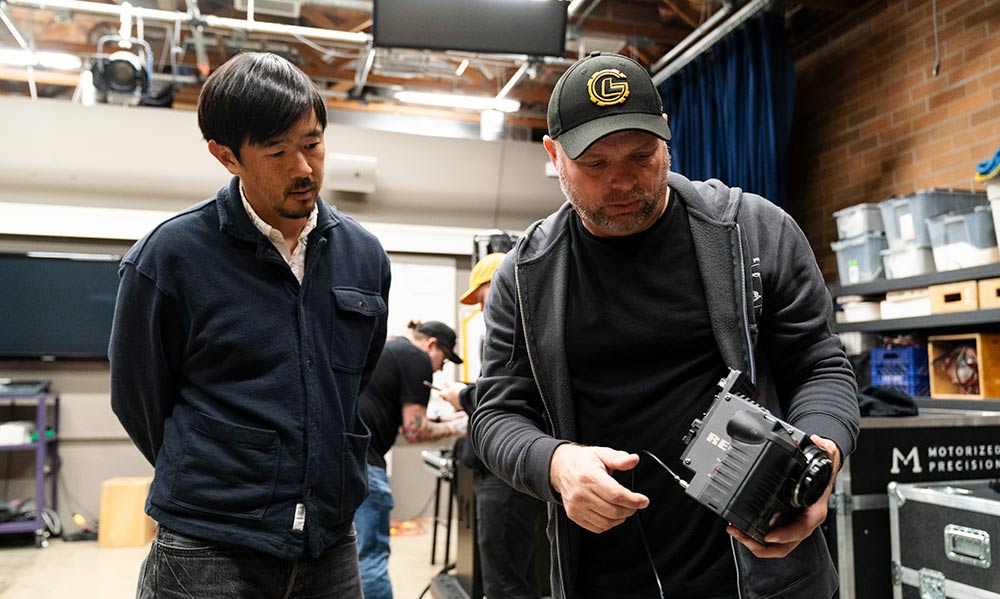
Innovation in Motion
Alex Chung, director of the School of Cinema, Art & Design, uplevels cinematography training for students as he shepherds the program into a new era.
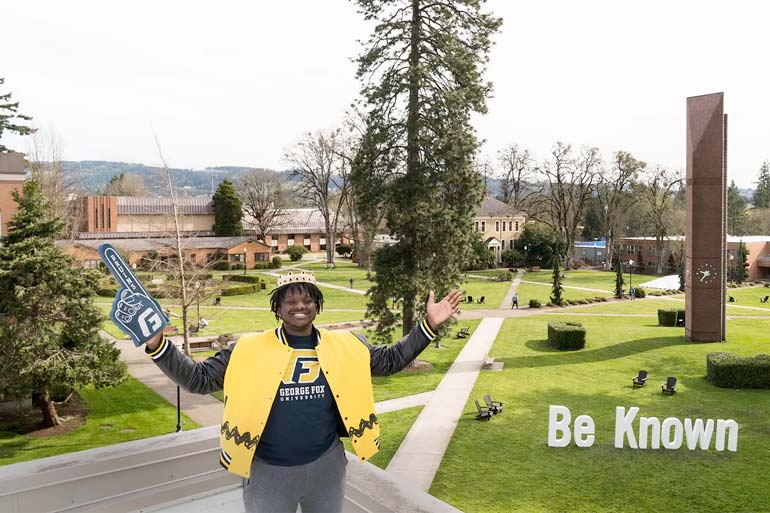
Edauntae is Everywhere
If you attend any significant event, activity or happening on campus, there’s no doubt you will see Edauntae Harris.
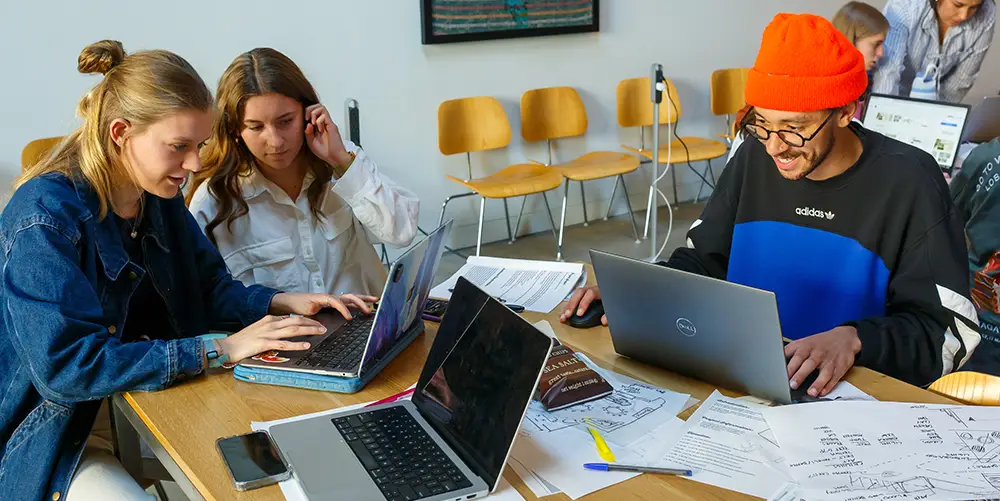
Interior Design Students Win Top Honors at Design for Impact Challenge
Two George Fox students are part of a winning team that successfully designed a classroom space for a high school in Southern California.
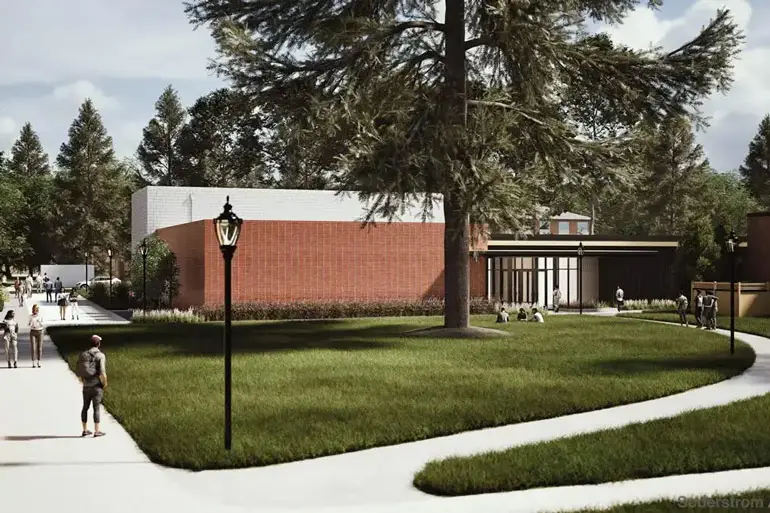
New Art and Cinematic Arts Building Set for Fall 2025 Opening
The long-anticipated construction of a new art and cinematic arts building is proceeding this summer and will launch a new era of creativity and collaboration when its doors open this fall.
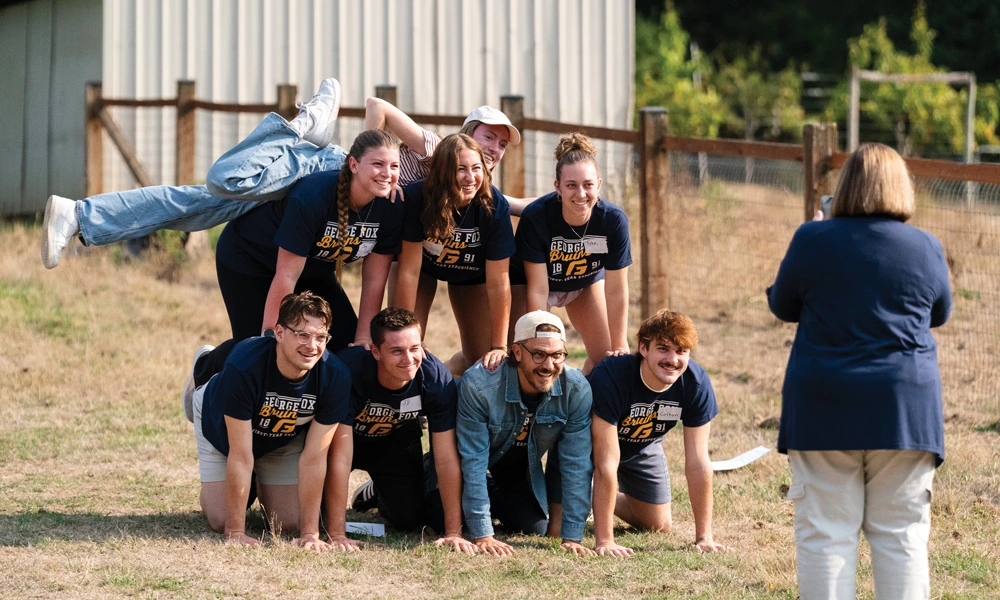
The First-Year Experience Is Forming Leaders From Day One
In fall 2025, 90 George Fox freshmen gathered at a Sherwood ranch to begin asking: Who am I, and who is God calling me to be?
Lessons in Hope and Healing
Alumna Christine Thiessen finds healing and purpose by creating a scholarship that supports students like filmmaker Jack Flitter, transforming her grief into a lasting legacy of hope and generosity