
Opening Doors of Faith, Family, and Radical Hospitality in Salem
Driven by her own journey through hardship, online student Vicki Pastre turns trauma into transformational mental health advocacy and community support.
by Rachel Brumfield
In a corner of Salem, Oregon, there’s a little glimpse of heaven taking place on an otherwise random weeknight. People from all walks of life gather in a simple church building for a meal and connection. Some bring histories of hardship and brokenness. Nothing about the evening is extraordinary, except the radical hospitality and deep love they experience.
Vicki Pastre (’26) is usually behind the effort in some way.
“It's meeting people where they're at, people like me, who have been through hardships, and helping them see that they can have a better life and that they can have a community that's going to love and respect them.”
She knows what it’s like to walk into a church with fear and uncertainty – and she’s experienced the hospitality of being welcomed and loved, rather than judged. Now she facilitates life recovery programs, women’s Bible studies and a weekly prayer night, all while caring for a son with special needs, working full time and advancing her own education.
For her, it’s a calling. She approaches her whole life ready for the next person that needs help finding their way.
Finding Her Way
Vicki has always had a heart to help others, but her own journey has given her deep empathy for those who find themselves in a place they never imagined they’d be.
In 2021, she fled addiction and a domestic violence situation, only to find herself unhoused with her 4-year-old son. She was struggling with her health, fighting to keep her family together, and navigating a complicated system to secure resources for her son, who was later diagnosed with autism.
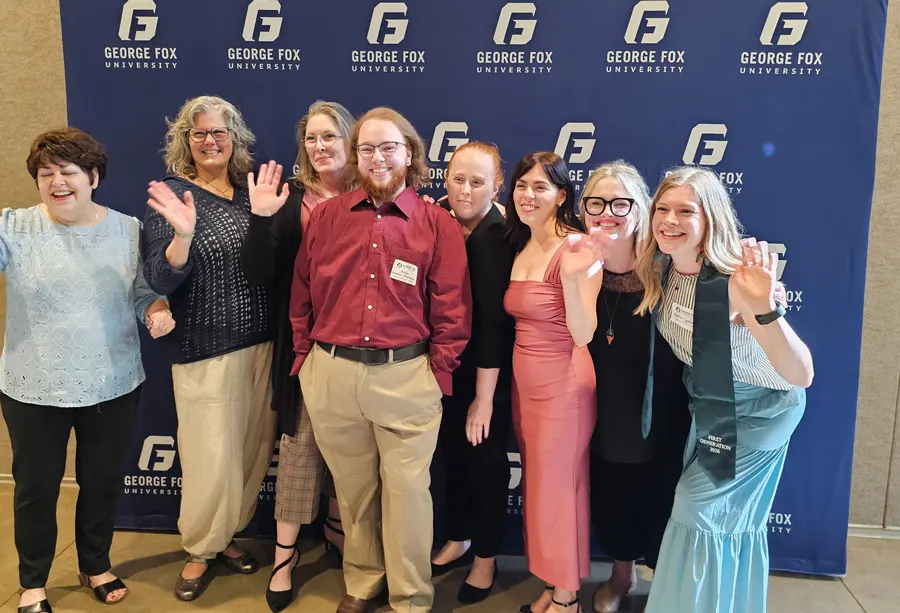
Vicki Pastre (third from the left) and her social work cohort
“It was climbing out of that pit. There were so many people that showed up for us. When the world had turned its back against us, there were so many people who said, ‘We see you, we hear your story, we're here to support you. We're going to walk you through this, and we know you're afraid.’"
Her church picked her and her son up for church every Sunday. A case worker at the women’s shelter saw her as a mother trying to protect her family and went above and beyond to advocate for her.
“I truly believe that God was in my corner and removing roadblocks, because there were times I didn’t know what decisions to make. My favorite prayer now is, ‘God, please open the doors for me that no man can close so I know which one to walk through.’”
As she found her footing again, Vicki went back to school and earned her associate degree in social services. Through a series of open doors, she landed a job as a substance abuse counselor (CADC II) and qualified mental health professional (QMHA).
“What I love most is the connection and growth I get to witness. I focus on creating a safe and supportive environment where clients are seen as individuals – not a number or a diagnosis. I deeply appreciate seeing clients gain motivation, begin to recognize their full potential, and grow in hope and confidence as they move forward. Walking alongside them through that process is incredibly meaningful to me.”
With a new career underway, she had no plans to continue her education, but God continued to open doors.
‘Doors That No Man Can Close’
Finances were one reason not to pursue a bachelor’s. Her son still required a lot of support. And then there was her age. She insisted she was too old for more school.
But a wise friend encouraged her, “No matter how old you are, you’re still going to be old. So why not do something you enjoy?”
“I knew I wanted to do more than substance abuse counseling,” Vicki says. Watching her son’s journey and growth gave her a heart for another underserved population, and she had an interest in social work after experiencing the impact of so many people stepping up for her in a time of need.
Shortly after, the door flew wide open: She received a full-ride scholarship from the Ford Family Foundation. She enrolled in George Fox’s Accelerated Online Degree program.
“I could have never gone to a campus, not juggling a full-time job and a child with special needs who has constant doctor's appointments.”
The program opened more unexpected doors for connection and growth. She was selected as a co-leader for her cohort and helped build community among her online classmates. They set up regular Zoom calls and opened up channels for ongoing communication. She and her co-leader helped create a safe space where they could all be challenged, supported and lifted up.
“I love my cohort. We’re still very close and talk almost daily,” she says.
Even in school, she found ways to walk alongside those who are struggling. When one of her cohort mates was struggling through a difficult divorce, Vicki called to check in every other Saturday morning. When someone wasn’t understanding course material, she worked with professors to lend resources she had access to through her work.
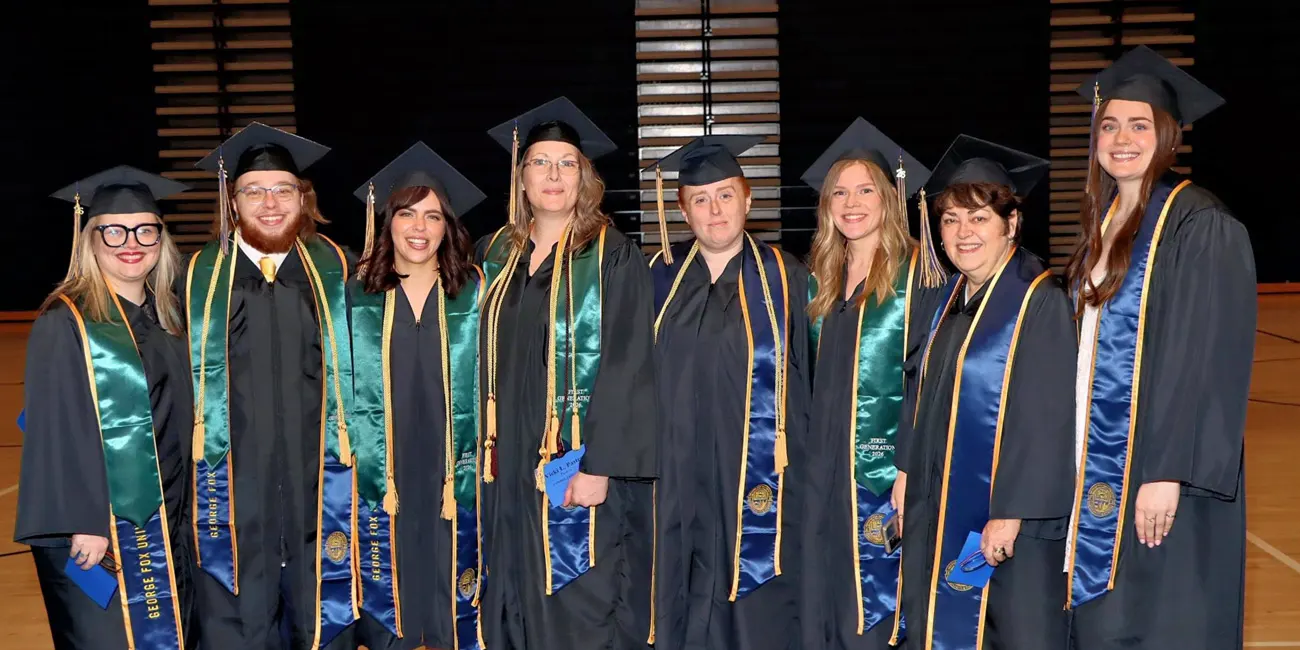
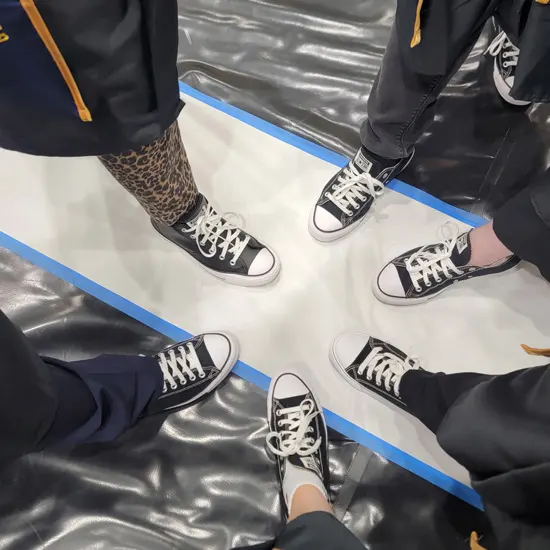
At graduation, almost the whole cohort showed up in matching Converse shoes.
“For many of us, we didn't have that traditional college experience. So it was perfect that we got to be kids and enjoy it.”
Helping Others Find Their Way
Vicki isn’t stopping yet. She was accepted into George Fox’s Master of Social Work program and started classes in the fall. She plans to become a licensed clinical social worker (LCSW) and pursue clinical mental health counseling as well.
“They're already putting people on my caseload who are neurodivergent or have traumatic brain injuries,” she says. “Also, I just got trained in comprehensive assessment and management of suicide (CAMS), and my goal for that is to become certified in that.”
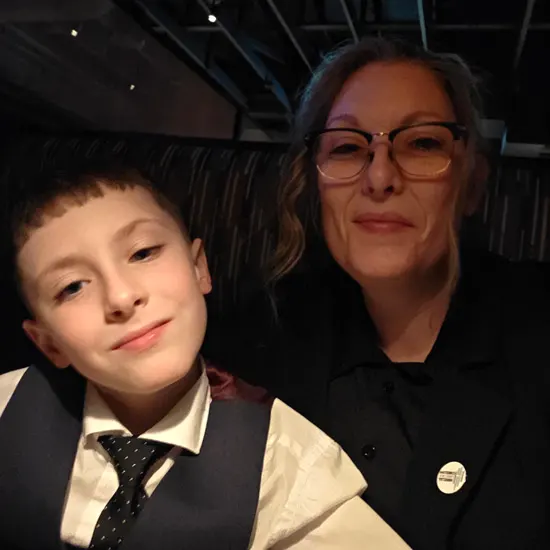
For her, it all comes back to her faith and her son. She wants to see him have all the opportunities she’s had. And she wants to see everyone experience the welcome and support she has found in community.
“It's really important that, as Christians, we come together and help people find their way. The only way we're going to be able to unite our communities is by removing that barrier of shame and guilt, letting people see that they're loved, that they are children of God.”
Related Posts
Why Earn a Masters in Social Work (MSW)?
George Fox University MSW program director Rebecca Yazzie explains the opportunities and versatility you get with a Masters in Social Work.
'A Career That I Love'
Inspired by a mother who cared for her and her own life circumstances, Cynthia Molina is changing lives as a social worker with Boys & Girls Aid in Portland
From the Pulpit to the Clinic: A Minister’s Journey to Social Work Practice
Unsure of his future, Trevor Owen finds a new sense of purpose and direction with his decision to shift from full-time ministry to trauma counseling
‘I’m Doing the Things They Said Were Impossible’
Ten years after a traumatic accident, Court Cedergreen achieved the college degree that doctors told her would be unattainable.
Physician Assistant Program Holds First White Coat Ceremony
The university’s new physician assistant program reached a significant milestone in November, holding its first White Coat Ceremony for 19 Master of Medical Science students.
‘We Work Better Together’: Interprofessional Education at George Fox
George Fox grows innovative leaders through interprofessional education in holistic healthcare.