
When Medicine is Your Future
A Guide to Choosing a Pre-Professional Health Sciences Program
by Jaime Handley
Picture this: you’re a newly minted high school graduate with your sights set on medicine. You know you want to do something in the medical field, but you’re not quite sure what, and you need a starting point.
Or maybe you’ve been certain of your future career since childhood, when your parents gave you that toy doctor’s bag at Christmas, and you plan to have an “MD” behind your name in the next ten years.
Whether you’re looking to become a medical doctor, dentist, PA, occupational therapist, physical therapist, optometrist, pharmacist, or even a veterinarian, you will need to find an undergraduate pre-health sciences program to set your trajectory. A pre-health sciences program provides the mandatory prerequisite coursework in biology, general chemistry, physics, anatomy, physiology, and mathematics that you will need to apply for various medical programs.
But beyond the general coursework, what should a student interested in a pre-health program look for?
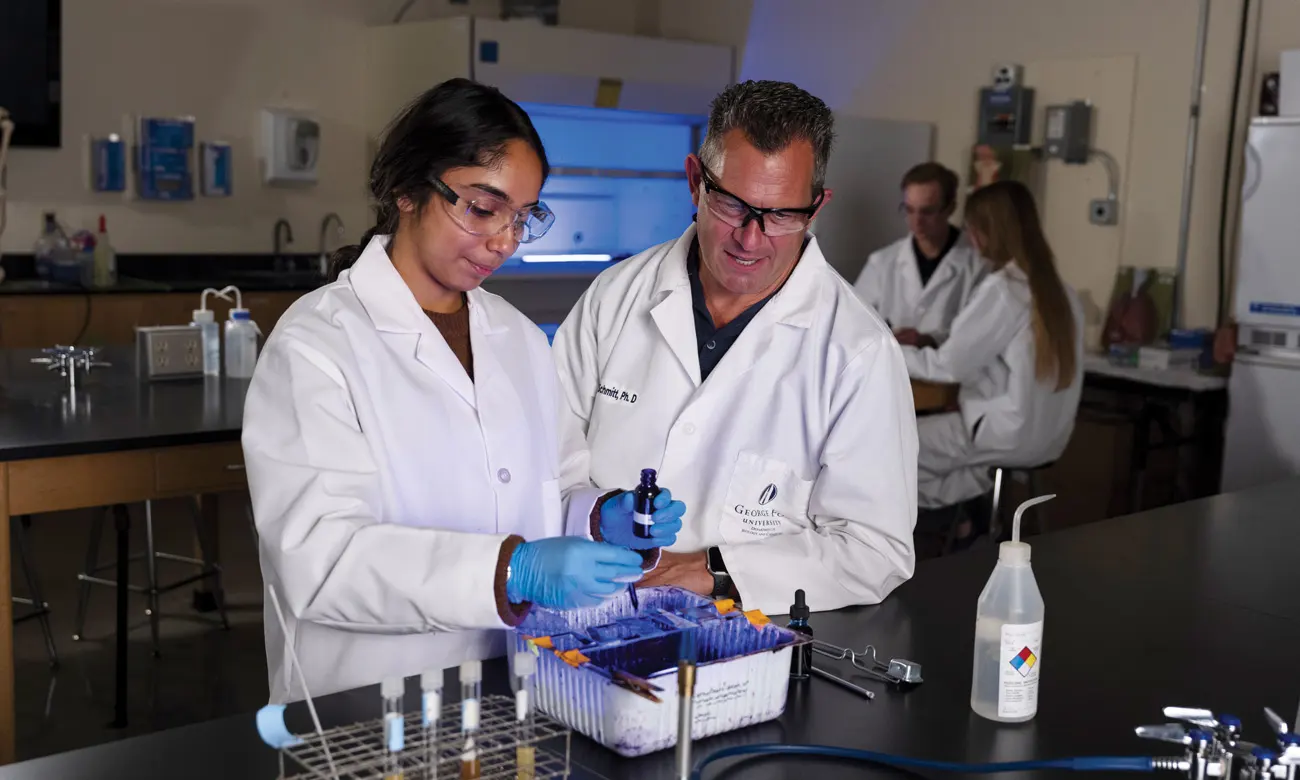
Dr. John Schmitt, Director of the Pre-Health Sciences Program at George Fox University, focuses on five criteria that any student should consider when choosing a pre-health sciences program: strong research opportunities, problem-based learning approaches, partnerships, shadowing opportunities, and advising support.
Research Opportunities
While research may conjure images of people in white lab coats injecting samples into test tubes, it’s really much more practical.
As Schmitt says, “Research allows students the ability to problem-solve individually, but also to work as a team and collaborate.”
In other words, research allows students to practice the real-world skills they'll use day in and day out, whether through lab-based practice, patient-facing hours, or independent student research projects.
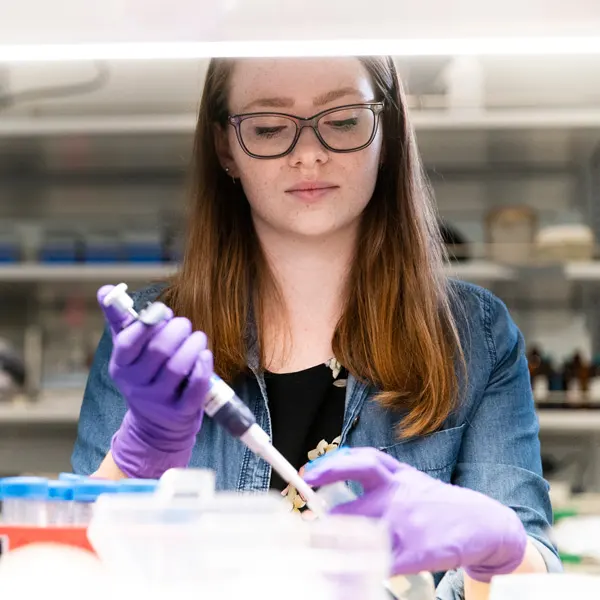
At George Fox, the Richter Scholars program supports this kind of independent study under faculty mentorship. This research-based opportunity helps students take ownership of an interest in a key research area by proposing it to a faculty committee that reviews their research idea. Once approved, they work under the mentorship of a faculty liaison who guides and directs their work, helping them learn independently and develop critical thinking skills within a supportive framework.
The Murdock Undergraduate Collaborative Research Program provides George Fox University sophomores and juniors who are interested in pursuing a career in biomedical research—particularly those interested in graduate school or M.D./Ph.D. programs—the opportunity to participate in ongoing research projects at OHSU. This part-time one-year internship includes a 10-week summer commitment on-site at OHSU and offers a paid stipend.
Finding a program with ample research opportunities lets you test your problem-solving skills and push yourself beyond your current aptitude in a structured, supportive environment to multiply your learning outcomes.
Problem-Based Learning Approaches
Though sitting through lectures is a common college experience, many institutions have found problem-based learning—student-centered teaching methods in which small groups of students work through real-world clinical cases—to be a much more effective mode of instruction.
At George Fox University, this type of problem-based pedagogy is woven throughout the pre-health sciences program.
Dr. Schmitt elaborates, “Problem solving is a big part of what we teach our pre-health students to do, not only with research experiences, but in our teaching labs as well. We want to allow students to tackle problems and to work in teams to figure out how to solve those problems.”
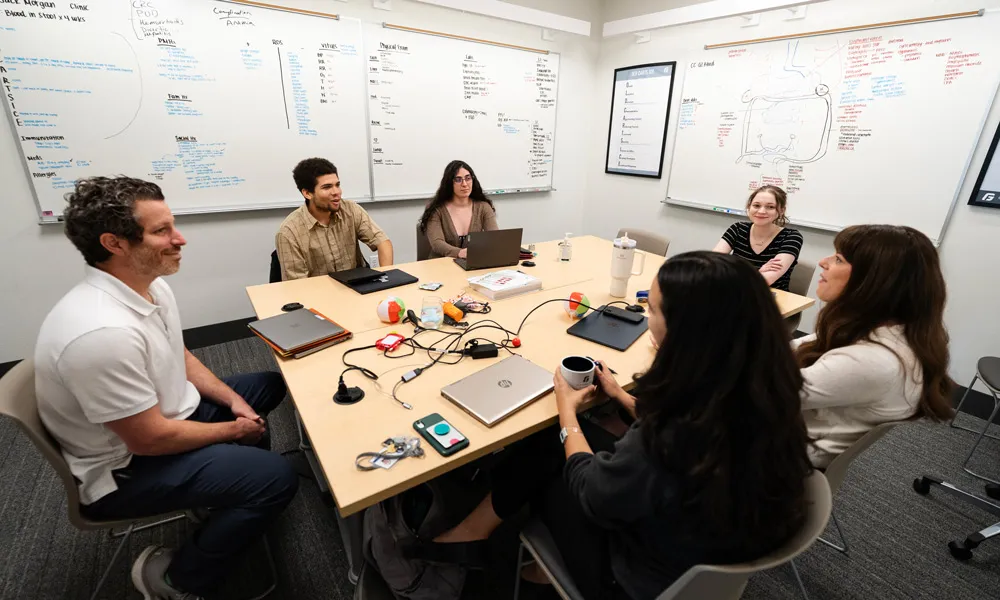
This learning model extends beyond the undergraduate classroom, with George Fox University’s graduate PA program emphasizing this small-group, peer-led process to help students develop new knowledge rather than simply memorizing the right answer. This approach helps hone analytical skills for solving complex medical cases.
As Schmitt reflects, “Only about 11% of all PA programs in the United States operate under this pedagogical style.”
Problem-based learning approaches allow students to practice, in real time, the team-based collaborative models they will use every day in their future careers.
When considering pre-health programs, it’s important to ask not only about the program’s pedagogical framework—how they teach—but also where students can practice those skills through partnerships and shadowing.
Partnerships
Partnerships can help bridge the gap between undergraduate instruction and post-graduate opportunities. Universities that create structured pathways prepare students for the competitive admission process that awaits them upon graduation.
George Fox University creates strategic partnerships to give students a leg up and help them connect with opportunities beyond their undergraduate experience.
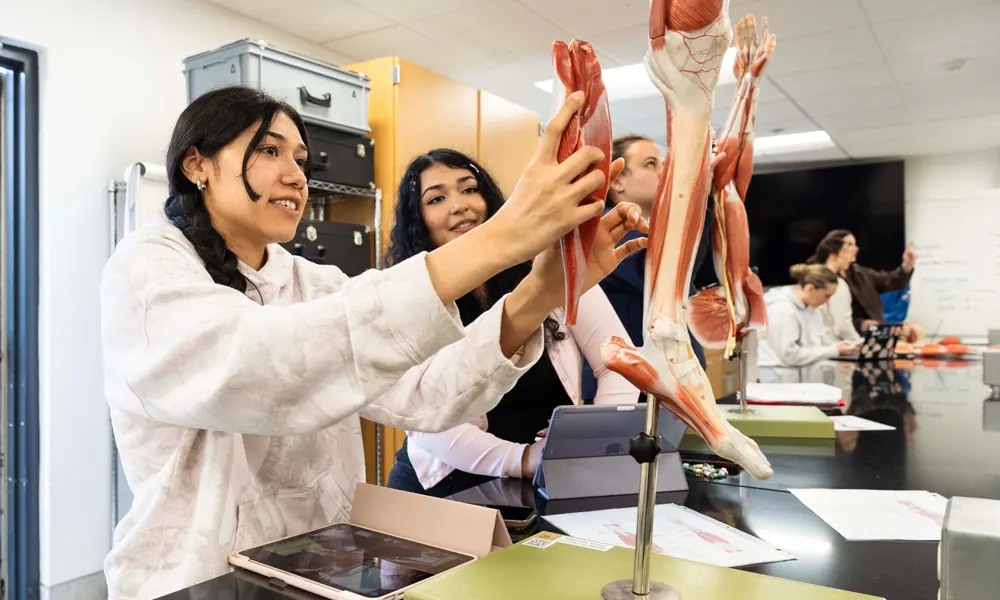
As Dr. Schmitt explains, “At George Fox, we’re working to vertically align our undergraduate and graduate programs to create even better pathways through the undergraduate systems that will allow students to move as seamlessly as possible to their post-undergraduate placement.”
Through relationships with other universities such as Loma Linda and Oregon Health & Science University, George Fox offers multiple partnership pathways to help students find the best fit for their graduate studies and beyond.
One of George Fox's newer pre-health sciences partnerships is a formal academic collaboration with A.T. Still University’s School of Osteopathic Medicine in Arizona. This partnership guarantees interviews for up to ten George Fox undergraduate students each year. It also provides access to an enhanced admissions pathway and reflects A.T. Still and George Fox's shared mission to care for people holistically, with a commitment to diverse and underserved communities.
Shadowing
Shadowing is another key component of any pre-health sciences program. It lets you closely observe healthcare professionals in various settings, confirm your career goals, and strengthen your graduate school application. Knowing the setting you want to work in can also help you align your pre-health sciences undergraduate experience with your graduate school choice.
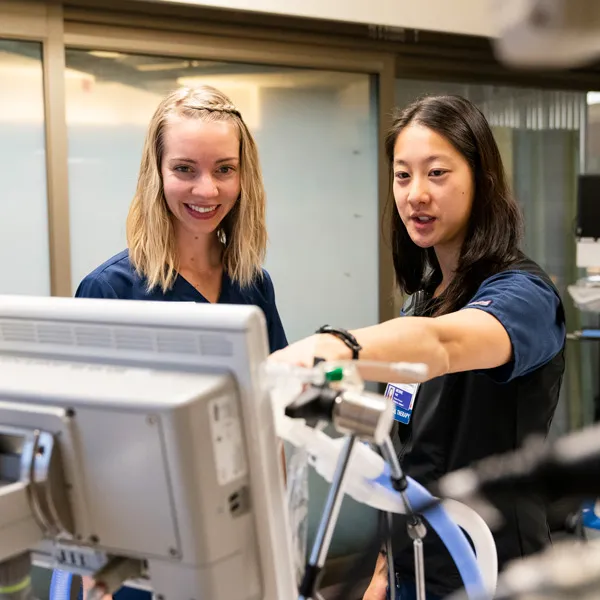
George Fox University offers a shadowing partnership with the Virginia Garcia Memorial Health Center in Newberg. This holistic care center offers medical, dental, pharmacy, behavioral health, wellness, and patient support services in one centralized location and serves over 2,000 each year. With access to providers across a wide range of health-care fields, George Fox students can see firsthand what day-to-day patient care looks like in each of these potential professions.
Dr. Schmitt notes, “Virginia Garcia is a tremendous community health partner which provides opportunities for George Fox students to provide health care to underserved and underprivileged members of our community. They provide medical and dental care as a local nonprofit organization and are a rich opportunity for our students to interact with the physicians and patients there.”
And, in a fun twist, A.T. Still sends many of its current medical students to the Virginia Garcia Memorial Health Center, so George Fox pre-health sciences students not only interact with physicians but also with medical students, giving them a glimpse into future opportunities and a community of students a few steps ahead on the path to act as mentors.
Several free Christian clinics in the Newberg area also offer volunteer opportunities, especially for first- and second-year students who are still learning the terminology and culture of their fields.
Advising
The quiet champion of any pre-health sciences program is its advising pathway. Advising helps students move from general degree requirements to preparing for the highly competitive world of post-graduate opportunities. This includes understanding not only the prerequisites for different medical careers, but also how to build a competitive application, stay on track when things get tough, and identify future pathways.
As a faith-based university, George Fox moves beyond traditional advising to give students opportunities to understand themselves spiritually as well as vocationally.
This begins with a first-year seminar for all incoming biology and biochemistry students that encourages them to explore how God has uniquely wired them as they begin their college journey.
Travis Pickell, professor of Theology, also recently developed a course on Healthcare and the Integrated Life, which helps pre-health science students wrestle with ethical topics in medicine, such as courage, compassion, and attention. This year-long, cohort-based program brings together about 10 to 14 pre-health and nursing students for monthly meetings to read Scripture, engage with art, poetry, and concrete practices, and discuss the intersection of healthcare and virtue.
Dr. Schmitt also seeks to connect pre-health science students with other departments on campus in creative offerings that support their long-term goals.
“We want to make sure that we offer what students really need, not just check boxes to get them into future programs. We want to prepare them and help them be well-rounded spiritually and vocationally. And this includes outside-the-box experiences to help our students succeed.”
One example of this unorthodox approach is the opportunity for pre-dental students to take a ceramics class through George Fox's art department.
“We want to help them look for things that will make them stand out and really help them discover their calling,” Schmitt says. “A student who wants to be a dentist or even a surgeon has to be really comfortable working with their hands. They need dexterity to work in small spaces. Over the last couple of years, we’ve been able to offer some workshops for pre-dental students, and we hope to expand that offering to other pre-health sciences specialties.”
Experiences like this set students apart when they apply to medical or dental school, as their transcript tracks a variety of unique experiences.
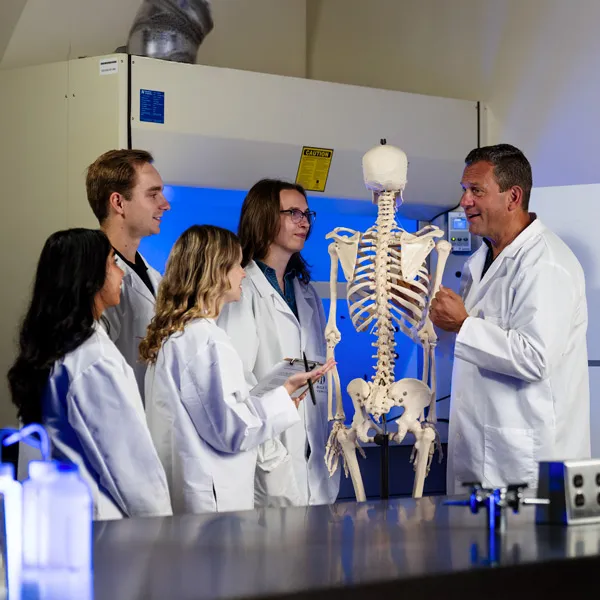
For any pre-health sciences program, understanding how advisors and faculty support you from first year through applying to graduate school and beyond is essential to the selection process. At George Fox, the advising team ensures continuity in coursework so students build a strong foundation that applies broadly to various healthcare professions. As they develop their calling over their four-year undergraduate career, they have flexibility within the program to pivot as they move towards graduate school.
And speaking of graduate school, when choosing a pre-health sciences program, it's important to explore what each school offers beyond the undergraduate experience.
Do they have master’s- and doctoral-level training that supports a larger learning collaborative? Are there integrated pathways and opportunities?
George Fox offers various master's and doctoral-level programs, including Certified Registered Nurse Anesthetist (CRNA), Doctor of Physical Therapy (DPT), Occupational Therapy Doctorate (OTD), Physician Assistant/PA (MMSc), Doctor of Medical Science (DMSc), and Psychiatric Mental Health Nurse Practitioner (PMHNP).
“We really try to support various pathways to healthcare here at Fox,” Dr. Schmitt explains.
This support is essential as you take the first steps toward your calling as a healthcare professional.
Ready to find your next steps? Explore George Fox’s Pre-professional Health Programs

Related Posts

A Dream Redefined
Desiray Anderson gave up everything she ever knew to pursue a physical therapy career she never envisioned

How George Fox Fosters Spiritual Growth
Anna Gallagher interviews three students of different denominations on their faith experience at George Fox!
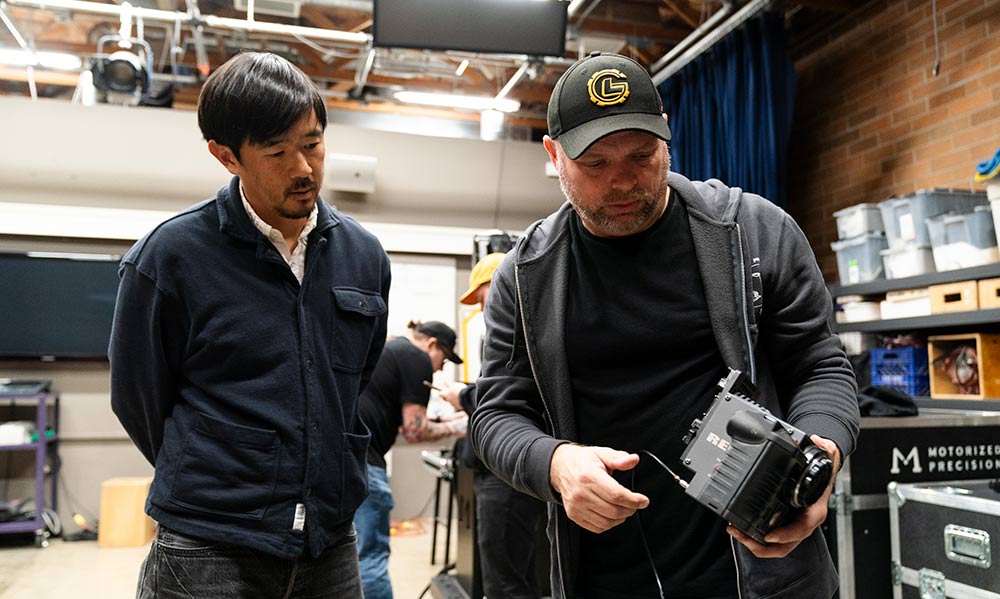
Innovation in Motion
Alex Chung, director of the School of Cinema, Art & Design, uplevels cinematography training for students as he shepherds the program into a new era.
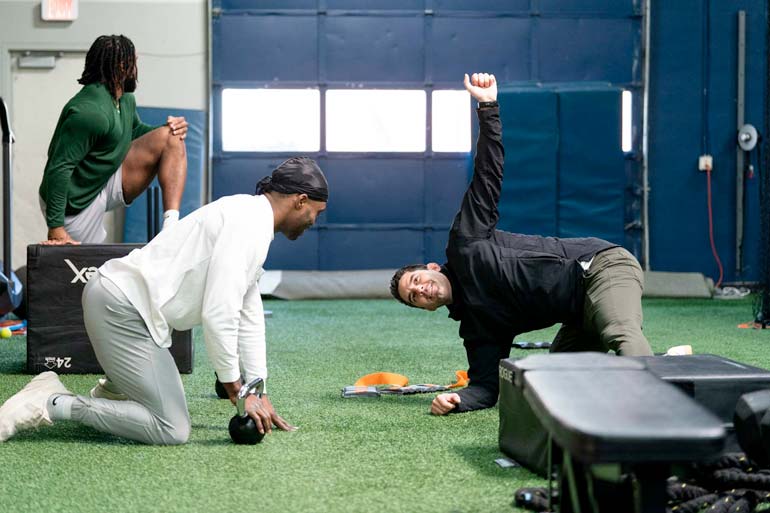
Physical Therapist to the ‘Stars’
Whether he’s working with NFL athletes or a 94-year-old trying to walk without pain, Ryan Baugus treats his physical therapy clients with the same mindset: They are the “star of the show”

Rehabilitating Our Heroes
George Fox DPT graduate Gavin McBride is transforming lives as a cardiopulmonary physical therapist for the U.S. Department of Veterans Affairs

Kinesiology Outcome Story: How a Career of Purpose Began
How George Fox equipped one graduate with the skills to mentor the next generation and build a youth fitness movement.