

Building a Living Equation
Groundbreaking research performed on campus could one day improve the treatment of neurological diseases and deepen our understanding of the brain
Nature follows a certain pattern known as symmetry – a set of fundamental physical laws. And the world of engineering doesn’t just notice and define the laws of symmetry; it depends on them.
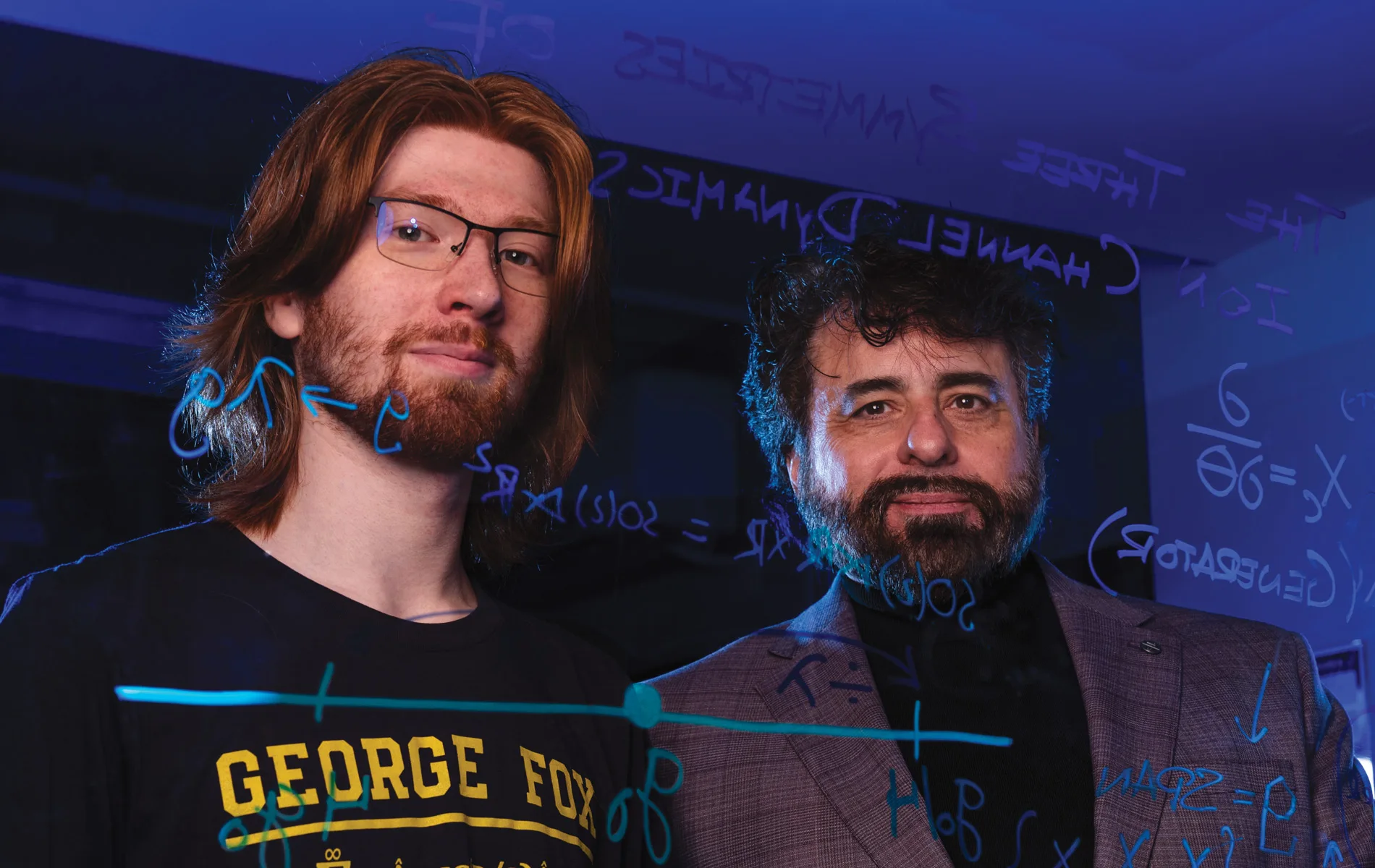
Through his groundbreaking work with the assistance of junior engineering major Daniel Blue, professor Robert Melendy has used the language of mathematics and symmetry to describe and model something that most of us take for granted every day: how our neurons – the cells in the brain and nervous system that function as our body’s communication grid – actually work.
“Using the elegant language of mathematics, we can perfectly describe the pattern that is deeply embedded in nature,” Melendy explains. “God is the creator of order and beauty, not chaos and confusion. Mathematics is neither chaotic nor confusing. It is a complex and beautiful language to describe what’s going on in our world.”
An Equation for Building Artificial Neurons
In 2015, while working at Liberty University, Melendy attended a joint engineering and medical school seminar that reignited an interest in research he’d pursued in graduate school: engineering applications in medicine, neuroscience and biology.
The question on the table: Can we build artificial neurons?
As an engineer, Melendy was grounded in the idea that if you understand how something works, you should be able to build a copy of it.
Though others were working on similar models, he wasn’t satisfied with the research precisely because of that grounding idea: proving the how. How were these other researchers developing their circuits and models?
“When you’re an engineer, you want to see a blueprint,” he explains. “You are asking, ‘What is the design? How did you come up with that, and by what method? How did you do the calculations to show that you used certain components?’ That’s what was missing.”
Though the incredibly complicated 1952 Hodgkin-Huxley equations – which describe how neurons fire and won the Nobel Prize in 1963 – model various aspects of brain function, the question of “why” was still not sufficiently answered.
And so Melendy began working on his own model rooted in cable theory.
“I started from scratch using my knowledge of electrical engineering, control theory and mathematics to develop a model that had never been developed,” he says. “I used my model as the basis for a circuit design because the outcome of my model matches very closely to what you see with the Hodgkin-Huxley equations; it’s just that it’s much simpler.”
Melendy published his first model in the Journal of Applied Physics in 2015 and a more refined, rigorous model in the Journal of Electrical Bioimpedance in 2018.
He then began to re-examine an area of mathematics called Lie groups (pronounced “lee”), named after Marius Sophus Lie, a Norwegian mathematician from the mid-1800s, on which discoveries in particle physics and quantum mechanics are based.
While Lie’s mathematical equations were intended to solve problems in classical dynamics, they turned out 100 years later to be exactly what was needed for subatomic particles in physics. And as Melendy and Blue have now discovered, this same mathematics bridges electrical engineering, mathematical physics and neuroscience, further proving that nature has a mathematical description, even neurons.
As Melendy puts it, “There isn’t anything in mathematics yet that hasn’t found a physical application.” The one exception, he notes, may be the Riemann Hypothesis – mathematics’ greatest unsolved mystery – though science has long suspected a deep connection to quantum mechanics that remains to be proven.
After more than a decade working on this problem, he became convinced that hidden within these Lie group symmetries were the patterns he was looking for all along.
The Final Breakthrough
Returning to George Fox in 2023 after a previous stint at the university from 2006 to 2014, Melendy continued to iterate and work on his model, often wondering who he might find to help him.
“There really are not too many people on the globe who have these areas of knowledge that they could bring together,” he explains.
So when he met Daniel Blue in a freshman Engineering Principles class in the spring of 2024, he wondered if Blue might be the right person to help move the project forward.
“I was watching him as the semester unfolded, thinking, ‘This young man is really sharp!’” he remembers.
Melendy noticed that Blue had a unique depth of competence in coding and wondered whether, with a bit more engineering training, he might be able to help with more advanced coding work.
Over a year later, Melendy asked Blue to join him to reorganize and consolidate code.
“Daniel was able to fix the code right away,” he recalls. “It was incredible. And he hadn’t even seen the problem yet.”
This partnership was instrumental to the success of Melendy’s discovery.
Together, they wrote a paper on control theory, published in the journal Computational Mathematics and Biophysics, describing a mechanism that controls switching within a neuron.
Though Blue came on board primarily for computational work – writing and debugging MATLAB code to simulate membrane behaviors – it was through teaching him control theory and watching him code that Melendy began thinking about Lie group theory and its application to his original circuit design model from 10 years prior.
This exploration of the Lie group approach led to a 37-page paper on systematic circuit design using Lie algebras, which is currently under review at the Journal of Computational and Mathematical Biophysics.
Additionally, their work with Lie group symmetries revealed the “why” that Melendy had been drawn to discover – specifically, why the Hodgkin-Huxley equations must have their particular form. The breakthrough answer to that question was published in the journal Membranes in 2026.
Practical Implications
In the future, Melendy and Blue hope to build their neuron circuit based on the model currently under review.
But this research is far more than just a personal academic victory. It’s a clear example of what collaboration, innovation and creative thinking can achieve.
Understanding the fundamental rules governing how a neuron fires has implications for diseases such as epilepsy, Parkinson’s disease, ALS and multiple sclerosis. Most notably, knowing why neurons fire in a particular way allows medical researchers to better predict how certain drugs targeting ion channels may behave.
Understanding the fundamental rules governing how a neuron fires has implications for diseases such as epilepsy, Parkinson’s disease, ALS and multiple sclerosis.
The research may also help in designing brain-like circuits based on physical principles, providing a rigorous theoretical foundation for building systems central to the future of AI.
Melendy has even seen his earlier work on membrane electrical properties, published in the Journal of Electrical Bioimpedance, cited by researchers developing real-world medical applications. Yunwei Zhang of Tianjin University cited it in an Institute of Electrical and Electronics Engineers study on spinal cord stimulation therapies to help manage chronic, severe nerve-related pain and improve patients’ daily function and quality of life. Prominent biophysicist Bradley J. Roth of Oakland University also cited the work in his Springer Nature book chapter exploring the effects of electromagnetic fields on the human body and their potential for pain treatment, further underscoring the international reach of this foundational research.
For Blue, the research has been a living example of his classroom learning.
“You get in the lab with all these equations and you problem-solve a bit,” he explains. “Then you realize that what you’ve produced matches what you did in Excel or hand calculations or MATLAB, and you see how the things you’ve learned actually work.”
Blue also credits the unique classroom environment at George Fox for the opportunity to work on such a groundbreaking project.
“All of the professors have worked on really unique research. And because of class size, there aren’t 100 of us in a room listening to a lecture; it’s more like a conversation in the classroom,” he says. “Taking advantage of that kind of small class size and relational atmosphere is incredible.”
Melendy seconds the notion. “Undergraduate research is highly valuable. It’s healthy for the university. It’s healthy for the students. It’s healthy for everyone.”
And one day, that research could help scientists improve countless lives by understanding how the brain works at its most fundamental level.
You Might Like:

Grapes of Math
George Fox computer science and engineering students are developing an autonomous robot that could drastically change the way vineyard owners predict their harvest
Biology Virtual Reality Lab
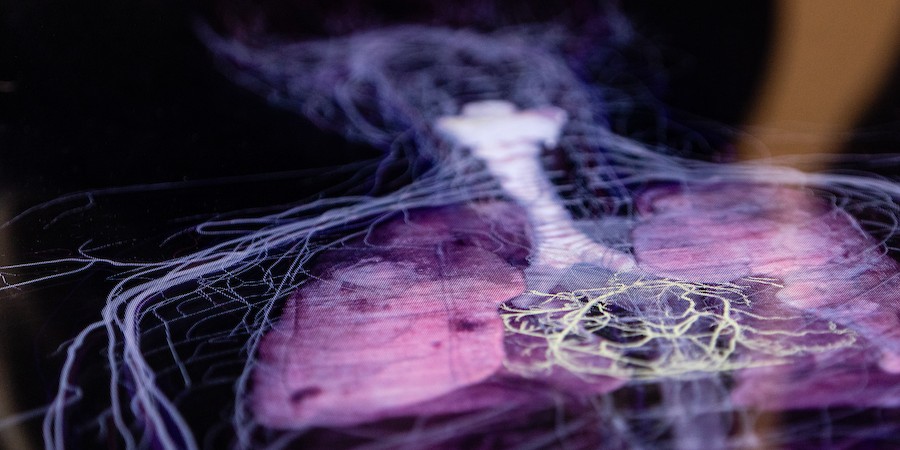
George Fox's science department opened a new virtual reality lab for biology and biochemistry students to gain hands-on experience.
Striking a Balance
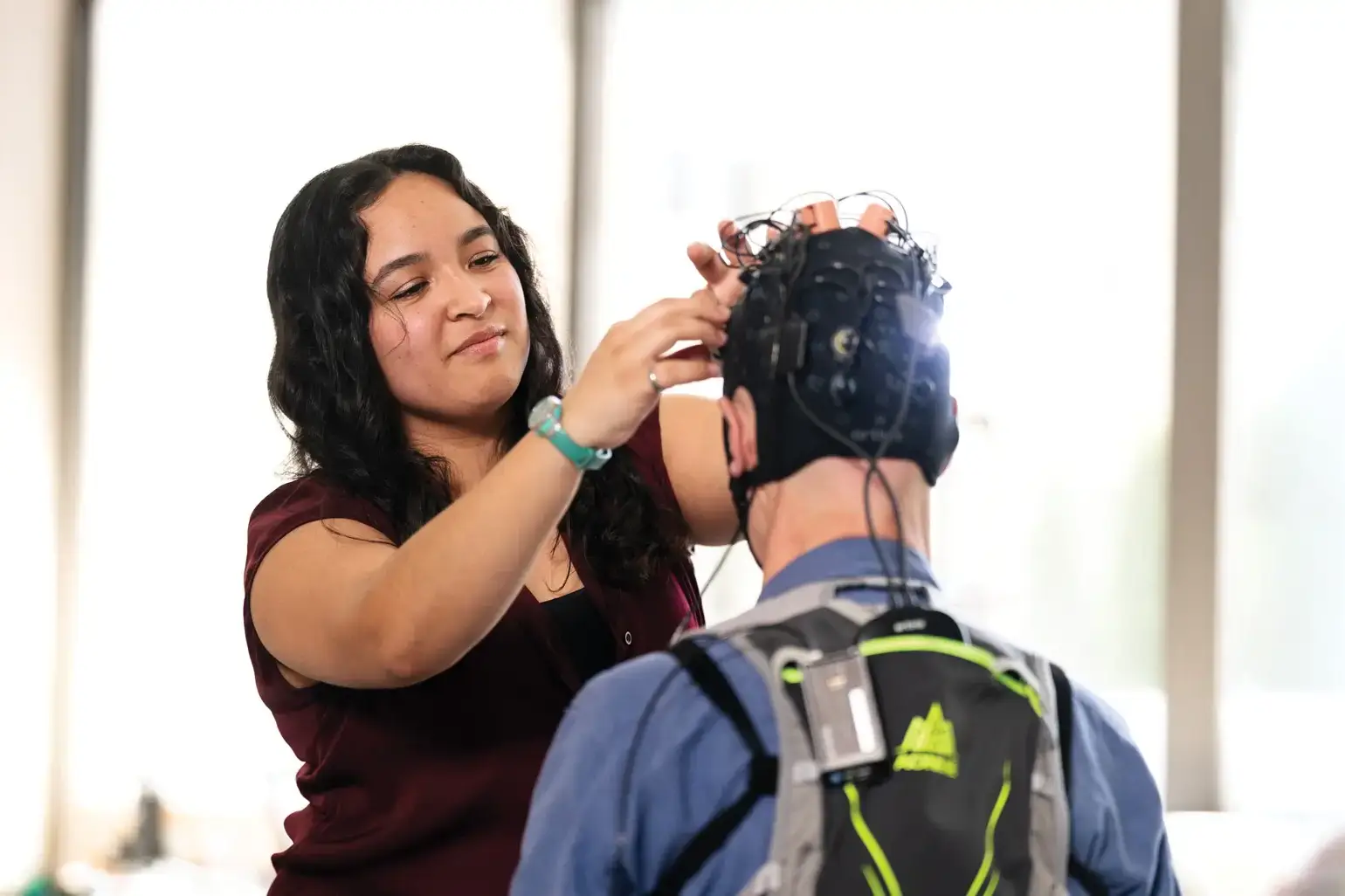
Biomedical engineering graduate Frankie Alcalá works at the intersection of people and technology to bring hope to patients with Parkinson’s disease

Lasting Legacies
Five retiring employees reflect on what kept them at George Fox a combined 137 years

A Different Brand of Courage
Two percent of people with Apert syndrome attend college, but Sam Poukish isn’t one to be defined by the odds
The Bouncinator 3000
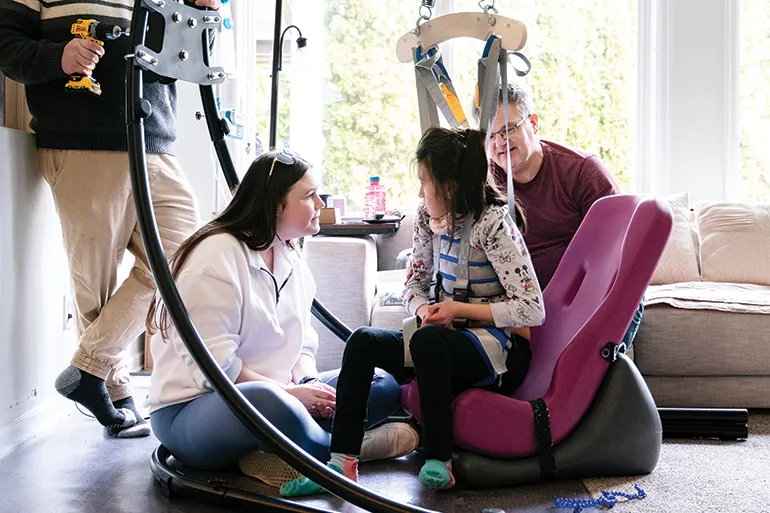
A custom-made device gives a young girl with physical disabilities newfound freedom

Cover of Summer 2026 issue
Looking for more?
Browse this issue of the George Fox Journal to read more of the stories of George Fox University, Oregon's premier Christian university.