At George Fox University, the art and design major is for students who want to create meaningful work that is professionally excellent, culturally engaged, and grounded in faith.
Through a newly developed curriculum, the Bachelor of Fine Arts (BFA) offers students clarity, depth and real-world preparation for creative vocations. You’ll graduate with the skills, experience and confidence to thrive as a dynamic, in-demand creative.
Exploring Art Through Richter Scholars Program | George Fox UniversityClose
Concentrations
Studio Arts
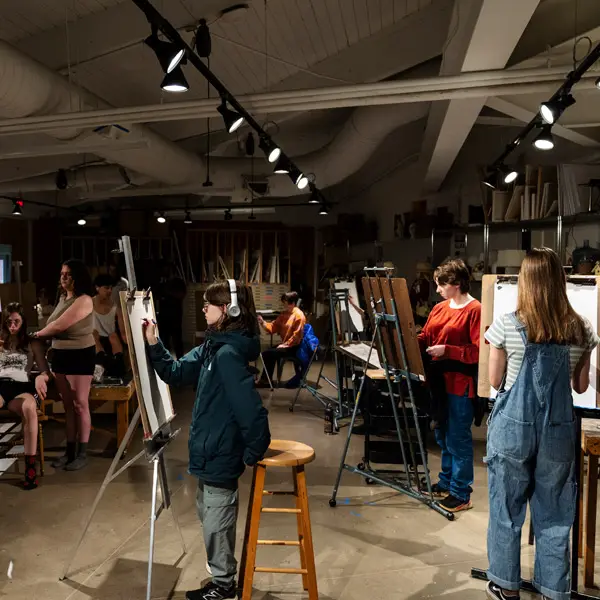
The studio arts concentration is for dedicated artists ready to refine their technical skill and conceptual depth. This program provides the time and space to develop a signature style in our new 12,000-square-foot creative facility.
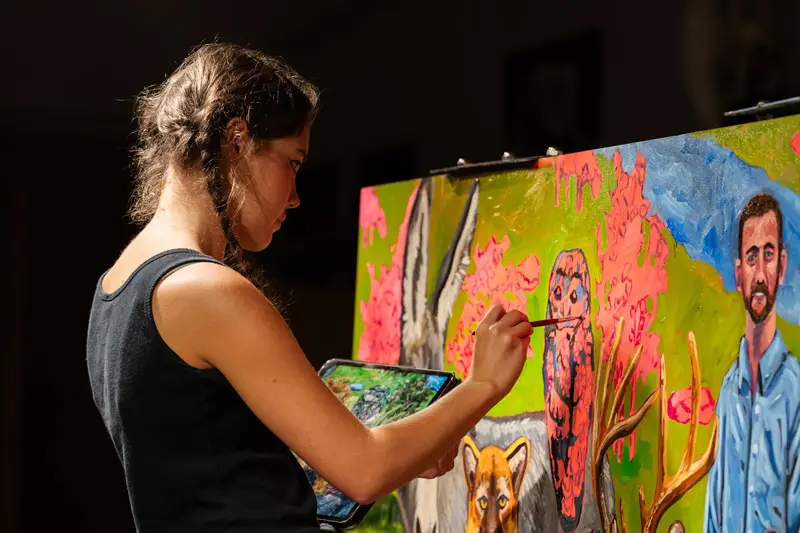
No matter your focus – whether it’s ceramics, sculpture, painting, or another media form – the BFA track prioritizes business acumen, leadership and a rigorous studio practice, culminating in a professional-grade senior solo showcase.
Illustration
Transform your drawing talent into a professional career in narrative art. The BFA in illustration goes deeper than technical rendering, focusing on the business of being a creator. You will explore advanced techniques in digital and analog media while learning to navigate the industries of publishing, concept art and freelance illustration. This intensive track pushes you to create a cohesive, market-ready portfolio that reflects your unique style and capabilities.
Graphic Design
The BFA in graphic design is an intensive, portfolio-driven program for students aiming for top-tier agencies and leadership roles. You’ll go beyond the Creative Suite and master the intersection of UI/UX design, branding identity systems and motion graphics. With a heavy emphasis on studio hours and professional critiques, you will graduate with work ready to compete in the global marketplace.
Professional Preparation
The BFA is a professional preparation degree designed for students seeking advanced studio training and graduate-level readiness. The BFA structure reflects the standards of leading art and design schools nationwide, emphasizing sustained creative practice and cross-disciplinary learning.
Ideal for students pursuing:
Leadership roles at creative firms
Creative practice and studio careers
Graduate school, including a Master of Fine Arts
Becoming an independent artist or freelance professional
Bachelor of Arts
In addition to the BFA, George Fox offers three distinct Bachelor of Arts majors in graphic design, illustration and studio arts. The Bachelor of Arts opportunity provides a flexible and consolidated curriculum. This is ideal for students interested in pursuing a double major and seeking more collaborative experiences outside of art and design.
Why Study Art & Design at George Fox?
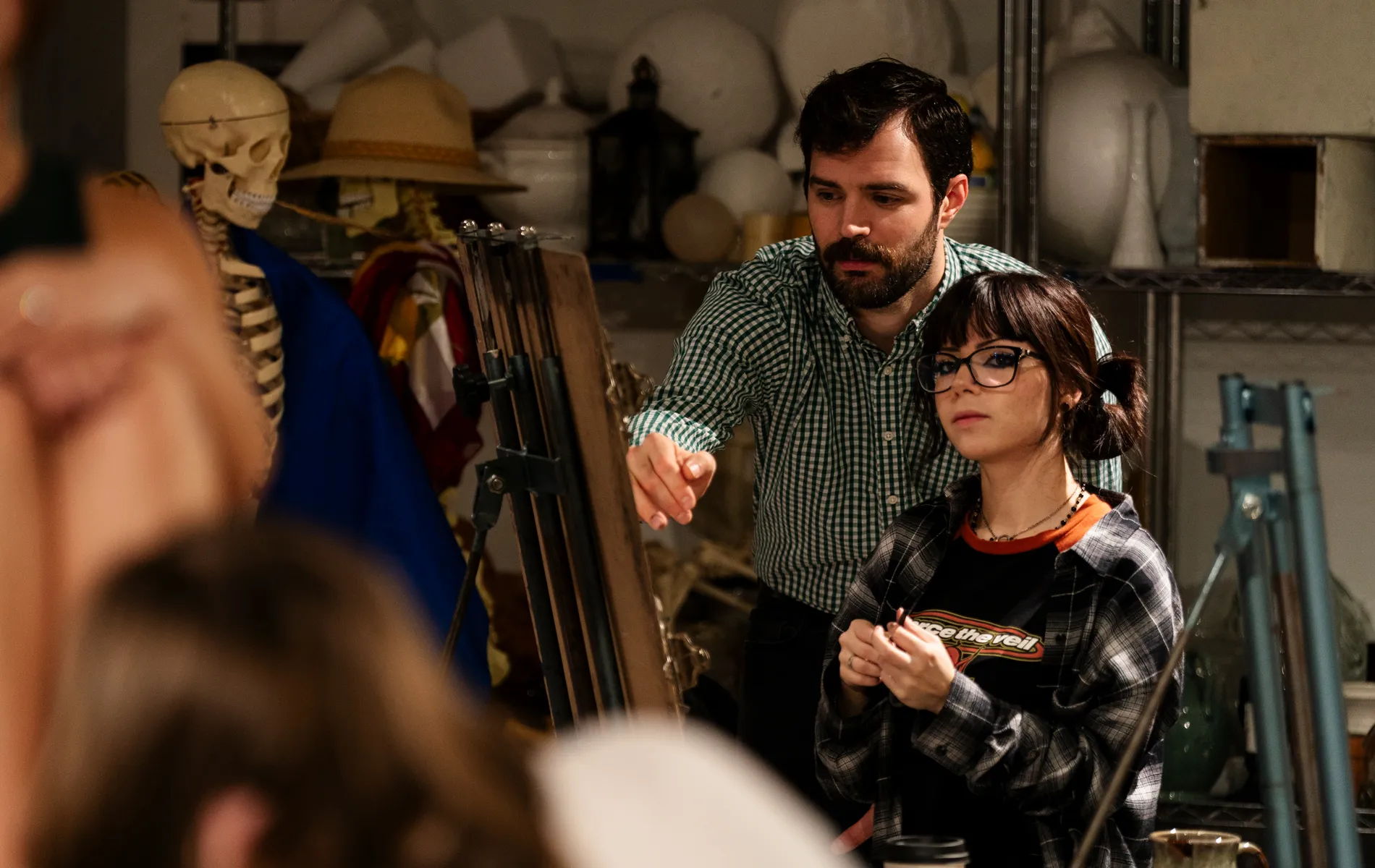
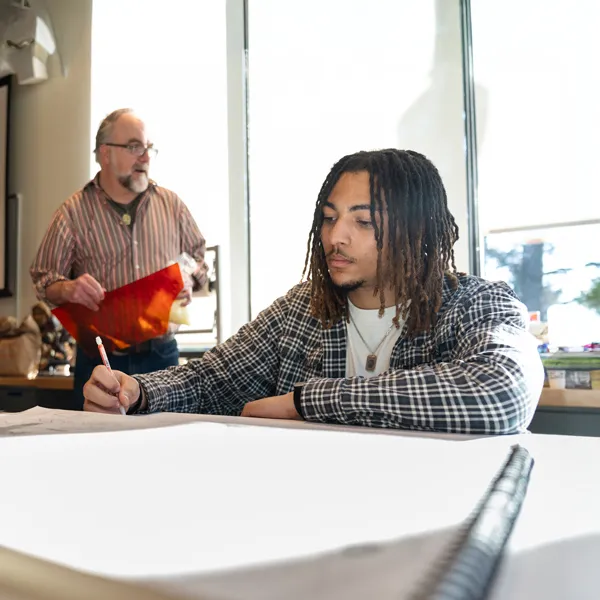
Small class sizes, cross-disciplinary learning and close faculty mentorship mean you’re known here – not just as an artist, but as a whole person. You’ll grow alongside peers who challenge your thinking, sharpen your craft, and share your commitment to meaningful creative work.
Students in the BFA will develop a portfolio and receive studio time and space to complete projects, all in preparation for a solo or group showcase.
Faith is a foundation of the George Fox University art program. You will explore the intersection of Christianity and art from professors who love God.
You will take business courses that will provide you with leadership training to create your own unique career and manage projects and teams.
Courses / Curriculum What Will I Study?
Visual storytelling
Digital and traditional media
Branding and identity systems
Faith and learning field experience
Project management
Business and leadership
Graphic design, illustration and studio art courses
The Cornerstone Core is a set of 12 courses across 10 academic disciplines that undergraduate students take at George Fox to cultivate their character within the Christian context.
A seminar course designed to acclimate students new to the GFU Art & Design department with its culture, expectations, processes, and community. Through online materials and four weeks of in-person events at the start of the semester, new students get to know the department and their fellow cohort members while planning for success in their program. Student enrollment is mandatory for the first semester of study. Additional course fee is required.
A hands-on technical course offering an introduction to materials, processes, and theory foundational to creative visual practice. Technical material use, research, ideation, design principles, and elements are explored through two-dimensional exercises and projects. Additional course fee is required.
A project-driven course offering an introduction to materials, techniques, and theory related to three-dimensional design and interdisciplinary collaboration. Construction methodologies, research, design principles, and creative ideation are explored through exercises, projects, and proposals. Additional course fee is required.
A course offering an introduction to industry-standard design software and applications, including Adobe Illustrator, Photoshop, InDesign, SketchUp, and other applications tailored to the instructor's expertise. Students can access the Creative Suite on campus computers in Lemmons. Students not accessing on-campus computers should anticipate purchasing the Creative Suite for a personal device. Additional course fee is required.
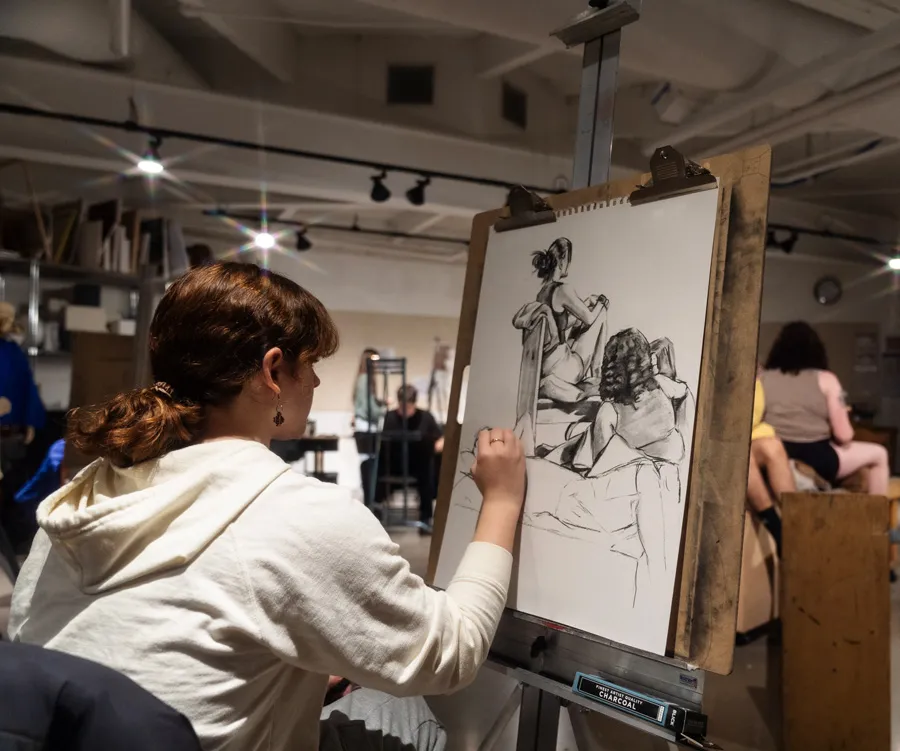
A course offering students an expansive understanding of drawing as both an artistic act and a part of the daily creative process. Through skill-building exercises, sketchbook work, concept-driven projects, and critique sessions, students explore the history, techniques, and impact of mark-making. Students develop foundational skills of observational drawing, as well as being introduced to drawing practice's other facets. Additional course fee is required.
A survey course focusing on art and design's historic, social, and aesthetic developments. Through formal analysis, research, and creative exercises, students engage with primary sources and theory to uncover the rich fabric that makes up our visual histories and cultures. This course develops students' understanding of all Art and Design history with special attention to the first half of the department's foundations timeline. Additional course fee is required.
A survey course focusing on art and design's historic, social, and aesthetic developments. Through formal analysis, research, and creative exercises, students engage with primary sources and theory to uncover the rich fabric that makes up our visual histories and cultures. This course develops students' understanding of all Art and Design history with special attention to the second half of the department's foundations timeline. Additional course fee is required.
A seminar course focusing on the study of Christianity's integration within historic and contemporary art and design practices - from the conceptual, theological, and theoretical to the practical. Additionally, students evaluate and articulate how their own practice and their faith/values inform one another. Additional course fee is required.
A seminar course preparing students for an internship or professional experience that will follow this course as a dynamic program graduation requirement. Additionally, students gain exposure to common business practices such as the development of contracts, estimates, invoices, accounting, promotion, and project management. Prerequisite: Junior status or instructor approval.
A seminar course focusing on art and design's expressions outside of the 'canon' and how non-Western cultures, such as African, Asian, and Latin American, have influenced history. Topics are rotated. Prerequisite: ARTS 206 Art and Design History I, ARTS 207 Art and Design History II, or instructor's permission. Additional course fee is required.
A seminar course focusing on art and design's expressions outside of the 'canon' and how non-Western cultures, such as African, Asian, and Latin American, have influenced history. Topics are rotated. Prerequisite: ARTS 206 Art and Design History I, ARTS 207 Art and Design History II, or instructor's permission. Additional course fee is required.
A study of the theory and practice of management. The course involves discussion and application of areas such as social responsibility, strategy, problem solving, communication, change, job performance, and financial/operational controls.
Prerequisite or Co-requisite: BUSN 110 Introduction to Business.
This course will prepare students to skillfully use fundamental project management concepts and behavioral skills to effectively plan and lead project work. Specifically, through practical, hands-on work, case studies, and exercises, students will learn to manage project resources, schedules, tasks, time/cost tradeoffs, risks, and scope to produce desired organizational outcomes. Importantly, since most project teams are comprised of internal and external resources which are often distributed geographically, students will become knowledgeable and skillful at recognizing and overcoming the challenges of leading distributed teams. In short, this course will provide a sense of confidence with planning and oversight throughout all phases of a project's life cycle.
Professional Networking - Complete 5 credit hours:
A weekly seminar course focusing on both professional practice and the application of theory, concepts, and methodology of contemporary art and design practices by engaging students in discourse surrounding lectures of visiting professional artists. Additional course fee is required.
A weekly seminar course focusing on both professional practice and the application of theory, concepts, and methodology of contemporary art and design practices by engaging students in discourse surrounding lectures of visiting professional artists. Additional course fee is required.
A weekly seminar course focusing on both professional practice and the application of theory, concepts, and methodology of contemporary art and design practices by engaging students in discourse surrounding lectures of visiting professional artists. Additional course fee is required.
A weekly seminar course focusing on both professional practice and the application of theory, concepts, and methodology of art historical study by engaging students in discourse surrounding lectures of visiting professional artists. Additional course fee is required.
A weekly seminar course focusing on both professional practice and the application of theory, concepts, and methodology of art historical study by engaging students in discourse surrounding lectures of visiting professional artists. Additional course fee is required.
A course offering an introduction to graphic design by combining studio work with classroom instruction. Fundamental components of the design process are incorporated to provide students with a robust experience in ideation, research execution, and presentation of projects. Advanced uses of Creative Suite, digital tools, and other emerging software and technologies are explored based on the instructor's expertise. Prerequisite: ARTD 110 Digital Tools. Additional course fee is required.
A course offering an advanced exploration of the structures, processes, and methodologies designers use to generate ideas, solve complex problems, and effectively engage audiences. Emphasizing real-world applications such as working with actual clients, environmental design, and wayfinding systems, students delve into the profound ways design influences and shapes human behavior. By incorporating advanced techniques in design thinking, creative strategy, ethnography, and research, students explore diverse approaches to ideation and execution. Additional course fee is required.
A capstone course focusing on the organization and preparation of a portfolio showcasing a student's creative work in preparation for employment in the field of design. Students explore visual organization and display, document assembly methods, and various reproduction image management techniques. Computer design and printing processes are used to create consistent paper and digital portfolios. The course may be taken two times. For BFA students taking Portfolio Development the second time, they are expected to create an informed, focused, and in-depth body of work, which is developed through research and critical feedback with instructors and visiting practitioners. In recognition of the transition from student to professional, this process represents students' work in their studio spaces, largely in a self-directed manner, in consultation with the faculty. This work should reflect mature and independent decisions made regarding content and means of expression. Prerequisites: Declared Art and Design major/minor with Junior or Senior status, or by instructor permission. Additional course fee is required.
A capstone course focusing on the organization and preparation of a portfolio showcasing a student's creative work in preparation for employment in the field of design. Students explore visual organization and display, document assembly methods, and various reproduction image management techniques. Computer design and printing processes are used to create consistent paper and digital portfolios. The course may be taken two times. For BFA students taking Portfolio Development the second time, they are expected to create an informed, focused, and in-depth body of work, which is developed through research and critical feedback with instructors and visiting practitioners. In recognition of the transition from student to professional, this process represents students' work in their studio spaces, largely in a self-directed manner, in consultation with the faculty. This work should reflect mature and independent decisions made regarding content and means of expression. Prerequisites: Declared Art and Design major/minor with Junior or Senior status, or by instructor permission. Additional course fee is required.
A course focusing on students' ownership of the conceptual and technical development of their practice and maintenance of a studio space. Students identify, research, and begin creating a body of work and a written thesis in their area of interest. Emphasis is placed on strong technical and formal articulation in support of a compelling, developing thesis concept. Professional practices for the emergent practitioner are examined and implemented. Participation in the Professional Networking visiting practitioner program through studio visits and lectures is a key component of this course. Prerequisite: Art and Design major and senior status, or instructor's permission. Additional course fee is required.
A course offering an introduction to typography including type history, typefaces, type selection and layout, the use of type in effective designs, and creative approaches to using type. Prerequisite: ARTD 110 Digital Tools. Additional course fee is required.
A course offering an in-depth exploration of design for both 2D and 3D printed objects. Students engage in project ideation, paper selection, technical execution, working with print templates, and preparing production-ready designs. The course may also include opportunities to collaborate with real clients, leveraging the instructor’s professional network. Prerequisite: ARTD 210 Typography. Additional course fee is required.
A course focusing on internet design and internet-minded media through content and CMS, design, and front-end web development (including HTML & CSS coding), and standard user interface models. Students review best practices in visual communication and engage in hand-coding while exploring design models and emerging site production methods. Prerequisite: ARTD 110 Digital Tools. Additional course fee is required.
A course focused on visual thinking and systematic approaches to graphic design. Students explore brand development, identity systems, and generative design methods. Students design, develop, and present projects that achieve clear communicative objectives, while also having the potential opportunity to collaborate with real clients. Prerequisite: ARTD 210 Typography. Additional course fee is required.
A course focusing on the design of interactive objects and experiences, with a focus on user interface (UI) and user experience (UX) design. Key topics include navigation, information architecture, kinetic design, and the development of intuitive and effective interfaces. Students also explore research methods central to UI/UX design, gaining the skills necessary to craft seamless and engaging digital experiences. Prerequisite: ARTD 210 Typography. Additional course fee is required.
A course structured around applied design projects that allow students to work collaboratively with regional clients. Within this course, students work in teams as they move projects from concept and quote to preparation for production. Designers develop work across a variety of media and learn to manage client relationships while producing work that meets the needs of real audiences. Prerequisite: Junior Status. Additional course fee is required.
A course offering an introduction and development of students' skills and techniques for effective painting with acrylics and oils. Students study color mixing, create effective compositions, develop depth, space, and form with paint, and gain confidence in painting ability by understanding techniques and progressing the ability to apply them. Additional course fee is required. Prerequisite: ARTS 111 Drawing I, or instructor's permission.
A course offering studio development of students' skills and techniques for effective painting with acrylics or oils. Students study more complex color mixing and gain further confidence in ones painting ability by understanding additional techniques and gaining the ability to apply them. Prerequisite: ARTS 210 Beginning Painting, or instructor's permission. Additional course fee is required.
A course offering studio development of students' skills and techniques for effective painting with acrylics or oils. Students focus on individual artistic development as they combine techniques and subject matter into a personal style of visual communication. Prerequisite: ARTS 310 Intermediate Painting, or instructor's permission. Additional course fee is required.
A course offering an introduction and investigation of additive, subtractive, assembled, and cast sculptural techniques. Students use diverse media (such as metals, glass, plaster, clay, and wood) to explore conceptual and theoritic questions at the heart of sculptural practice. Prerequisite: ARTS 102 3D (Mixing Medias), or instructor's permission. Additional course fee is required.
A course offering studio development of sculptural practice in a variety of media. Students explore more complex techniques and gain further confidence in diverse media (such as metals, glass, plaster, clay, and wood) to explore conceptual and theoritic questions at the heart of sculptural practice. Prerequisite: ARTS 220 Beginning Sculpture, or instructor's permission. Additional course fee is required.
A course offering studio development of students' skills and techniques in sculptural practice in a particular three-dimensional media. Students explore advanced techniques and gain further confidence while clarifying their conceptual and theoretical questions at the heart of the work. Prerequisite: ARTS 320 Intermediate Sculpture, or instructor's permission. Additional course fee is required.
A course offering further studio development of skills and the introduction of more advanced photographic techniques. A focus on medium and large-format camera use is explored, with cameras available for checkout. Prerequisite: ARTS 230 Beginning Photography, or instructor's permission. Additional course fee is required.
Focuses on the individual artistic development of students as they combine techniques and subject matter into a personal style of visual communication. Additional course fee is required. Prerequisite: ARTS 330 Intermediate Photography.
A course offering an introduction to techniques and methods of historical and contemporary printmaking. Rotating topics include silkscreen printing, relief, etching, and lithography. Students explore the production and conceptual questions around the print as an art object. Additional course fee is required.
A course offering study into further techniques and methods of historical and contemporary printmaking. Rotating topics include silkscreen printing, relief, etching, and lithography. Intermediate students mix previous print knowledge with current offerings to diversify mark-making abilities. Intermediate students begin conceptualizing intended messages with the specific print media. Prerequisite: ARTS 240 Beginning Printmaking, or instructor's permission. Additional course fee is required.
A course offering studio development of students' individual printmaking process and production skills. Students focus on a dedicated process and develop work that combines techniques and subjects into a personal style of visual communication. Prerequisite: ARTS 340 Intermediate Printmaking, or instructor's permission. Additional course fee is required.
A course offering an introduction to the materials, methods, and basic techniques and skills of ceramic practice, including hand-building, wheel-throwing, and surface design. Additional course fee is required.
A course offering further studio development of the students' ceramics knowledge and skill in hand building, wheel-throwing, and firing techniques. Prerequisite: ARTS 250 Beginning Ceramics, or instructor's permission. Additional course fee is required.
A course offering studio development of students' individual artistic development as they combine ceramic techniques and subject matter into a personal style of visual communication that clarifies their conceptual and theoretical questions. Prerequisite: ARTS 350 Intermediate Ceramics, or instructor's permission. Additional course fee is required.
An upper-division rotating lecture/studio course that focuses on an area of interest and specialty for the instructor. Media and techniques such as design impact on historic preservation, footwear, apparel, product, industrial, and service design may be explored. Students may repeat this course under a different topic. Students may need to purchase additional supplies. Additional course fee is required.
A lower-division rotating lecture/studio course that focuses on an area of interest and specialty for the instructor. Media and techniques such as watercolor, kiln-worked glass, jewelry, alternative processes in photography, or paper and bookmaking may be explored. Students may repeat this course under a different topic. Students may need to purchase additional supplies. Additional course fee is required.
An upper-division rotating lecture/studio course that focuses within an area of interest and specialty for the instructor. Media and techniques such as watercolor, kiln-worked glass, jewelry, alternative processes in photography, or paper and bookmaking may be explored. Students may repeat this course under a different topic. Students may need to purchase additional supplies. Additional course fee is required.
A course continuing students' understanding of drawing's multiple media and the students' daily creative process. Through sketchbook work, research, thematic-driven projects, and critique sessions, students explore the history, techniques, and impact of mark-making in contemporary and varied practices. Students develop technical drawing skills and dive into drawing practice's other facets (esp. conceptual, non-representational, and figurative work). Prerequisite: ARTS 111 Drawing I. Additional course fee is required.
A course offering an introduction to professional illustration skills in commercial and personal contexts. Students learn the technical processes of research, ideation, image creation, and deployment to bring vivid storytelling to design briefs and concepts. Prerequisites: ARTD 110 Digital Tools and ARTS 111 Drawing I. Additional course fee is required.
A course offering studio development of illustration skills in applied projects across a variety of self-selected media. Students develop their personal approach to illustration processes through research, making, evaluating, presenting, and reflecting on their work. Creative strategy, context, and content, technique, media, and subject matter vary each semester. Prerequisites: ARTD 260 Illustration I. Additional course fee is required.
A capstone course focusing on the organization and preparation of a portfolio showcasing a student's creative work in preparation for employment in the field of design. Students explore visual organization and display, document assembly methods, and various reproduction image management techniques. Computer design and printing processes are used to create consistent paper and digital portfolios. The course may be taken two times. For BFA students taking Portfolio Development the second time, they are expected to create an informed, focused, and in-depth body of work, which is developed through research and critical feedback with instructors and visiting practitioners. In recognition of the transition from student to professional, this process represents students' work in their studio spaces, largely in a self-directed manner, in consultation with the faculty. This work should reflect mature and independent decisions made regarding content and means of expression. Prerequisites: Declared Art and Design major/minor with Junior or Senior status, or by instructor permission. Additional course fee is required.
A capstone course focusing on the organization and preparation of a portfolio showcasing a student's creative work in preparation for employment in the field of design. Students explore visual organization and display, document assembly methods, and various reproduction image management techniques. Computer design and printing processes are used to create consistent paper and digital portfolios. The course may be taken two times. For BFA students taking Portfolio Development the second time, they are expected to create an informed, focused, and in-depth body of work, which is developed through research and critical feedback with instructors and visiting practitioners. In recognition of the transition from student to professional, this process represents students' work in their studio spaces, largely in a self-directed manner, in consultation with the faculty. This work should reflect mature and independent decisions made regarding content and means of expression. Prerequisites: Declared Art and Design major/minor with Junior or Senior status, or by instructor permission. Additional course fee is required.
A course focusing on students' ownership of the conceptual and technical development of their practice and maintenance of a studio space. Students identify, research, and begin creating a body of work and a written thesis in their area of interest. Emphasis is placed on strong technical and formal articulation in support of a compelling, developing thesis concept. Professional practices for the emergent practitioner are examined and implemented. Participation in the Professional Networking visiting practitioner program through studio visits and lectures is a key component of this course. Prerequisite: Art and Design major and senior status, or instructor's permission. Additional course fee is required.
A course offering an introduction to typography including type history, typefaces, type selection and layout, the use of type in effective designs, and creative approaches to using type. Prerequisite: ARTD 110 Digital Tools. Additional course fee is required.
A course offering an introduction to techniques and methods of historical and contemporary printmaking. Rotating topics include silkscreen printing, relief, etching, and lithography. Students explore the production and conceptual questions around the print as an art object. Additional course fee is required.
A lower-division rotating lecture/studio course that focuses on an area of interest and specialty for the instructor. Media and techniques such as watercolor, kiln-worked glass, jewelry, alternative processes in photography, or paper and bookmaking may be explored. Students may repeat this course under a different topic. Students may need to purchase additional supplies. Additional course fee is required.
A course focusing on developing media illustrations in multi-dimensional digital space, including the techniques and skills of three-dimensional modeling, lighting, and rendering. Students learn how to work across multiple professional software in their workflows to take advantage of emerging applications and technologies. Prerequisite: ARTD 110 Digital Tools. Additional course fee is required.
A course structured around applied design projects that allow students to work collaboratively with regional clients. Within this course, students work in teams as they move projects from concept and quote to preparation for production. Designers develop work across a variety of media and learn to manage client relationships while producing work that meets the needs of real audiences. Prerequisite: Junior Status. Additional course fee is required.
A course offering an introduction and development of students' skills and techniques for effective painting with acrylics and oils. Students study color mixing, create effective compositions, develop depth, space, and form with paint, and gain confidence in painting ability by understanding techniques and progressing the ability to apply them. Additional course fee is required. Prerequisite: ARTS 111 Drawing I, or instructor's permission.
A course offering studio development of students' skills and techniques for effective painting with acrylics or oils. Students study more complex color mixing and gain further confidence in ones painting ability by understanding additional techniques and gaining the ability to apply them. Prerequisite: ARTS 210 Beginning Painting, or instructor's permission. Additional course fee is required.
A course offering studio development of students' skills and techniques for effective painting with acrylics or oils. Students focus on individual artistic development as they combine techniques and subject matter into a personal style of visual communication. Prerequisite: ARTS 310 Intermediate Painting, or instructor's permission. Additional course fee is required.
A course offering an introduction and investigation of additive, subtractive, assembled, and cast sculptural techniques. Students use diverse media (such as metals, glass, plaster, clay, and wood) to explore conceptual and theoritic questions at the heart of sculptural practice. Prerequisite: ARTS 102 3D (Mixing Medias), or instructor's permission. Additional course fee is required.
A course offering studio development of sculptural practice in a variety of media. Students explore more complex techniques and gain further confidence in diverse media (such as metals, glass, plaster, clay, and wood) to explore conceptual and theoritic questions at the heart of sculptural practice. Prerequisite: ARTS 220 Beginning Sculpture, or instructor's permission. Additional course fee is required.
A course offering studio development of students' skills and techniques in sculptural practice in a particular three-dimensional media. Students explore advanced techniques and gain further confidence while clarifying their conceptual and theoretical questions at the heart of the work. Prerequisite: ARTS 320 Intermediate Sculpture, or instructor's permission. Additional course fee is required.
A course offering further studio development of skills and the introduction of more advanced photographic techniques. A focus on medium and large-format camera use is explored, with cameras available for checkout. Prerequisite: ARTS 230 Beginning Photography, or instructor's permission. Additional course fee is required.
Focuses on the individual artistic development of students as they combine techniques and subject matter into a personal style of visual communication. Additional course fee is required. Prerequisite: ARTS 330 Intermediate Photography.
A course offering study into further techniques and methods of historical and contemporary printmaking. Rotating topics include silkscreen printing, relief, etching, and lithography. Intermediate students mix previous print knowledge with current offerings to diversify mark-making abilities. Intermediate students begin conceptualizing intended messages with the specific print media. Prerequisite: ARTS 240 Beginning Printmaking, or instructor's permission. Additional course fee is required.
A course offering studio development of students' individual printmaking process and production skills. Students focus on a dedicated process and develop work that combines techniques and subjects into a personal style of visual communication. Prerequisite: ARTS 340 Intermediate Printmaking, or instructor's permission. Additional course fee is required.
A course offering an introduction to the materials, methods, and basic techniques and skills of ceramic practice, including hand-building, wheel-throwing, and surface design. Additional course fee is required.
A course offering further studio development of the students' ceramics knowledge and skill in hand building, wheel-throwing, and firing techniques. Prerequisite: ARTS 250 Beginning Ceramics, or instructor's permission. Additional course fee is required.
A course offering studio development of students' individual artistic development as they combine ceramic techniques and subject matter into a personal style of visual communication that clarifies their conceptual and theoretical questions. Prerequisite: ARTS 350 Intermediate Ceramics, or instructor's permission. Additional course fee is required.
An upper-division rotating lecture/studio course that focuses on an area of interest and specialty for the instructor. Media and techniques such as design impact on historic preservation, footwear, apparel, product, industrial, and service design may be explored. Students may repeat this course under a different topic. Students may need to purchase additional supplies. Additional course fee is required.
A lower-division rotating lecture/studio course that focuses on an area of interest and specialty for the instructor. Media and techniques such as watercolor, kiln-worked glass, jewelry, alternative processes in photography, or paper and bookmaking may be explored. Students may repeat this course under a different topic. Students may need to purchase additional supplies. Additional course fee is required.
An upper-division rotating lecture/studio course that focuses within an area of interest and specialty for the instructor. Media and techniques such as watercolor, kiln-worked glass, jewelry, alternative processes in photography, or paper and bookmaking may be explored. Students may repeat this course under a different topic. Students may need to purchase additional supplies. Additional course fee is required.
Students explore different means of producing visual effects using digital computer imaging, blue-screens, compositing, and old-fashioned movie magic. Students will also learn how to create animated text sequences and video graphics. Additional course fee required.
A course continuing students' understanding of drawing's multiple media and the students' daily creative process. Through sketchbook work, research, thematic-driven projects, and critique sessions, students explore the history, techniques, and impact of mark-making in contemporary and varied practices. Students develop technical drawing skills and dive into drawing practice's other facets (esp. conceptual, non-representational, and figurative work). Prerequisite: ARTS 111 Drawing I. Additional course fee is required.
A course focusing on applied and theoretical spaces outside of historical research and interpretation. Students develop their research, presentation, and even technical skills as they apply their creative skills and knowledge to pressing contemporary discussions and practices ranging from Arts Administration to Contemporary Art Forms. Topics are rotated. Additional course fee is required.
A capstone course focusing on the organization and preparation of a portfolio showcasing a student's creative work in preparation for employment in the field of design. Students explore visual organization and display, document assembly methods, and various reproduction image management techniques. Computer design and printing processes are used to create consistent paper and digital portfolios. The course may be taken two times. For BFA students taking Portfolio Development the second time, they are expected to create an informed, focused, and in-depth body of work, which is developed through research and critical feedback with instructors and visiting practitioners. In recognition of the transition from student to professional, this process represents students' work in their studio spaces, largely in a self-directed manner, in consultation with the faculty. This work should reflect mature and independent decisions made regarding content and means of expression. Prerequisites: Declared Art and Design major/minor with Junior or Senior status, or by instructor permission. Additional course fee is required.
A capstone course focusing on the organization and preparation of a portfolio showcasing a student's creative work in preparation for employment in the field of design. Students explore visual organization and display, document assembly methods, and various reproduction image management techniques. Computer design and printing processes are used to create consistent paper and digital portfolios. The course may be taken two times. For BFA students taking Portfolio Development the second time, they are expected to create an informed, focused, and in-depth body of work, which is developed through research and critical feedback with instructors and visiting practitioners. In recognition of the transition from student to professional, this process represents students' work in their studio spaces, largely in a self-directed manner, in consultation with the faculty. This work should reflect mature and independent decisions made regarding content and means of expression. Prerequisites: Declared Art and Design major/minor with Junior or Senior status, or by instructor permission. Additional course fee is required.
A course focusing on students' ownership of the conceptual and technical development of their practice and maintenance of a studio space. Students identify, research, and begin creating a body of work and a written thesis in their area of interest. Emphasis is placed on strong technical and formal articulation in support of a compelling, developing thesis concept. Professional practices for the emergent practitioner are examined and implemented. Participation in the Professional Networking visiting practitioner program through studio visits and lectures is a key component of this course. Prerequisite: Art and Design major and senior status, or instructor's permission. Additional course fee is required.
A course structured around applied design projects that allow students to work collaboratively with regional clients. Within this course, students work in teams as they move projects from concept and quote to preparation for production. Designers develop work across a variety of media and learn to manage client relationships while producing work that meets the needs of real audiences. Prerequisite: Junior Status. Additional course fee is required.
Complete 5 of the following (3 Intro, 1 Intermediate, 1 Advanced):
A course offering an introduction and development of students' skills and techniques for effective painting with acrylics and oils. Students study color mixing, create effective compositions, develop depth, space, and form with paint, and gain confidence in painting ability by understanding techniques and progressing the ability to apply them. Additional course fee is required. Prerequisite: ARTS 111 Drawing I, or instructor's permission.
A course offering studio development of students' skills and techniques for effective painting with acrylics or oils. Students study more complex color mixing and gain further confidence in ones painting ability by understanding additional techniques and gaining the ability to apply them. Prerequisite: ARTS 210 Beginning Painting, or instructor's permission. Additional course fee is required.
A course offering studio development of students' skills and techniques for effective painting with acrylics or oils. Students focus on individual artistic development as they combine techniques and subject matter into a personal style of visual communication. Prerequisite: ARTS 310 Intermediate Painting, or instructor's permission. Additional course fee is required.
A course offering an introduction and investigation of additive, subtractive, assembled, and cast sculptural techniques. Students use diverse media (such as metals, glass, plaster, clay, and wood) to explore conceptual and theoritic questions at the heart of sculptural practice. Prerequisite: ARTS 102 3D (Mixing Medias), or instructor's permission. Additional course fee is required.
A course offering studio development of sculptural practice in a variety of media. Students explore more complex techniques and gain further confidence in diverse media (such as metals, glass, plaster, clay, and wood) to explore conceptual and theoritic questions at the heart of sculptural practice. Prerequisite: ARTS 220 Beginning Sculpture, or instructor's permission. Additional course fee is required.
A course offering studio development of students' skills and techniques in sculptural practice in a particular three-dimensional media. Students explore advanced techniques and gain further confidence while clarifying their conceptual and theoretical questions at the heart of the work. Prerequisite: ARTS 320 Intermediate Sculpture, or instructor's permission. Additional course fee is required.
A course offering further studio development of skills and the introduction of more advanced photographic techniques. A focus on medium and large-format camera use is explored, with cameras available for checkout. Prerequisite: ARTS 230 Beginning Photography, or instructor's permission. Additional course fee is required.
Focuses on the individual artistic development of students as they combine techniques and subject matter into a personal style of visual communication. Additional course fee is required. Prerequisite: ARTS 330 Intermediate Photography.
A course offering an introduction to techniques and methods of historical and contemporary printmaking. Rotating topics include silkscreen printing, relief, etching, and lithography. Students explore the production and conceptual questions around the print as an art object. Additional course fee is required.
A course offering study into further techniques and methods of historical and contemporary printmaking. Rotating topics include silkscreen printing, relief, etching, and lithography. Intermediate students mix previous print knowledge with current offerings to diversify mark-making abilities. Intermediate students begin conceptualizing intended messages with the specific print media. Prerequisite: ARTS 240 Beginning Printmaking, or instructor's permission. Additional course fee is required.
A course offering studio development of students' individual printmaking process and production skills. Students focus on a dedicated process and develop work that combines techniques and subjects into a personal style of visual communication. Prerequisite: ARTS 340 Intermediate Printmaking, or instructor's permission. Additional course fee is required.
A course offering an introduction to the materials, methods, and basic techniques and skills of ceramic practice, including hand-building, wheel-throwing, and surface design. Additional course fee is required.
A course offering further studio development of the students' ceramics knowledge and skill in hand building, wheel-throwing, and firing techniques. Prerequisite: ARTS 250 Beginning Ceramics, or instructor's permission. Additional course fee is required.
A course offering studio development of students' individual artistic development as they combine ceramic techniques and subject matter into a personal style of visual communication that clarifies their conceptual and theoretical questions. Prerequisite: ARTS 350 Intermediate Ceramics, or instructor's permission. Additional course fee is required.
A course offering studio development of students' skills and techniques for effective painting with acrylics or oils. Students study more complex color mixing and gain further confidence in ones painting ability by understanding additional techniques and gaining the ability to apply them. Prerequisite: ARTS 210 Beginning Painting, or instructor's permission. Additional course fee is required.
A course offering studio development of students' skills and techniques for effective painting with acrylics or oils. Students focus on individual artistic development as they combine techniques and subject matter into a personal style of visual communication. Prerequisite: ARTS 310 Intermediate Painting, or instructor's permission. Additional course fee is required.
A course offering studio development of sculptural practice in a variety of media. Students explore more complex techniques and gain further confidence in diverse media (such as metals, glass, plaster, clay, and wood) to explore conceptual and theoritic questions at the heart of sculptural practice. Prerequisite: ARTS 220 Beginning Sculpture, or instructor's permission. Additional course fee is required.
A course offering studio development of students' skills and techniques in sculptural practice in a particular three-dimensional media. Students explore advanced techniques and gain further confidence while clarifying their conceptual and theoretical questions at the heart of the work. Prerequisite: ARTS 320 Intermediate Sculpture, or instructor's permission. Additional course fee is required.
A course offering further studio development of skills and the introduction of more advanced photographic techniques. A focus on medium and large-format camera use is explored, with cameras available for checkout. Prerequisite: ARTS 230 Beginning Photography, or instructor's permission. Additional course fee is required.
Focuses on the individual artistic development of students as they combine techniques and subject matter into a personal style of visual communication. Additional course fee is required. Prerequisite: ARTS 330 Intermediate Photography.
A course offering study into further techniques and methods of historical and contemporary printmaking. Rotating topics include silkscreen printing, relief, etching, and lithography. Intermediate students mix previous print knowledge with current offerings to diversify mark-making abilities. Intermediate students begin conceptualizing intended messages with the specific print media. Prerequisite: ARTS 240 Beginning Printmaking, or instructor's permission. Additional course fee is required.
A course offering studio development of students' individual printmaking process and production skills. Students focus on a dedicated process and develop work that combines techniques and subjects into a personal style of visual communication. Prerequisite: ARTS 340 Intermediate Printmaking, or instructor's permission. Additional course fee is required.
A course offering further studio development of the students' ceramics knowledge and skill in hand building, wheel-throwing, and firing techniques. Prerequisite: ARTS 250 Beginning Ceramics, or instructor's permission. Additional course fee is required.
A course offering studio development of students' individual artistic development as they combine ceramic techniques and subject matter into a personal style of visual communication that clarifies their conceptual and theoretical questions. Prerequisite: ARTS 350 Intermediate Ceramics, or instructor's permission. Additional course fee is required.
A lower-division rotating lecture/studio course that focuses on an area of interest and specialty for the instructor. Media and techniques, such as footwear, apparel, industrial design, product design, and service design, may be explored. Students may repeat this course under a different topic. Students may need to purchase additional supplies. Additional course fee is required.
An upper-division rotating lecture/studio course that focuses on an area of interest and specialty for the instructor. Media and techniques such as design impact on historic preservation, footwear, apparel, product, industrial, and service design may be explored. Students may repeat this course under a different topic. Students may need to purchase additional supplies. Additional course fee is required.
An upper-division rotating lecture/studio course that focuses within an area of interest and specialty for the instructor. Media and techniques such as watercolor, kiln-worked glass, jewelry, alternative processes in photography, or paper and bookmaking may be explored. Students may repeat this course under a different topic. Students may need to purchase additional supplies. Additional course fee is required.
Dynamic Requirements for Graduation
Complete the following:
Pre-Gate Review
Gate Review
Senior Portfolio or Project Review
Internship
Extra-Curricular Portfolio Display or Exhibition
Thesis Essay
Individual Portfolio Display or Exhibition
Our spaces /Where Will I Learn?
Art & Cinematic Arts Building
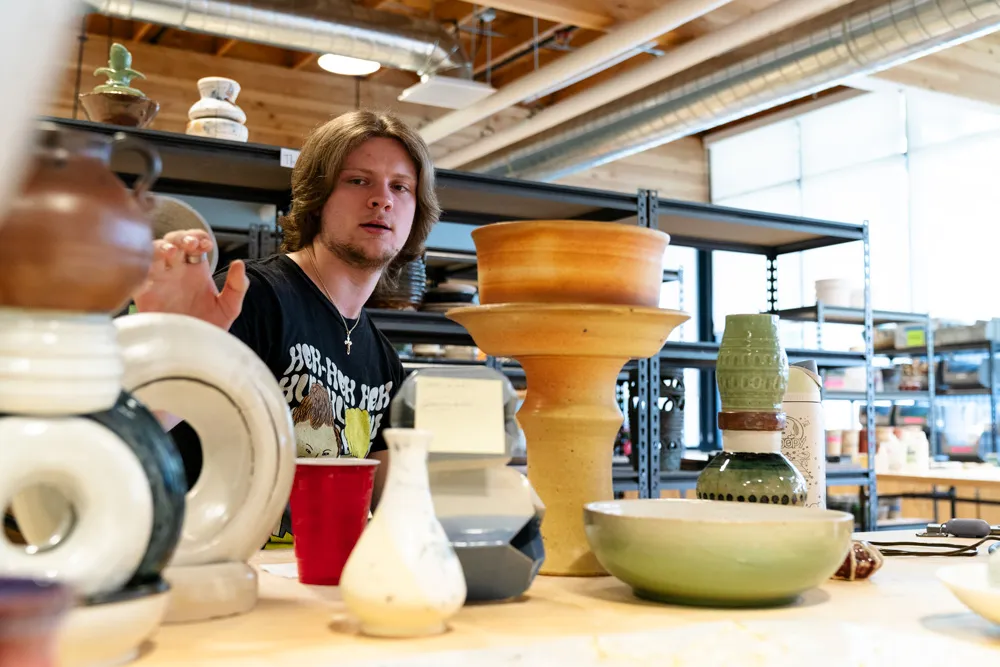
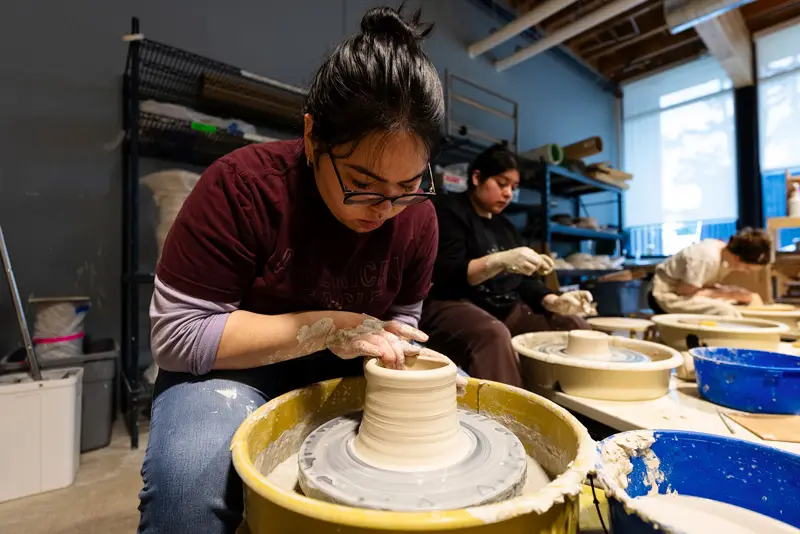
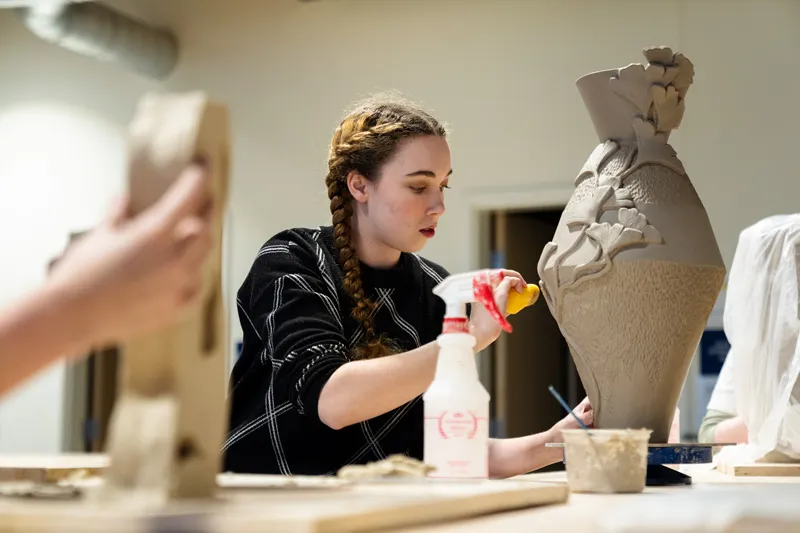
Create and collaborate in open studio spaces designed for studio arts, illustration and cinematic arts students. Art students work in a large ceramics and pottery studio, dedicated glass and sculpture spaces, and a partially covered courtyard with a kiln for hands-on making.
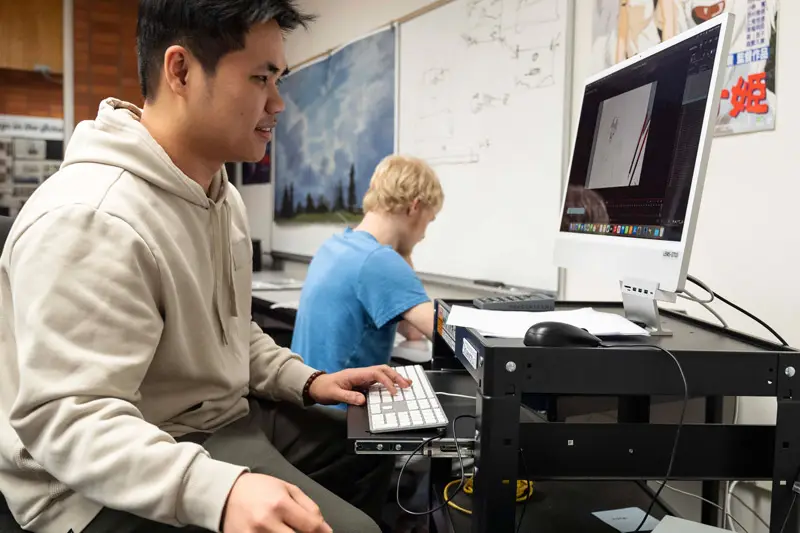
Cinematic arts students can edit video, record audio, film in a studio space, and share their work in a dedicated screening theater.
Located between the Maker Hub and Pennington Residence Hall, this 12,000-square-foot facility gives you the space to create and gain industry experience.
The Lemmons Center is best known for its unique design, which was to look like a water molecule from above, the building is made up of three hexagons and is set up to utilize the space as efficiently as possible. It houses many creative spaces including a printmaking studio, a photography darkroom, and animation, graphics and interior design labs.
According to the Bureau of Labor Statistics, employment as an art and design worker is expected to grow 2% between 2024 and 2034, and roles for art directors are growing at a 4% rate.
The Portland metro area is well-known for its thriving arts community, bringing in millions of dollars annually and supporting a significant population of artists. As the world becomes more “visual,” the role of the "traditional artist" has shifted and organizations of all types have been creating opportunities for artists.
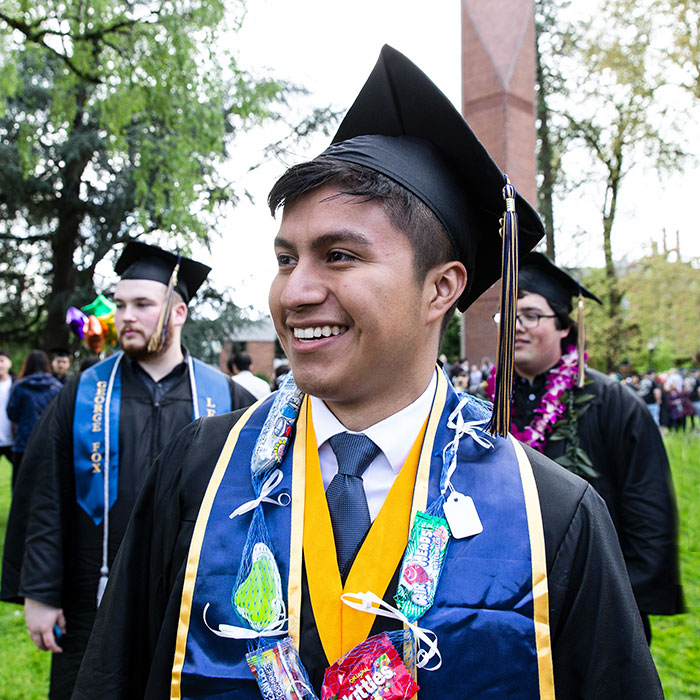
Our students have received full-ride scholarships to grad school, and we boast a large number of alumni who are supporting themselves with their practice.
100% of art and design students at George Fox complete an internship in their field before they graduate. Here's where some of our students interned during the 2025-2026 school year:
Lewis and Clark Graduate School of Education (art education)
Illustrating a Life of Joy
What if your art degree could take you somewhere you never expected? For Christine Joy Swanson (BFA, '14), it led to a yellow cottage studio, galleries across the country, and a children's book — all built on a foundation she started building at George Fox.
Swanson came to college not knowing exactly where her art would take her. What she found was a community that helped her grow as both an artist and a person. Today, her paintings hang in spaces like the Allison Inn & Spa and Providence Medical Center, where one of her landscapes brings comfort to patients undergoing cancer treatment. She teaches. She paints. She writes. And through it all, she carries a simple belief — one she learned long before college — that joy is something you choose, even when life is hard.
The professors also care very deeply for their students, especially in the art department and they want to see you succeed. They encouraged me to take up more space and have confidence in myself and my capabilities and that really taught me that believing in yourself leaves more room for growth.
Request Information About Bachelor of Fine Arts in Art & Design







 Loading...