

Pre-Pharmacy Program
At A Glance
Program Type
Pre-Professional
Accreditation
Northwest Commission on Colleges and Universities (NWCCU)
Grad School Prep
An academic advisor will support you in the grad school application process
Best Major Choices
Biology or biochemistry

If you’re fascinated by how the human body works, how compounds interact, and how discoveries in the laboratory become treatments that change lives, pre-pharmacy could be your path to serving others through science.
We will prepare you for pharmacy school in an environment where God is recognized as Creator. Most pre-pharmacy students major in biology or biochemistry, but you can choose any academic major we offer as long as you take certain specific courses required of your pharmacy school of choice.
Through it all, you’ll learn from scientists who teach from a distinctly Christian perspective and believe rigorous scientific inquiry and the Christian faith go hand in hand. They’ll challenge you not only to understand the intricacies of pharmacology, but to consider how that knowledge can be used with wisdom, compassion and integrity in service to others.


Is a Career as a Pharmacist for Me?
You might picture a pharmacist as someone behind the counter at your local drug store, but the scope of the profession is much broader than that. In addition to compounding and dispensing medications, pharmacists also may conduct health and wellness screenings, administer immunizations, teach other healthcare practitioners about proper medication therapies for patients, and advise on healthy lifestyles.
Types of Pharmacists
- Community pharmacists work in retail stores or independently owned pharmacies who dispense medications and answer any questions patients may have.
- Clinical pharmacists work in hospitals, clinics and other healthcare settings and focus on direct patient care rather than dispensing prescriptions.
- Consultant pharmacists advise healthcare facilities or insurance providers on patient medication use or improving pharmacy services.
- Pharmaceutical industry pharmacists work in marketing, sales, or research and development, designing or conducting clinical drug trials and helping to develop new drugs.
Research Opportunities
Our biology and chemistry professors actively conduct research in onsite and offsite research laboratories, providing our undergraduate majors the opportunity to participate and present the results. And a handful of our graduates have gone on to cancer research labs at OHSU – recent grads Quinlan Morrow and Brittany Smith among them.
On campus, students in our biology major have gained valuable research experience alongside professor John Schmitt, whose breast cancer research project, “Vitamin D Regulation in Breast Cancer Cells,” has received grant funding from the M.J. Murdock Charitable Trust.
Students can also pursue independent research through opportunities such as the Richter Scholars Program, which supports independent student research projects conducted under the guidance of a faculty mentor.


Where Faith & Science Meet
At George Fox, faith isn’t separate from your science education.
Our professors are practicing scientists and Christians who invite you to explore the relationship between scientific discovery and Christian faith. You’ll have opportunities to consider the ethical questions surrounding science and medicine, discern your vocation, and think about what it means to use your education in service to others.
It’s a distinctive part of the George Fox experience: You’ll be prepared not only to understand the science of medicine, but to consider the person behind the patient.
Courses / Curriculum What Will I Study?
Your course of study will vary depending on your major, but you must take certain courses to meet pharmacy school requirements.
- Your course load will include classes in biology (human anatomy and physiology, advanced physiology, general biology, advanced human anatomy) chemistry (general chemistry, organic chemistry, biochemistry), physics (general physics) and mathematics (statistical procedures, calculus). It is also recommended you take courses in psychology, communications and economics.
- We offer undergraduate research and clinical job shadowing opportunities, and many of our students engage in research both at the university and at Oregon Health & Science University.
- As getting into pharmacy school is competitive, you should choose electives that will demonstrate your knowledge and dedication to learning. Select your major based on what you enjoy and what you feel you will do well in academically.
- You should also focus on learning as much as you can about medicine, ethics, etc., from physicians, local hospitals, and other health professionals. Shadowing a pharmacist can be helpful in determining whether you would really like to have a career in the profession.
Cornerstone Core
The Cornerstone Core is a set of 12 courses across 10 academic disciplines that undergraduate students take at George Fox to cultivate their character within the Christian context.
As an alternative to Cornerstone Core, students can participate in our great books honors program.
Bachelors (BS) in Biology Requirements
Biology Core Requirements (18 credit hours)
Complete the following:
Biology Upper-Division Electives (16 credit hours)
Complete at least one course from each of the following groups.
Choose one of the following:
Choose one of the following:
Choose one of the following:
Physical Sciences (16 credit hours)
Choose four of the following:
Quantitative Skills (6-8 credit hours)
Complete the following:
Choose one of the following:
Optional Thesis
Students can petition the department thesis committee by the end of the fall semester of their junior year for permission to do original research as part of their degree requirement. Students allowed to pursue the thesis option must:
- Complete an acceptable research proposal and the Research Methods course (BIOL 384) by the end of the spring semester of the junior year.
- Take up to 4 hours of Biological Research (BIOL 465) between the spring semester of their junior year and graduation, and Senior Thesis (BIOL 496) during the spring semester of their senior year.
- Complete a written thesis acceptable to the thesis committee by April 1 of their senior year.
- Prepare a poster and give an oral presentation of their research prior to graduation.
The department considers this an honor to be noted on the student's transcript. The thesis is designed to enhance a student's preparation for graduate or professional school.
Bachelors (BA) in Biology Requirements
Core Requirements (41-45 credit hours)
Complete the following:
Choose one of the following sequences:
Sequence 1
Sequence 2
Complete the following:
Choose one of the following field studies courses:
Choose one of the following diversity courses:
Choose one of the following form/function courses:
Choose one of the following cell/molecular courses:
Upper-division BIOL electives
Complete the following:
Complete the following:
Complete MATH 180 or higher. Students who complete MATH 180 College Algebra are encouraged to take MATH 240 Statistics (3 credit hours) as well.
Liberal Arts Tracks (14-16 credit hours) - choose one
Complete the following:
Choose 12 credit hours of electives from the following:
Option 1
Complete the following:
Spanish language sequence:
Option 2
Complete the following:
Spanish language sequence:
Choose 6-8 credit hours of Global/Cultural Understanding electives from the following:
Complete the following:
Choose three of the following:
Complete the following:
Complete the following:
Introductory course taken by majors in the field (3 hours)
Take 12 upper-division elective hours, as agreed upon by department chair of chosen discipline and biology department head. (12 hours)
Bachelors (BS) in Biochemistry Requirements
Complete the following:
Complete the following:
Complete the following:
Complete one of the following:
Complete one of the following sequences:
OR
Complete three of the following:
Philosophy: The opportunity to pursue a chemistry thesis is an honor. Consequently, the thesis option will be noted on a student's transcript. The thesis is designed to enhance a student's preparation for graduate or professional school. The heart of the thesis is original research conducted under the guidance of a chemistry faculty member.
Eligibility: The thesis option may be pursued by any chemistry major in good academic standing. Students wishing to pursue a thesis must:
- Consult with their research advisor about an acceptable research project.
- In writing, notify the chemistry thesis committee (composed of the chemistry department faculty) of their intention to conduct research. The thesis committee must receive notification by the end of the fall semester of the student's junior year.
After the beginning of the spring semester of a student's junior year, students must petition the department thesis committee for permission to pursue thesis research. Students who pursue the thesis option must:
- Enroll in at least 1 hour of Chemical Research (CHEM 465) each semester, beginning the spring semester of their junior year, through the spring semester of their senior year.
- Submit the first copy of a written thesis to the thesis committee by April 1 of their senior year. The final, edited copy is due to the thesis committee the last day of classes during the spring semester.
- Prepare a poster and give an oral presentation of their research.
In some cases, students may apply research conducted off campus to the CHEM 465 requirement. Students who participate in off-campus research programs may petition the thesis committee for special consideration of the thesis option. The thesis committee must receive the petition by the beginning of the fall semester of the student's senior year. The thesis committee may elect to substitute the off-campus experience for a portion of the CHEM 465 requirement.
Our spaces/Where Will I Learn?
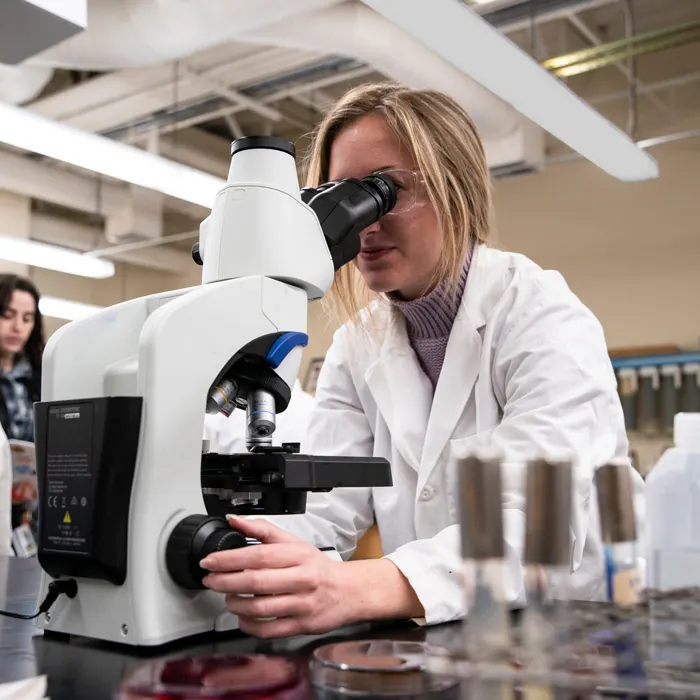
Whatever your field of interest – medicine, dentistry, pharmacy, optometry or veterinary science – you’ll get the opportunity to put science into practice in our Edwards-Holman Science Center, which gives you access to cutting-edge equipment and hands-on experiences that will prepare you for graduate school and a professional health career.
Our Facilities and Equipment
- Anatomy & Physiology Labs: Study human anatomy firsthand with three human cadavers and gain experience with anatomical and surgical techniques
- Virtual Reality Anatomy Lab: Use 24 Vive Focus 3 headsets to explore 3D anatomy, virtual dissections, pathology and radiology
- Leica Confocal Microscope: Use a $180,000 confocal microscope for advanced cellular and molecular imaging
- Biological Analysis Equipment: Gain hands-on experience with a NanoDrop and mass spectrometer for DNA, protein and chemical analysis
- Advanced Biochemistry Equipment: Work with research-grade tools including NMR, gas chromatography-mass spectrometry, HPLC, FTIR, and fluorometry
- Specialized Research Technology: Explore additional techniques through size-exclusion chromatography and atomic force microscopy
Through laboratory courses, project-based research and field experiences, you’ll build the analytical, technical and problem-solving skills that can prepare you for the next step toward a career in healthcare. And with many labs capped at 20 students, you’ll receive personal attention and get the opportunity to conduct meaningful research with faculty mentors.
Career Outlook What’s After George Fox
Employment of pharmacists is projected to grow 5% from 2025 to 2035, according to the U.S. Bureau of Labor Statistics, faster than the average for all occupations. About 12,500 openings for pharmacists are projected each year, on average, over the decade. Many of those openings are expected to result from the need to replace workers who transfer to different occupations or exit the labor force, such as to retire.
- Researcher, Druker Lab at OHSU
- Physical Therapist, St. Anthony’s Hospital
- Pediatrician, Vancouver Clinic
- High School Biology Teacher, Hillsboro High School
- Tribology Analyst, Portland Tribology Lab
- Nurse, Seattle Children’s Hospital
- Chiropractor, Back Pain & Accident Chiropractic
- Remote Sensing Analyst, Watershed Sciences Inc.
- Hematology/Oncology Researcher, Dartmouth University Hitchcock Medical Center
- Associate Director of Histocompatibility, OHSU
- Chairman of Anesthesiology, East Jefferson General Hospital
- Cancer research, Oregon Health & Science University
- Stem cell research, Oregon Health & Science University
- Medical mission work, South America
- Samaritan’s Purse, Sudan
- World Vision, Albania
- Quiet Waters Outreach
- Thermo Fisher Scientific, Eugene, Ore.
- Stanford University
- U.C. Berkeley
- Oregon Health & Science University
- Washington University School of Medicine, St. Louis
- University of Washington, School of Medicine
- Loma Linda University, School of Medicine
- University of Southern California, Keck School of Medicine
‘The Calling Comes First’
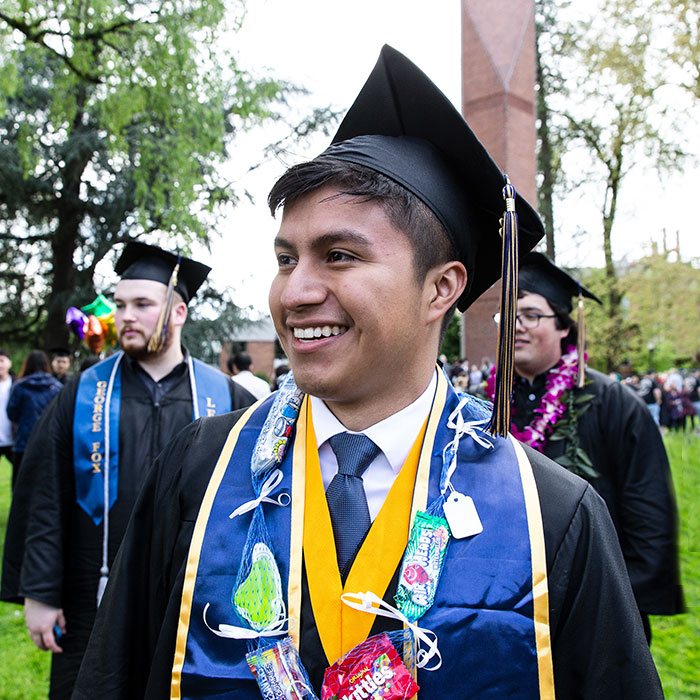
What does it look like to pursue medicine as a calling, not just a career? For Dr. Luke Fletcher (Biology, '09), it starts every morning with a simple question: "OK, God, what do you have for me?"
Fletcher is a medical oncologist and cancer researcher at Willamette Valley Cancer Institute in Eugene, Oregon — treating patients with blood cancers, conducting research that shapes national care standards. He chose community oncology over a prestigious academic hospital because that's where he felt called to be: close to patients, close to home, close to the people who needed him most.
His path from George Fox biology student to oncologist wasn't without hard moments. A serious health scare after his freshman year made him question everything. But a mentor's words — and a quiet confidence that God was still in it — kept him moving forward. Now he comes back to George Fox University to offer those same "hammer moments" to the next generation of pre-med students, mentoring them and funding scholarships out of his own pocket.
Serena Ferris
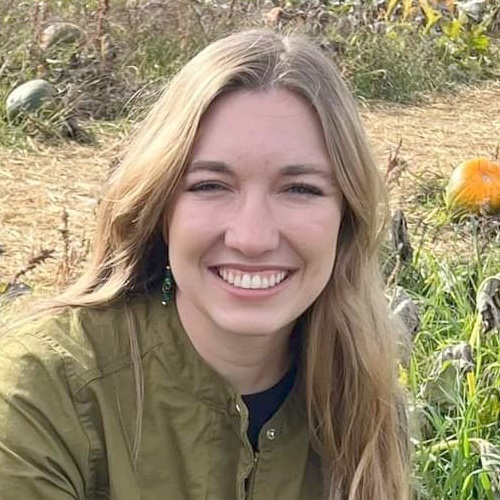
Pharmacist, Roseburg, Oregon
I took many courses at George Fox that helped prepare me for the rigorous demands of pharmacy school. Taking classes such as advanced anatomy and physiology, genetics, microbiology, and organic chemistry gave me a strong foundation in the sciences before attending graduate school. The biology department allows students to thrive in an academic environment where they have access to professors who care about their success, not only in classes but also in their future careers. I am grateful for my George Fox education and the opportunities for career growth it has afforded me since graduation.
"For by him all things were created, in heaven and on earth, visible and invisible, whether thrones or dominions or rulers or authorities—all things were created through him and for him."
Colossians 1:16Request Information About Pre-Pharmacy
 Loading...