Pre-Physician Assistant
At A Glance
Program Type
Pre-Professional
Accreditation
Northwest Commission on Colleges and Universities (NWCCU)
Graduate Program
Affiliated with George Fox University’s physician assistant (PA) program
Facilities
Take courses in our state-of-the-art biology, chemistry and health sciences labs

Are you ready to offer solutions to the medical profession? As the practice of medicine shifts in America, the answer to overworked doctors, undertreated patients and a healthcare system that’s bursting at the seams is you.
As a physician assistant (PA), you'll be equipped to treat patients and walk with them on the road to health and healing. And, you'll get to begin this important work much faster – and with fewer student loans – than the medical school and residency path. Plus, with the Bureau of Labor Statistics predicting the field will grow 21% by 2035, you can expect great job prospects upon graduation!



Equipped to Succeed
At George Fox, you'll be equipped to thrive in your undergraduate studies as you work closely with your professors and academic advisors to meet prerequisite admission requirements for physician assistant programs. And you’ll benefit by learning at a university with our own physician assistant program. Our faculty are eager to see you succeed in your postgraduate studies!
George Fox undergraduate students who meet all requirements of the George Fox University PA program are guaranteed an interview for the program.
Our Community
You’ll benefit from our 17-to-1 student-to-faculty ratio, which ensures you’ll receive the personalized attention you need to thrive. Your professors’ instruction and career planning advocates will prepare you to be a competitive candidate in a physician assistant program that’s right for you!
You’ll also have the opportunity to connect with your peers by joining our student-run pre-health clubs.
Where Faith & Science Meet
At George Fox, faith isn’t separate from your science education.
Our professors are practicing scientists and Christians who invite you to explore the relationship between scientific discovery and Christian faith. You’ll have opportunities to consider the ethical questions surrounding science and medicine, discern your vocation, and think about what it means to use your education in service to others.
It’s a distinctive part of the George Fox experience: You’ll be prepared not only to understand the science of medicine, but to consider the person behind the patient.
Courses / Curriculum What Will I Study?
These recommendations are for people desiring to enter the physician assistant profession. Pre-PA students must have a sound background in science, which can be accomplished in many majors we offer, including biology, biochemistry, and biomedical engineering. Good communication skills are important, as is a broad general education in the social sciences and humanities.
Required Courses
Undergraduate courses that best meet prerequisite requirements for the George Fox PA program include:
- One year of Anatomy/Physiology
- One semester of General Biology with Lab
- One semester Microbiology
- One semester of another biology course (second term of General Biology, Genetics, Cell Biology, Histology, Immunology, Virology, Epidemiology, Biochemistry)
- One semester General Chemistry with Lab
- One semester of another chemistry course (second semester of General Chemistry, Organic Chemistry, Analytical Chemistry, Biochemistry if not used for other biology)
- One semester psychology (General Psychology, Abnormal Psychology, Developmental Psychology, Psychology throughout the Lifespan)
- One semester Statistics
- Medical Terminology (not required, but recommended)
Note: AP credit or CLEP scores are not accepted by most PA programs, including George Fox’s PA graduate program.
Cornerstone Core
The Cornerstone Core is a set of 12 courses across 10 academic disciplines that undergraduate students take at George Fox to cultivate their character within the Christian context.
As an alternative to Cornerstone Core, students can participate in our great books honors program.
Bachelors (BS) in Biology Requirements
Biology Core Requirements (18 credit hours)
Complete the following:
Biology Upper-Division Electives (16 credit hours)
Complete at least one course from each of the following groups.
Choose one of the following:
Choose one of the following:
Choose one of the following:
Physical Sciences (16 credit hours)
Choose four of the following:
Quantitative Skills (6-8 credit hours)
Complete the following:
Choose one of the following:
Optional Thesis
Students can petition the department thesis committee by the end of the fall semester of their junior year for permission to do original research as part of their degree requirement. Students allowed to pursue the thesis option must:
- Complete an acceptable research proposal and the Research Methods course (BIOL 384) by the end of the spring semester of the junior year.
- Take up to 4 hours of Biological Research (BIOL 465) between the spring semester of their junior year and graduation, and Senior Thesis (BIOL 496) during the spring semester of their senior year.
- Complete a written thesis acceptable to the thesis committee by April 1 of their senior year.
- Prepare a poster and give an oral presentation of their research prior to graduation.
The department considers this an honor to be noted on the student's transcript. The thesis is designed to enhance a student's preparation for graduate or professional school.
Bachelors (BA) in Biology Requirements
Core Requirements (41-45 credit hours)
Complete the following:
Choose one of the following sequences:
Sequence 1
Sequence 2
Complete the following:
Choose one of the following field studies courses:
Choose one of the following diversity courses:
Choose one of the following form/function courses:
Choose one of the following cell/molecular courses:
Upper-division BIOL electives
Complete the following:
Complete the following:
Complete MATH 180 or higher. Students who complete MATH 180 College Algebra are encouraged to take MATH 240 Statistics (3 credit hours) as well.
Liberal Arts Tracks (14-16 credit hours) - choose one
Complete the following:
Choose 12 credit hours of electives from the following:
Option 1
Complete the following:
Spanish language sequence:
Option 2
Complete the following:
Spanish language sequence:
Choose 6-8 credit hours of Global/Cultural Understanding electives from the following:
Complete the following:
Choose three of the following:
Complete the following:
Complete the following:
Introductory course taken by majors in the field (3 hours)
Take 12 upper-division elective hours, as agreed upon by department chair of chosen discipline and biology department head. (12 hours)
Bachelors (BS) in Biochemistry Requirements
Complete the following:
Complete the following:
Complete the following:
Complete one of the following:
Complete one of the following sequences:
OR
Complete three of the following:
Philosophy: The opportunity to pursue a chemistry thesis is an honor. Consequently, the thesis option will be noted on a student's transcript. The thesis is designed to enhance a student's preparation for graduate or professional school. The heart of the thesis is original research conducted under the guidance of a chemistry faculty member.
Eligibility: The thesis option may be pursued by any chemistry major in good academic standing. Students wishing to pursue a thesis must:
- Consult with their research advisor about an acceptable research project.
- In writing, notify the chemistry thesis committee (composed of the chemistry department faculty) of their intention to conduct research. The thesis committee must receive notification by the end of the fall semester of the student's junior year.
After the beginning of the spring semester of a student's junior year, students must petition the department thesis committee for permission to pursue thesis research. Students who pursue the thesis option must:
- Enroll in at least 1 hour of Chemical Research (CHEM 465) each semester, beginning the spring semester of their junior year, through the spring semester of their senior year.
- Submit the first copy of a written thesis to the thesis committee by April 1 of their senior year. The final, edited copy is due to the thesis committee the last day of classes during the spring semester.
- Prepare a poster and give an oral presentation of their research.
In some cases, students may apply research conducted off campus to the CHEM 465 requirement. Students who participate in off-campus research programs may petition the thesis committee for special consideration of the thesis option. The thesis committee must receive the petition by the beginning of the fall semester of the student's senior year. The thesis committee may elect to substitute the off-campus experience for a portion of the CHEM 465 requirement.
Biomedical Engineering Requirements
Biomedical Engineering (54 credit hours)
Complete the following:
Complete one of the following sequences:
Medical Device Sequence
Pre-Doctor of Osteopathic Medicine Sequence
Pre-Physical Therapy Sequence
Pre-Occupational Therapy Sequence
Our spaces/Where Will I Learn?
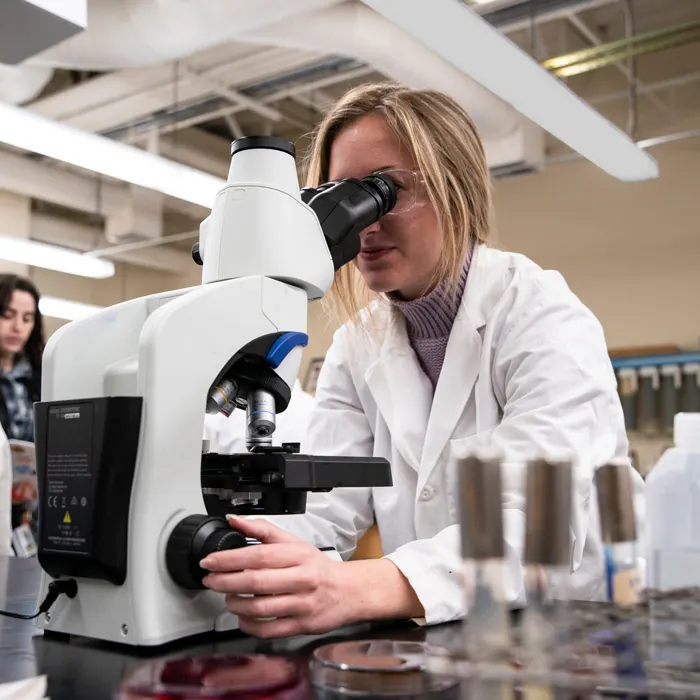
Whatever your field of interest – medicine, dentistry, pharmacy, optometry or veterinary science – you’ll get the opportunity to put science into practice in our Edwards-Holman Science Center, which gives you access to cutting-edge equipment and hands-on experiences that will prepare you for graduate school and a professional health career.
Our Facilities and Equipment
- Anatomy & Physiology Labs: Study human anatomy firsthand with three human cadavers and gain experience with anatomical and surgical techniques
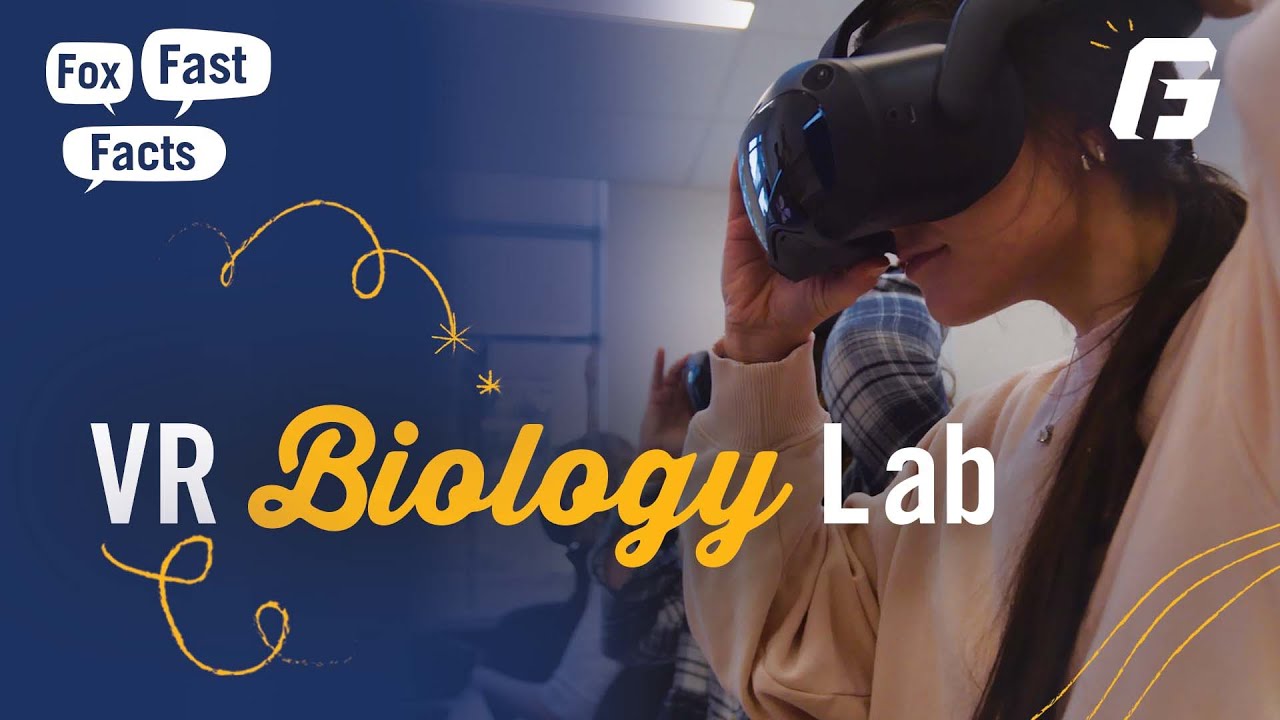
- Virtual Reality Anatomy Lab: Use 24 Vive Focus 3 headsets to explore 3D anatomy, virtual dissections, pathology and radiology
- Leica Confocal Microscope: Use a $180,000 confocal microscope for advanced cellular and molecular imaging
- Biological Analysis Equipment: Gain hands-on experience with a NanoDrop and mass spectrometer for DNA, protein and chemical analysis
- Advanced Biochemistry Equipment: Work with research-grade tools including NMR, gas chromatography-mass spectrometry, HPLC, FTIR, and fluorometry
- Specialized Research Technology: Explore additional techniques through size-exclusion chromatography and atomic force microscopy
Through laboratory courses, project-based research and field experiences, you’ll build the analytical, technical and problem-solving skills that can prepare you for the next step toward a career in healthcare. And with many labs capped at 20 students, you’ll receive personal attention and get the opportunity to conduct meaningful research with faculty mentors.
Occupations & Earning Potential
Below are some of the common career paths our pre-physician assistant graduates pursue or are well-equipped to go on to. Keep in mind that while a bachelor's degree provides a strong foundation, certain specialized or advanced roles may require additional education or experience.
U.S. Bureau of Labor Statistics (2026)

Joe Mohr
George Fox prepared me for grad school by helping me grow spiritually, academically and socially. The faculty here really care about you and take the time to get to know you and help you grow as a person. Personal relationships with faculty and small class sizes really helped me excel academically and laid a strong foundation to succeed in grad school.
Not only is George Fox an exceptional academic institution, but the faith-based and service-driven aspect of the university drew me to pursue grad school here, [preparing me] to truly help people and make a difference in the world.
Request Information About Pre-Physician Assistant
 Loading...